
The Herb Prof Team researches and writes our herbal guides, drawing on published research, traditional herbal references, and hands-on growing experience.
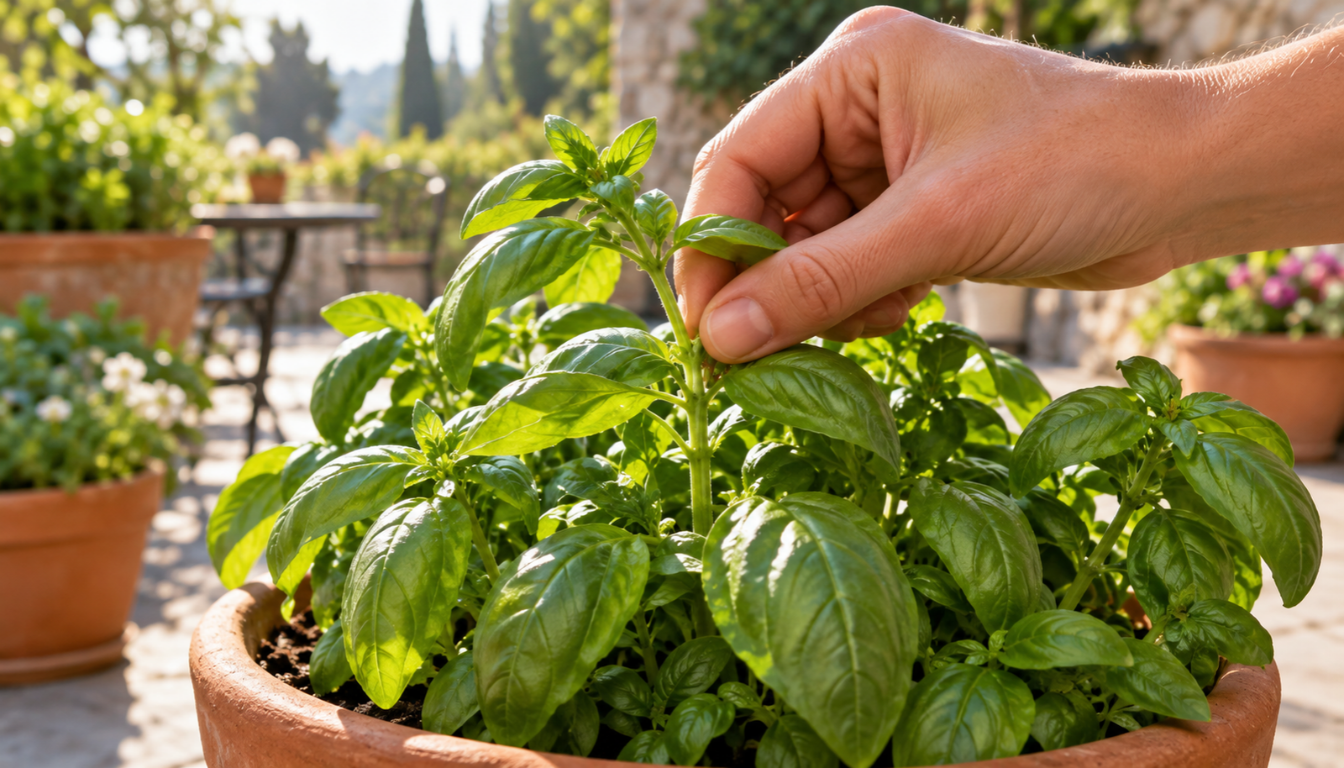
Knowing how to harvest basil the right way keeps your plant bushy, productive, and flavorful all season. The trick is simple. Cut or pinch just above a pair of leaves, so the stem branches instead of growing tall and bare.
Basil is a tender annual. It grows fast in warm weather and stops when cold arrives. Regular harvesting works as pruning, which is why the two jobs go together. This guide covers when to harvest, how to pick and prune, what to do when basil flowers, and how to store what you pick.
When to Harvest Basil
Start once the plant is about 6 to 8 inches tall and has at least six sets of leaves. At that point, it has enough foliage to lose some without stress. After that, harvest regularly. Frequent picking keeps the plant producing new growth.
Morning is generally best. Wait until the dew has dried, but pick before the midday heat, when leaves are more likely to wilt. Pick before the plant flowers, since flavor declines after bloom.
Watch the weather too. Basil is a warm-weather herb. Penn State Extension notes that temperatures below 40°F (4°C) discolor the leaves, and frost will kill the plant. When cold weather is in the forecast, harvest all your basil.
How to Harvest Basil Leaves
Both methods below work. The key is the same for each: cut or pinch just above a leaf node. A leaf node is the small bump on the stem where a pair of leaves attaches. Look closely and you may see tiny new shoots forming there. Removing the growing tip just above a node releases those side buds, and each one becomes a new branch. That’s why every pinch makes the plant bushier.
| Method | Best for | How |
|---|---|---|
| Pinching | Small amounts, no tools needed | Pinch the stem just above a leaf node |
| Scissors | Larger harvests, such as pesto | Cut each stem just above a leaf node |
Either way, take no more than about one third of the plant at a time.
Pinching
- Wait until the plant is at least 6 inches tall.
- Find a pair of leaves with a leaf node where they meet the stem.
- Pinch the stem just above that node with your fingers.
- Repeat on other stems as needed.
Pinching works well when you need only a few leaves.
Using Scissors
- Wait until the plant is at least 6 inches tall.
- Choose the stems you want to cut.
- With clean scissors, cut each stem just above a leaf node.
- Leave at least two sets of leaves on each stem, so it can regrow.
Scissors work better for a large harvest, such as pesto. Take no more than about one third of the plant at a time.
How to Prune Basil
Pruning is harvesting with a purpose. It encourages bushier growth, keeps the plant from turning leggy, and delays flowering. Without it, basil tends to grow tall and sparse.
Signs Your Basil Needs Pruning
- Tall, spindly growth
- Yellowing leaves
- Flower buds forming
- Crowded leaves
Tools and Timing
Sharp scissors or pruning shears are all you need. Wipe the blades clean between plants to avoid spreading disease. Prune every few weeks, or whenever the plant looks leggy or starts to bud. Regular, light pruning works better than occasional heavy cutting.
Common Mistakes to Avoid
- Taking more than about one third of the plant at once
- Cutting between nodes instead of just above them
- Leaving flower buds on the plant
- Pruning too early, before the plant reaches about 6 inches
- Using dull blades that crush the stems
Start New Plants from Your Cuttings
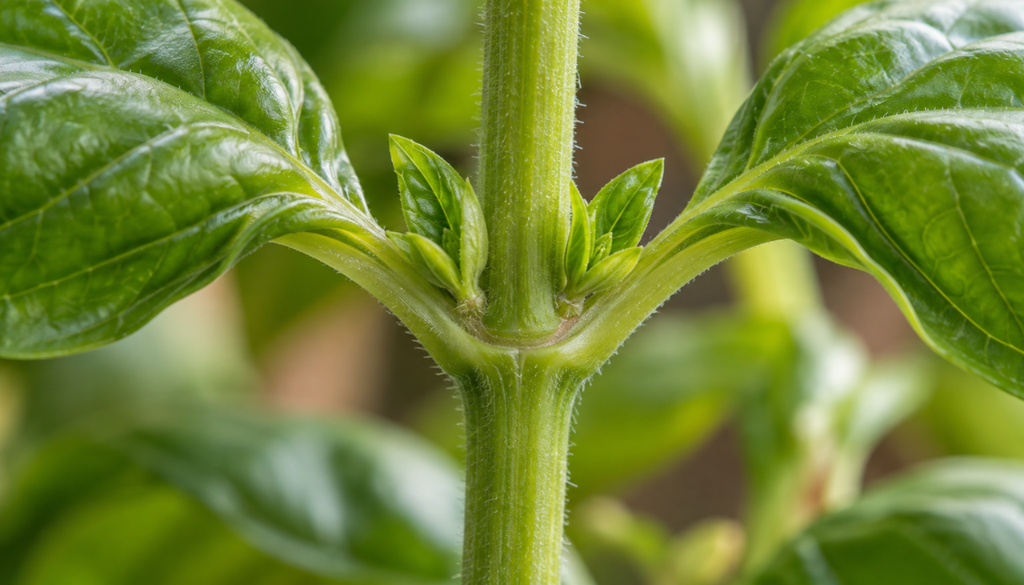
Stems you cut don’t have to go to waste. Basil roots easily in water, so one plant can become several.
- Take a 4 to 6 inch stem cutting just below a leaf node.
- Remove the lower leaves, so none sit in the water.
- Stand the stem in a jar of water in bright, indirect light.
- Change the water every few days.
- Roots usually appear in one to two weeks, though some take longer.
- Pot the cutting up once the roots are 1 to 2 inches long.
Cuttings count toward the one-third limit, so don’t take too many from one plant.
What to Do When Basil Flowers
Flower buds are your cue to act. Once basil flowers, it puts its energy into seed instead of leaves, so leaf production drops and the flavor declines. Penn State Extension advises pinching out the growing tips to slow flowering and promote branching. Pinch off buds as soon as you see them, cutting just above a leaf node.
Late in the season, you can let one plant bloom on purpose. The flowers attract bees and other pollinators, and you can collect seed before cold weather ends the plant.
Basil flowers are edible too, with a mild basil flavor. Sprinkle them on salads, pasta, or soup, or steep a few in hot water for a light tea. Only eat flowers from plants that haven’t been sprayed with pesticides.
A Season-Long Harvest Plan
- Early season: Once the plant has its first six leaves, pinch the tips above the second set of leaves. This sets up branching from the start.
- Midseason: Harvest regularly, taking about a third at a time. Pinch off flower buds as they appear.
- Late season: When cold weather is predicted, harvest all your basil. If you like, leave one plant to bloom so you can collect seed.
How to Store Fresh Basil
Treat basil like cut flowers. Trim the stems, stand them in a jar with an inch or two of water, and keep the jar at room temperature, out of direct sun. Change the water every couple of days. Penn State Extension recommends this over the refrigerator, because cold discolors basil leaves. Stems keep for a few days to a week this way.
If you need to refrigerate basil, Penn State Extension says it keeps up to a week wrapped in a paper towel inside a plastic bag. Cold can discolor the leaves, so check it often.
Freezing and Drying
If you dry basil, spread the leaves on a wire-mesh tray in a shady, dry, well-ventilated spot. Penn State Extension advises against hanging basil in bundles, since the leaves dry slowly and can mold. For longer storage, freeze basil or dry it. See our guides on [how to freeze basil] and [drying herbs in the oven].
A Food Safety Note on Basil and Oil
Fresh basil stored in oil can grow the bacteria that cause botulism. Extension guidance says to keep fresh herbs in oil in the refrigerator and use them within 4 days, or freeze them for long-term storage. Don’t infuse fresh basil or basil flowers in oil and leave it at room temperature.
Ways to Use Fresh Basil
- Stir it into tomato sauce for pasta
- Add it to salads
- Blend it into pesto with garlic, pine nuts, and olive oil
- Add it to soups and stews
- Use it in homemade pizza sauce
Before You Go – How to Harvest Basil
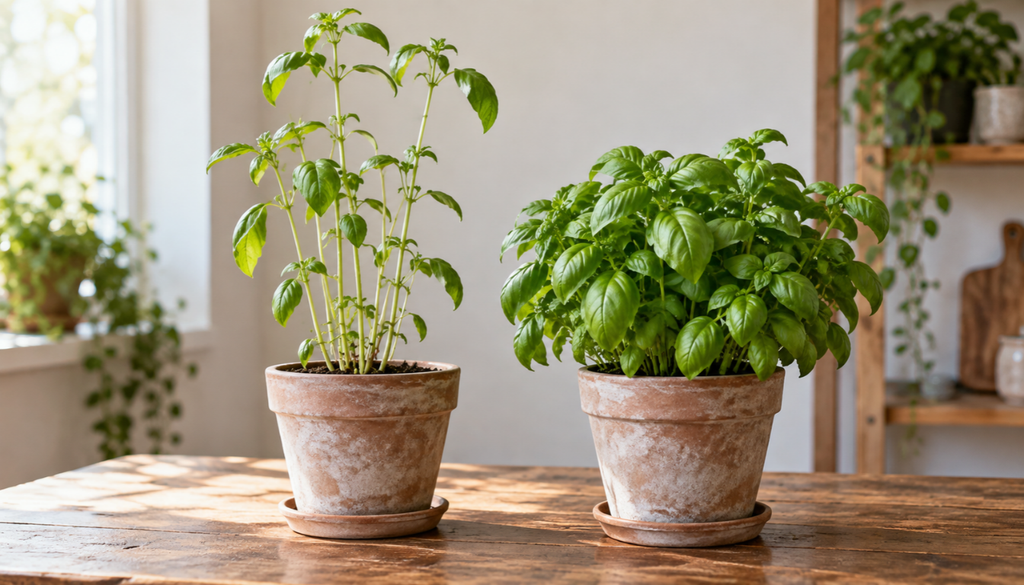
Harvesting and pruning basil are the same skill. Pick above a leaf node, take about a third at a time, and pinch off flower buds early. Do that, and one plant can keep you in leaves all season. Harvest what you want to keep before the first cold snap, then store it in a jar of water, freeze it, or dry it.
Sources
- UF/IFAS Extension (Pasco County), “Spice Up Your Life: A Beginners Guide to Growing Basil”: https://blogs.ifas.ufl.edu/pascoco/?p=3013
- Oregon State University Extension, “Herbs and Vegetables in Oil”: https://extension.oregonstate.edu/catalog/pub/sp-50-701-herbs-vegetables-oil
- Penn State Extension, “Herb Garden Plants: Basil”: https://extension.psu.edu/herb-garden-plants-basil
- Penn State Extension, “Basil, A Summer Favorite”: https://extension.psu.edu/basil-a-summer-favorite
Related Articles
Growing Medicinal Herbs: The Complete Home Guide
What Herbs Can Be Planted Together?
References – How to Harvest Basil
Little Herb Encyclopedia, by Jack Ritchason; N.D., Woodland Publishing Incorporated, 1995
The Ultimate Healing System, Course Manual, Copyright 1985, Don Lepore
Planetary Herbology, Michael Tierra, C.A., N.D., Lotus Press, 1988
Handbook of Medicinal Herbs, by James A. Duke, Pub. CRP Second Edition 2007
The Complete Medicinal Herbal, by Penelope Ody, Published by Dorling Kindersley
Frequently Asked Questions – How to Harvest Basil
When is the best time to harvest basil?
Start once the plant is 6 to 8 inches tall, then harvest regularly. Pick in the morning, after the dew dries.
How much basil can I harvest at once?
Take no more than about one third of the plant at a time. Leave at least two sets of leaves on each stem, so it can regrow.
Should I remove basil flowers?
Usually, yes. Flowering shifts the plant’s energy to seed, so leaf production drops and the flavor can turn bitter. Pinch off buds just above a leaf node. Late in the season, you can let one plant bloom for pollinators and seed.
Can I refrigerate fresh basil?
It’s best not to. Cold can discolor basil leaves, so Penn State Extension recommends keeping stems in a glass of water at room temperature. If you do refrigerate it, wrap the stems in a paper towel inside a plastic bag and use it within a week.
Can I eat basil flowers?
Yes. They’re edible and taste mildly of basil. Use them on salads, pasta, or soup, or steep them for tea. Only eat flowers from plants that haven’t been sprayed with pesticides.
How do I harvest basil for pesto?
Pick young, tender leaves, or cut whole stems just above a leaf node. Remove flower buds, since they can make pesto bitter. Wash and dry the leaves before using them. The same method works for Thai basil and other varieties. Store pesto in the refrigerator for up to 4 days, or freeze it for longer.