
The Herb Prof Team researches and writes our herbal guides, drawing on published research, traditional herbal references, and hands-on growing experience.
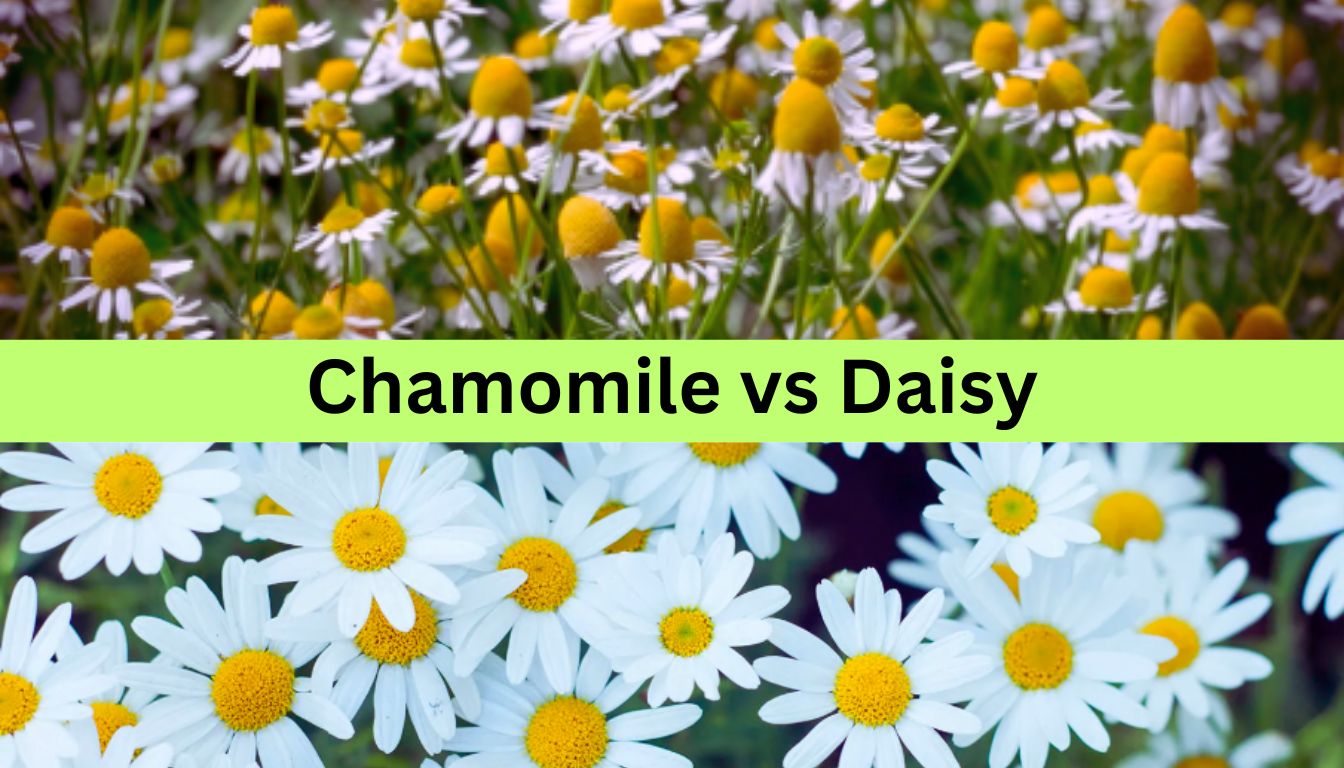
Chamomile vs daisy is an easy comparison to get wrong at first glance. Both produce white petals around a yellow centre and belong to the same Asteraceae family. The differences become clear once you know what to look for: size, leaf shape, scent, and how each plant is actually used.
Chamomile comes in two main species. German chamomile is an annual that grows up to two feet tall and produces a strong, bitter tea. Roman chamomile is a perennial, shorter at around one foot, and yields a sweeter, fruitier flavour. Daisies are generally larger, hardier, and come in far greater variety, with over 20,000 species ranging from the compact Bellis perennis to the tall Shasta daisy.
Characteristics of Chamomile vs Daisy
While chamomile and daisy share a family resemblance, several physical features set them apart. The table below breaks down the key differences at a glance.
| Feature | Chamomile | Daisy |
|---|---|---|
| Height | Up to 1–2 ft | Up to 3 ft |
| Petals | White, small | White, pink, or yellow; larger |
| Leaves | Feathery, thread-like | Broader, serrated edges |
| Scent | Sweet, apple-like | Mild, slightly sweet |
| Pollen buds | Elongated, less compact | Round, tight |
| Bloom time | Spring–Summer | Summer–Fall |
Beyond the features in the table, the stems of these two plants are also noticeably different. Chamomile stems are thin and delicate, and the plant tends to grow low to the ground in a loose, mat-like shape. Daisy stems are sturdier and more upright, giving the plant a taller, more structured appearance in the garden.
Smell as an Identification Tip
One of the easiest ways to tell chamomile and daisy apart in real life is simply to crush a leaf or flower between your fingers and smell it. Chamomile has a distinctive sweet, apple-like scent that is immediately recognisable. Daisies, by contrast, have a much fainter, more neutral smell. If you are ever unsure which plant you are looking at, the scent test will give you an answer within seconds.
Similarities Between Chamomile vs Daisy
Both Members of the Daisy Family
Daisies and chamomile share a common family, which is the Asteraceae family. This family is also known as the daisy family, and it includes many other plants such as sunflowers, marigolds, and asters. Both chamomile and daisies have a similar appearance with white petals and yellow centers. However, chamomile flowers are usually around 1 inch across, while many common daisies are significantly larger.
Can Have Medicinal Uses
Both chamomile and daisies have been used for medicinal purposes for centuries. You make chamomile tea from the dried flowers of German chamomile, Roman chamomile, or Matricaria chamomilla. It has a calming effect, and many people drink it to help with anxiety and insomnia. Modern studies suggest chamomile may modestly improve sleep quality and symptoms of generalised anxiety when used regularly, although the effects are mild and more research is needed.
Practitioners also use both chamomile and daisies in alternative medicine, such as aromatherapy and homeopathy. Chamomile essential oil is used to relieve stress and anxiety, while daisy essential oil is used to soothe skin irritation and inflammation.
Growing and Using Chamomile vs Daisy
When it comes to tea and culinary use, chamomile is the clear choice. Many people use chamomile tea as a herbal remedy for relaxation and sleep, and you can also add it to baking and cooking. Daisy does not feature commonly in either.
As with all Asteraceae plants, both chamomile and daisy can trigger allergic reactions in people who are sensitive to ragweed and related species, so new users should start slowly and stop use if any irritation or breathing symptoms appear.
Growing requirements differ between the two. Chamomile prefers full sun and well-draining soil, while daisies tolerate a bit more shade and prefer slightly moist soil. You can grow both plants from seed, and chamomile also spreads easily when you divide established clumps.
There are different types worth knowing. Wild chamomile (Matricaria recutita) handles hot, dry summers well and tends to be hardier, while Roman chamomile (Chamaemelum nobile) needs more watering but makes a beautiful low-growing ground cover that releases its scent when you walk on it.
If your goal is medicinal use or tea, chamomile is the better choice. For visual impact, cut flowers, or low-maintenance borders, daisies offer far more variety in colour, height, and bloom time. If space allows, growing both is worth considering as they complement each other well and serve entirely different purposes once harvested.
Before You Go – Chamomile vs Daisy

Chamomile and daisy are easy to mix up at first glance, but once you know what to look for, the feathery leaves, the apple scent, and the smaller flower head, chamomile becomes instantly recognisable. The two plants serve very different purposes once harvested, so knowing which is which matters whether you are growing for tea, medicine, or simply garden colour.
If you want to try growing both, chamomile is the more rewarding choice for herbal use, while daisies add visual variety with minimal effort. Together they make a complementary pair in any herb garden.
Enjoyed this article? Add theherbprof.com to your favourites and stay up to date with the latest herbal health guides and supplement reviews!
References – Chamomile vs Daisy
Royal Horticultural Society – Chamomile
Britannica – Daisy
Related Articles
Shaklee Herb Lax Review: An Analysis of Its Effectiveness
Catmint Vs Catnip: What’s the Difference?
Frequently Asked Questions – Chamomile vs Daisy
What distinguishes chamomile from other daisy family members?
Botanists classify chamomile as a member of the daisy family, Asteraceae. People often confuse it with other members of the family, such as daisies. However, you can distinguish chamomile from other daisy family members by its small, white, daisy-like flowers with yellow centres. Chamomile flowers have a sweet, apple-like fragrance, which is another distinguishing feature.
Can chamomile leaves be used in herbal remedies?
Herbalists primarily use chamomile flowers in remedies, but the leaves also contain essential oils with anti-inflammatory and antispasmodic properties. You can use them to make teas, tinctures, and poultices to treat a variety of ailments, including digestive problems, anxiety, and skin irritations.
How can I identify true chamomile seeds for planting?
You can recognise true chamomile seeds by their small, oblong shape and light brown colour. They are also slightly curved and have ridges running along their length. When planting chamomile seeds, it is important to choose a variety that is suitable for your growing conditions, as some types of chamomile prefer cooler temperatures and moist, well-drained soil.
What are the medicinal properties of daisy flowers?
Daisy flowers offer anti-inflammatory and pain-relieving properties. Herbal traditions have used daisies for centuries to treat a variety of ailments. Daisy flowers also contain antioxidants that can help protect the body against damage from free radicals.
Are there any toxicities associated with chamomile plants?
Most people tolerate chamomile well when they use it as directed. However, some people may be allergic to chamomile, and it can cause allergic reactions in some individuals. Pregnant or nursing women should avoid chamomile, as it may cause uterine contractions.
Which plant is commonly confused with chamomile and how can I tell them apart?
One plant that is commonly confused with chamomile is pineapple weed (Matricaria discoidea). Pineapple weed is a member of the same family as chamomile and has similar flowers, but it has a distinctive pineapple-like scent when crushed. You can also tell the two plants apart by their leaves. Pineapple weed has fern-like leaves, while chamomile has feathery, finely divided leaves.
Can you make tea from daisy flowers?
Daisy tea can be made from the dried flowers of Bellis perennis, the common daisy. Traditional herbalists have used it for centuries for its mild anti-inflammatory properties and is sometimes used to ease digestive discomfort and respiratory issues. However, daisy tea is far less widely consumed than chamomile tea and has a much milder, more neutral flavour.