
The Herb Prof Team researches and writes our herbal guides, drawing on published research, traditional herbal references, and hands-on growing experience.
Fenugreek seeds benefits are often described online as proven cures, but the research is much more limited. Fenugreek (Trigonella foenum-graecum) is a spice that people have used in cooking and traditional herbal practice for centuries. In this guide, you will learn what fenugreek is, what studies have found so far, how to use it in food, and who should avoid it.
This article is for general information only. It is not medical advice, and fenugreek is not a treatment for any condition.
What is Fenugreek?
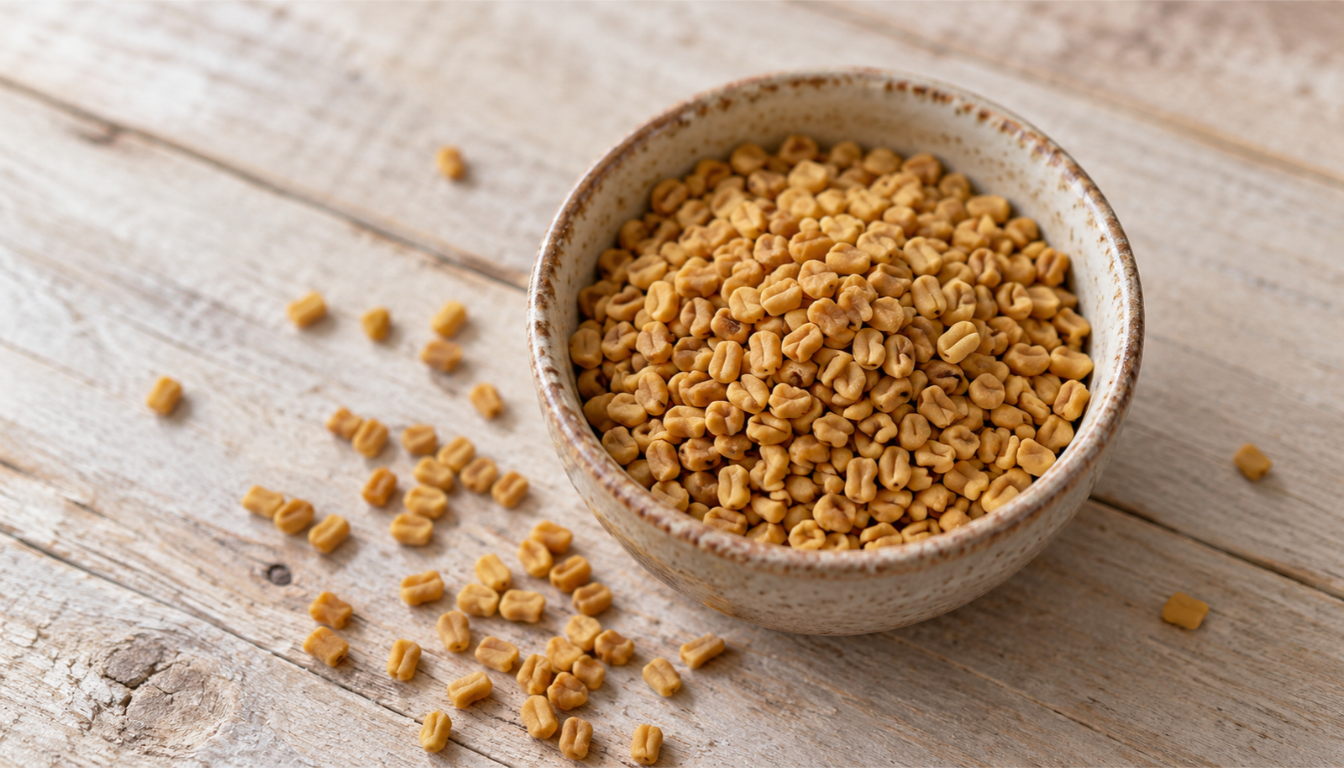
Fenugreek is a clover-like herb in the legume family, with green leaves and small white flowers. It is native to the Mediterranean region, southern Europe and western Asia, and people now use it widely in cooking. Cooks use the small, golden-brown seeds as a spice. They taste slightly bitter and nutty, and many people also notice a sweet, maple-like smell. In fact, the U.S. National Center for Complementary and Integrative Health (NCCIH) notes that the seeds smell and taste like maple syrup, so manufacturers also use them as a flavoring in foods and drinks.
The leaves are eaten too, either fresh or dried. However, this guide focuses on the seeds.
Fenugreek Seeds Benefits: What Does the Research Say?
Overall, the research on fenugreek is limited. Many studies are small, and some are poorly designed. As a result, no health claim about fenugreek is firmly proven. Here is how the evidence looks for the most common uses.
Blood Sugar
NCCIH says fenugreek may help lower blood sugar in people with type 2 diabetes, but many of the studies were not of high quality. In other words, the results are interesting but not strong enough to say fenugreek works. Therefore, fenugreek should never replace diabetes medicine or your doctor’s advice.
Breast Milk Supply
Fenugreek is a well-known traditional remedy for low milk supply. However, the evidence is weak and mixed. The U.S. National Library of Medicine’s LactMed database notes that meta-analyses disagree, and that many studies were small or lacked a true placebo. It also notes that the effect may be mostly psychological in humans. In addition, LactMed advises that products meant to boost milk supply should never replace a review of the other factors that affect milk production. If you are worried about your supply, talk to a lactation consultant or your doctor.
Other Traditional Uses
Fenugreek has also been used traditionally for menstrual cramps, menopause symptoms and kidney stones. NCCIH describes the evidence on menstrual cramps as low quality, with uncertain effects. According to NCCIH, the evidence for most of these uses is too limited to draw conclusions. Likewise, claims that fenugreek lowers cholesterol, reduces inflammation, prevents cancer or helps weight loss are not backed by strong evidence, so this guide does not make them.
How to Use Fenugreek Seeds in Cooking
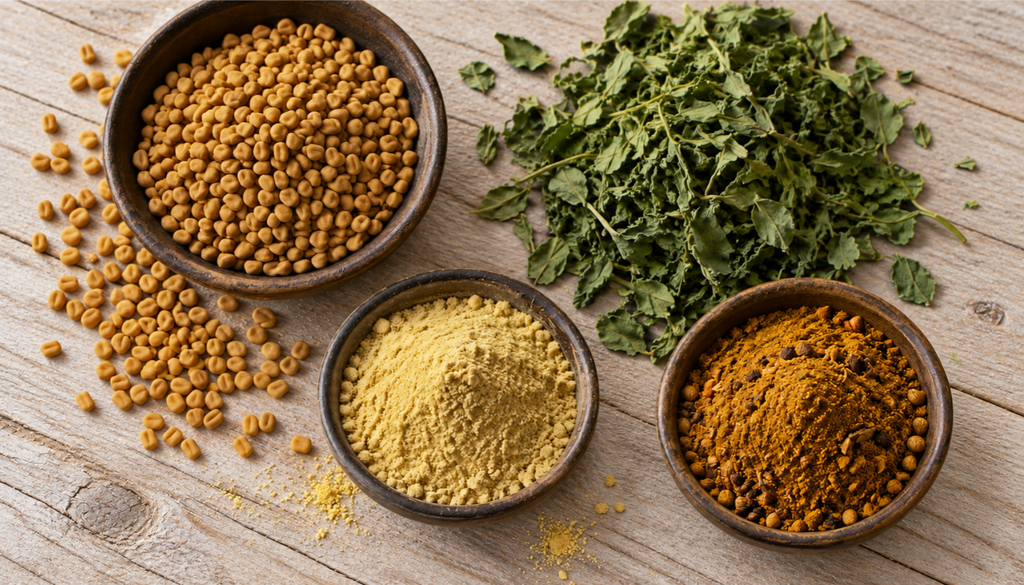
In the kitchen, fenugreek works as a spice in small amounts. Because the flavor is bitter, a little goes a long way.
- Toast lightly. Dry-roast the seeds in a pan for a short time, until they smell fragrant. Burnt seeds turn very bitter, so watch them closely.
- Grind or crush. Add the powder to curries, spice blends, soups and stews.
- Soak first. Soaking the seeds in water before cooking is a common way to soften them and take the edge off the bitterness.
- Try the leaves. Fresh or dried fenugreek leaves add a savory, slightly bitter flavor to curries, flatbreads and vegetable dishes.
Store whole seeds in an airtight container in a cool, dark, dry place. Ground fenugreek loses flavor faster than whole seeds, so buy small amounts.
Fenugreek Supplements
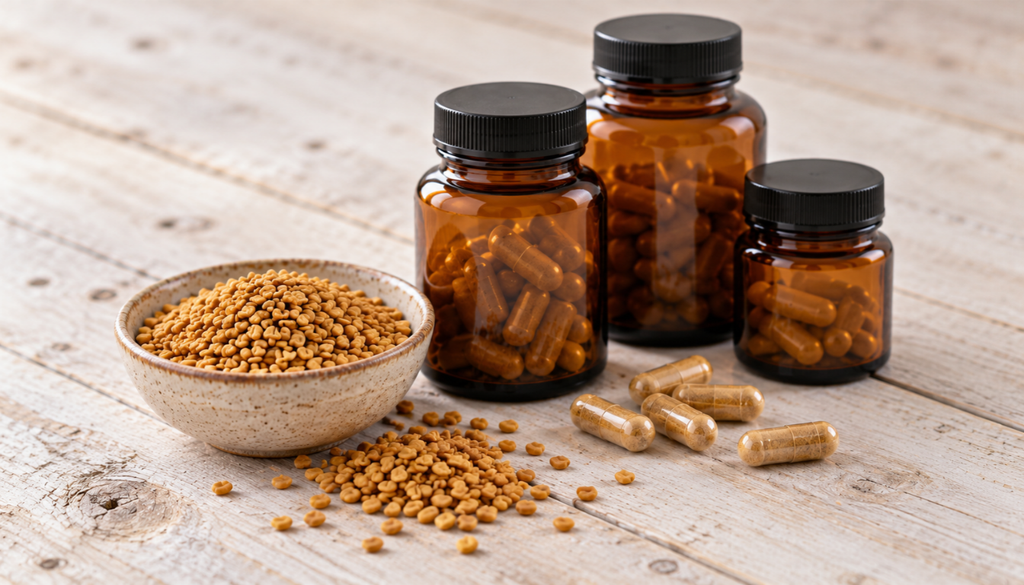
Companies also sell fenugreek as capsules, powders and extracts. Supplement strengths vary a lot between brands, and the label is your best guide. Because fenugreek can interact with medicine and is not suitable for everyone, speak to your doctor or pharmacist before taking it. This is especially important if you have diabetes, take a blood thinner, or are pregnant or breastfeeding.
Safety and Side Effects
The U.S. FDA classes fenugreek as generally recognized as safe as a flavoring, according to LactMed. NCCIH states that fenugreek appears safe for adults and children in the amounts commonly found in foods. However, supplements and larger amounts are a different matter.
- Digestive upset. Diarrhea, nausea and other stomach symptoms can occur. LactMed also lists gas and vomiting.
- Low blood sugar. NCCIH says large doses may cause a harmful drop in blood sugar. Therefore, take extra care if you use diabetes medicine.
- Pregnancy. NCCIH says fenugreek is not safe in pregnancy in amounts greater than those found in food, and that its use has been linked to birth defects.
- Breastfeeding: NCCIH says little is known about whether it is safe to use fenugreek in amounts greater than those found in food while breastfeeding.
- Allergy. Fenugreek can cause allergic reactions, including serious ones. LactMed notes that cross-reaction with chickpeas, peanuts and other legumes is possible, so ask your doctor first if you have a legume allergy.
- Blood thinners. LactMed notes that fenugreek can interact with warfarin and increase the risk of bleeding.
- Liver problems. LactMed notes that liver toxicity has been reported with fenugreek, both alone and in herbal mixtures. If you have liver disease, speak to your doctor first.
- Maple-syrup smell. Fenugreek can give urine, sweat and feces a maple-syrup odor. This is a known effect and is not usually a sign of illness, but tell your doctor if you are unsure.
Stop taking fenugreek and seek medical help if you develop a rash, trouble breathing, swelling or other signs of an allergic reaction.
Before You Go – Fenugreek Seeds Benefits
Fenugreek seeds are a flavorful spice with a long history of traditional use. The health research is still limited, so enjoy them in food and treat supplements with caution. If you take medicine, have a medical condition or are pregnant or breastfeeding, speak to a healthcare professional first.
Sources – Fenugreek Seeds Benefits
- National Center for Complementary and Integrative Health (NCCIH). Fenugreek.
- National Library of Medicine. Fenugreek, Drugs and Lactation Database (LactMed).
Related Article
Herb Rosemary Potatoes: How to Make the Perfect Dish
Frequently Asked Questions – Fenugreek Seeds Benefits
What are the main fenugreek seeds benefits?
Fenugreek is mainly valued as a flavorful spice. Researchers have studied it for blood sugar and breast milk supply, but the evidence is limited and mixed.
Can fenugreek lower blood sugar?
Some small studies suggest it might, but many were not high quality, according to NCCIH. It should not replace diabetes treatment.
Does fenugreek increase breast milk?
The evidence is mixed. LactMed notes that results differ between studies and that the effect may be mostly psychological. Speak to a lactation consultant or doctor if you are concerned about your supply.
Is fenugreek safe to eat every day?
In the small amounts used in cooking, it is believed to be safe for most adults. For supplements or larger amounts, check with your doctor first.
Is fenugreek safe during pregnancy?
NCCIH says it is not safe in pregnancy in amounts greater than those found in food. Pregnant women should avoid fenugreek supplements.
Who should avoid fenugreek?
People who are pregnant, have a legume allergy, take warfarin or diabetes medicine, or have liver disease should speak to a doctor before using it beyond normal cooking amounts.
Why does fenugreek smell like maple syrup?
The seeds contain a compound called sotolon that gives them a maple-like aroma. It can also be noticeable in sweat and urine.