
The Herb Prof Team researches and writes our herbal guides, drawing on published research, traditional herbal references, and hands-on growing experience.
Growing spearmint indoors is nearly identical to growing any other mint variety, spearmint and peppermint are the two most common choices. For container size, watering, light, propagation, and troubleshooting, see our complete guide to growing mint indoors. This page covers the few things worth knowing that are specific to spearmint.
Quick Ways to Identify Spearmint
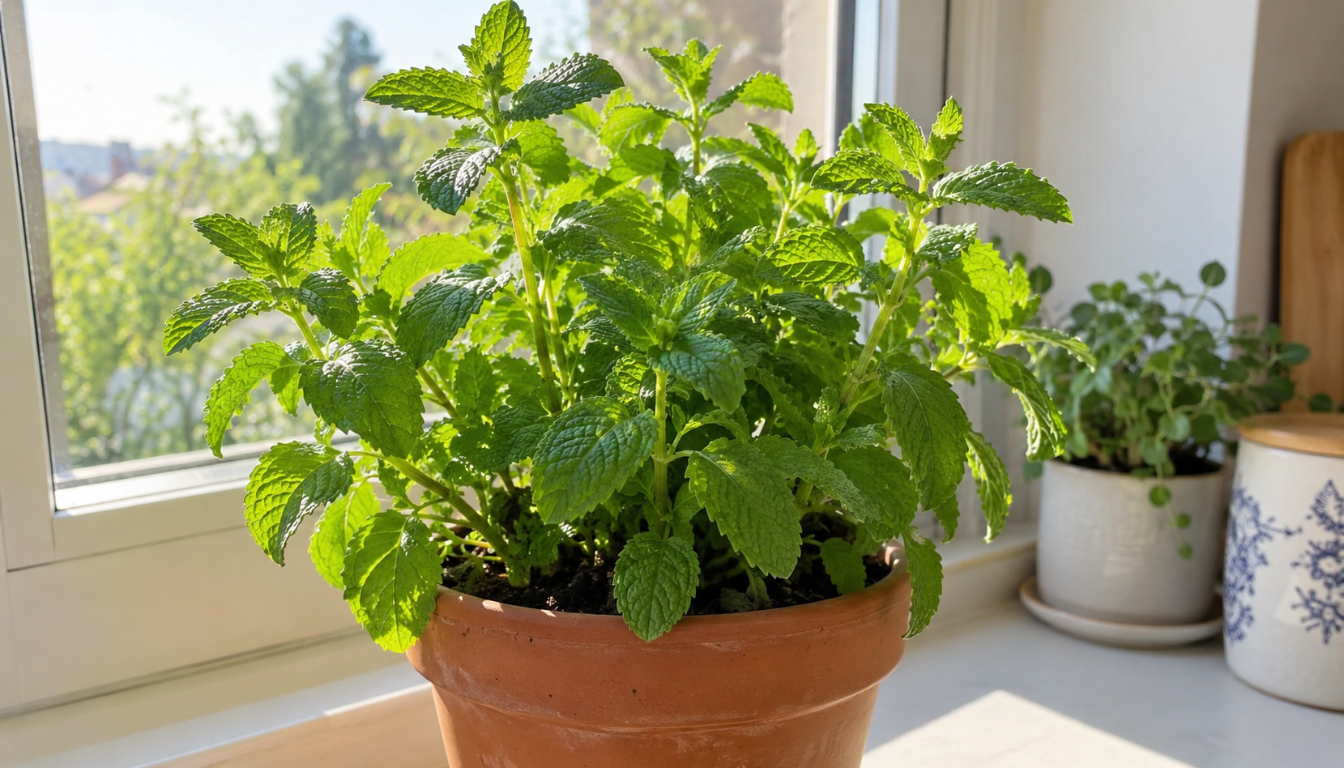
If you’re not sure which mint you have, spearmint typically shows green stems and lighter green leaves, compared to peppermint’s often purplish-tinted stems and darker foliage. Spearmint also grows readily from seed, since it’s a true, genetically stable species, while peppermint is a sterile hybrid that must be started from cuttings or division. For a full breakdown of flavor chemistry, growing differences, and best uses for each, see our dedicated spearmint vs peppermint comparison guide.
Growing Spearmint from Seed
Since spearmint is one of the few mint varieties that grows reliably from seed, it’s worth knowing: seeds typically germinate within about two weeks. If you’d rather start from a cutting instead, our propagating mint guide covers that process in full. Spearmint also tends to tolerate heat and drier soil a bit better than other mint varieties, making it a forgiving choice for less consistent indoor conditions.
Best Culinary Uses for Spearmint
Spearmint’s flavor is sweet and warm rather than sharply cooling, which makes it a natural fit for:
- Savory dishes, salads, and sauces
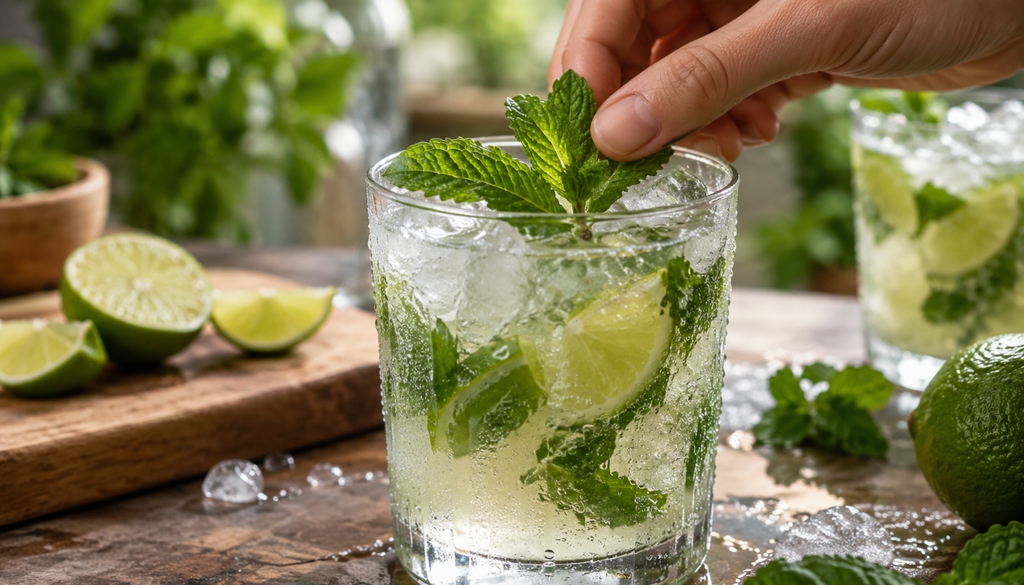
- Mojitos and other cocktails
- Middle Eastern dishes like tabbouleh
- Spearmint tea
Harvesting
Follow the same general harvesting approach covered in our full growing guide, snip stems just above a leaf node rather than pulling leaves individually. Spearmint’s essential oils are most concentrated in the morning. If you’re harvesting for tea or cooking where the flavor matters most, an early harvest gives you the strongest result.
Before You Go – Growing Spearmint Indoors
Growing spearmint indoors takes the same basic care as any mint. The main things worth knowing specifically about spearmint are that it grows readily from seed and tends to handle heat and inconsistent watering a bit better than other varieties. For the full growing guide, propagating instructions, and troubleshooting, see our complete guide to growing mint indoors and our propagating mint from cuttings guide.
References – Growing Spearmint Indoors
Little Herb Encyclopedia, by Jack Ritchason; N.D., Woodland Publishing Incorporated, 1995
The Ultimate Healing System, Course Manual, Copyright 1985, Don Lepore
Planetary Herbology, Michael Tierra, C.A., N.D., Lotus Press, 1988
Handbook of Medicinal Herbs, by James A. Duke, Pub. CRP Second Edition 2007
The Complete Medicinal Herbal, by Penelope Ody, Published by Dorling Kindersley
Related Articles
Pros and Cons of Salvia: A Comprehensive Overview
Propagating Mint from Cuttings: A Complete Guide
How to Grow Mint Indoors: The Complete Guide
Frequently Asked Questions – Growing Spearmint Indoors
Can I grow spearmint from seeds?
Yes, spearmint is one of the few mint varieties that grows reliably from seed, since it’s a true, genetically stable species. Seeds typically germinate within about two weeks. Peppermint, by contrast, is a sterile hybrid and can only be grown from cuttings or division.
How do I know if I have spearmint or another mint variety?
Spearmint typically has green stems and lighter green leaves. Crushing a leaf helps too, spearmint has a sweet, warm scent, quite different from peppermint’s sharp, cooling one. For a full comparison of flavor, chemistry, and uses, see our spearmint vs peppermint guide.
Is spearmint easier to grow than other mint varieties?
Spearmint tends to tolerate heat and drier soil a bit better than some other mint varieties, making it a forgiving choice if your indoor conditions aren’t perfectly consistent. Otherwise, its day-to-day care follows the same basics as any mint.
What’s the best use for spearmint in the kitchen?
Its sweet, warm flavor suits savory cooking, mojitos, and dishes like tabbouleh well. For a full breakdown of spearmint’s best uses versus peppermint’s, see our comparison guide.