
The Herb Prof Team researches and writes our herbal guides, drawing on published research, traditional herbal references, and hands-on growing experience.
Peppermint tincture is a fast-acting, well-studied natural remedy for tension headaches, and one of the simplest to make at home. The active compound menthol, extracted from fresh peppermint leaves into high-proof alcohol, delivers targeted cooling and analgesic relief when applied topically to the temples and forehead. This guide covers the clinical evidence, the exact recipe, dosage, application methods, and safety notes so you can make and use peppermint tincture with confidence.
What is Peppermint Tincture?
A tincture is a concentrated herbal extract made by steeping plant material in alcohol. The alcohol acts as a solvent, drawing out the fat-soluble and water-soluble active compounds from the herb, in peppermint’s case, primarily menthol, menthone, and methyl acetate, into a stable, potent liquid that can be stored for months and used in small amounts.
Peppermint tincture differs from peppermint essential oil in an important way. Essential oil is produced by steam distillation and is extremely concentrated, too concentrated to apply directly to skin without dilution. A tincture is alcohol-based, more moderate in potency, and can be used both topically and, in small doses, taken internally. For headache relief, both topical application and internal use are effective, and this guide covers both.
Why Peppermint Works for Headaches
Menthol is the primary active compound in peppermint (Mentha × piperita), comprising 35–55% of its essential oil. It works for headaches through two distinct mechanisms.
First, menthol activates cold-sensitive TRPM8 receptors in the skin and mucous membranes. This produces the characteristic cooling sensation and simultaneously signals pain-inhibiting pathways in the nervous system, reducing the perception of pain at the site of application. This is a genuine pharmacological effect, not simply a sensory distraction.
Second, menthol acts as a vasodilator and smooth muscle relaxant. Applied to the temples and forehead, it promotes local circulation and reduces the muscular tension that drives tension-type headaches, the most common form of headache. Researchers estimate more than 70% of people experience episodic tension-type headaches at some point.
What the Research Says
The clinical evidence for peppermint and tension headache relief is genuinely solid compared to many herbal remedies. A landmark randomised controlled trial by Göbel et al. (1996), published in Der Nervenarzt, found that topical peppermint oil applied to the forehead and temples was as effective as 1,000mg of paracetamol for tension headache relief, with no significant difference between the two treatments. Subsequent clinical reviews have incorporated this finding into treatment guidelines for tension-type headache.
A comprehensive 2022 review in Frontiers in Molecular Neuroscience (Li et al.) confirmed menthol’s analgesic and muscle-relaxant properties across dozens of preclinical and clinical studies, reinforcing the evidence base for topical peppermint preparations in headache and pain management.
For internal use, peppermint’s antispasmodic effects on smooth muscle also address the nausea and digestive discomfort that frequently accompany severe headaches and migraines, making a peppermint tincture taken internally a useful complementary support alongside topical application.
What You Need
Essential Ingredients
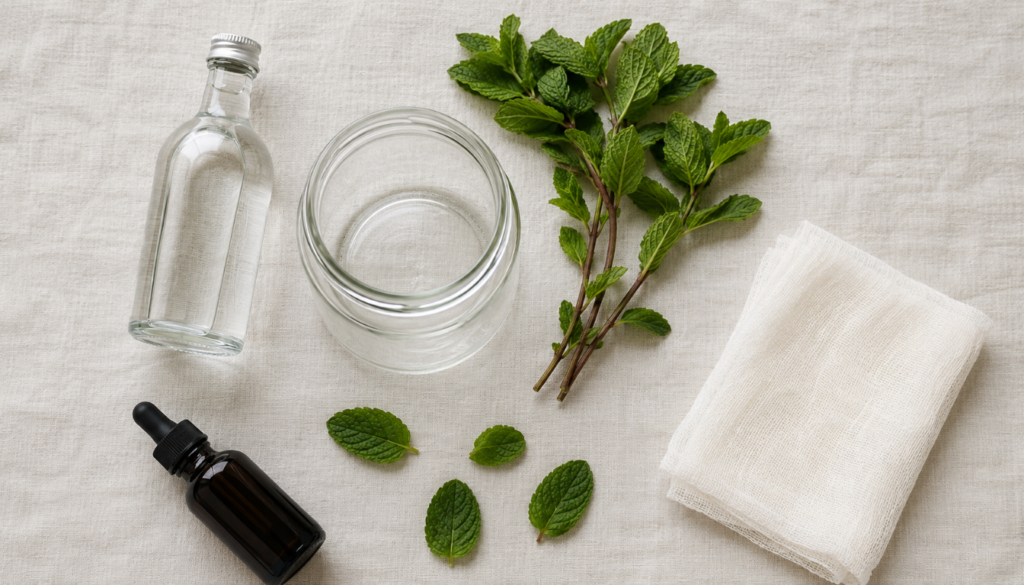
- Fresh peppermint leaves 1 cup, loosely packed. Use Mentha × piperita (peppermint) rather than spearmint for maximum menthol content. Fresh leaves produce a more aromatic tincture; dried leaves can be used if fresh are unavailable, at half the volume (½ cup dried).
- High-proof alcohol 1 cup of 80–100 proof vodka. The alcohol concentration matters: 40–50% alcohol (80–100 proof) extracts both the water-soluble and fat-soluble compounds from peppermint effectively. Avoid lower-proof spirits as they will produce a weaker tincture.
- A sterilised glass jar quart-sized with a tight-fitting lid. Glass is essential; alcohol will leach compounds from plastic over weeks of steeping.
- A dark glass dropper bottle for storing the finished tincture. Dark glass protects the menthol compounds from light degradation.
- A fine mesh strainer or cheesecloth for straining the finished tincture.
Optional Additions
- A teaspoon of dried lavender buds lavender’s linalool compound is genuinely well-studied for anxiolytic effects, with real human clinical trial evidence for lavender oil overall, and more preclinical (animal) evidence specifically isolating linalool’s role, a reasonable pairing with peppermint’s menthol for stress-related headaches
- A teaspoon of dried chamomile flowers adds anti-inflammatory and mild sedative properties, useful if headaches are accompanied by tension or insomnia
- A few drops of lemon essential oil adds a clean citrus note; lemon oil has also shown antimicrobial properties in lab studies
How to Make Peppermint Tincture: Step by Step
Preparation time: 15 minutes
Steeping time: 2–4 weeks
Yield: Approximately 200ml of finished tincture
Step 1: Prepare the peppermint
Wash the fresh peppermint leaves thoroughly under cold water and pat dry. Bruise the leaves lightly by crushing them between your palms or chopping them roughly. This breaks the cell walls and begins releasing the essential oils, producing a significantly more potent tincture.
Step 2: Fill the jar
Place the bruised peppermint leaves into the sterilised glass jar. If using optional additions, add them now. Pour the alcohol over the leaves, ensuring all plant material is fully submerged. Leaving plant material above the alcohol line risks mould growth during steeping.
Step 3: Seal and store
Seal the jar tightly and label it with the date. Store in a cool, dark place, a cupboard away from direct heat or sunlight is ideal. The tincture will steep for 2–4 weeks. Shake the jar gently every 2–3 days to agitate the plant material and encourage extraction.
Step 4: Strain and bottle
After 2–4 weeks, strain the tincture through a fine mesh strainer or cheesecloth into a clean bowl, pressing the plant material firmly to extract all liquid. Pour the finished tincture into dark glass dropper bottles using a small funnel. Label with the date and contents. Stored correctly in a cool, dark place, the tincture will remain potent for 12–24 months.
A note on steeping time: Two weeks produces a good-quality tincture. Four weeks produces a stronger, more concentrated preparation with more pronounced menthol extraction. If this is your first batch, a three-week steep is a reliable middle ground.
How to Use Peppermint Tincture for Headaches
Topical Application: For Tension Headaches
This is the most clinically supported method and produces the fastest results.
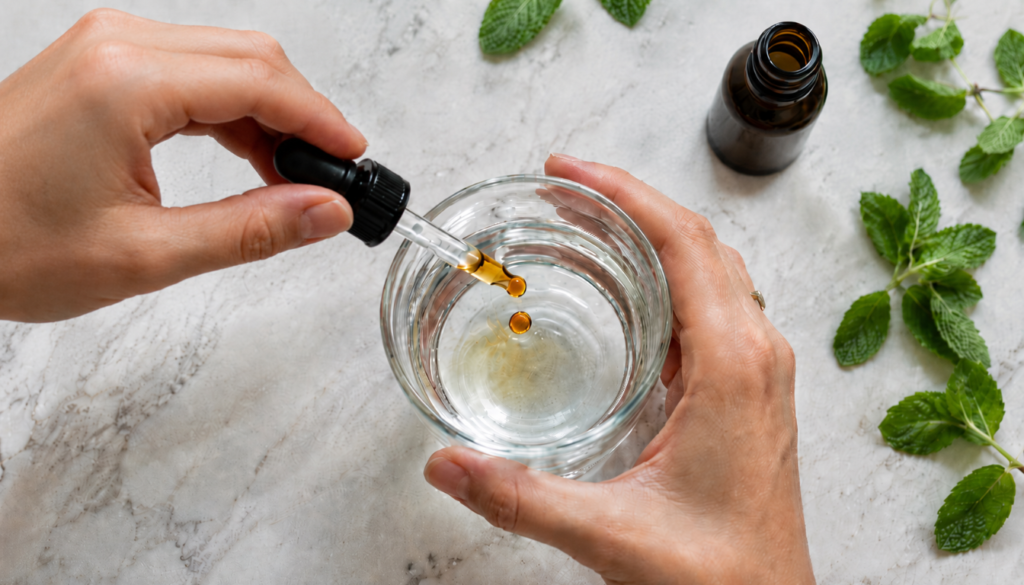
- Dispense 3–5 drops of tincture onto your fingertips
- Dilute with a small amount of carrier oil, coconut, almond, or jojoba work well, if you have sensitive skin
- Apply to the temples, forehead, and the base of the skull at the back of the neck
- Massage gently in circular motions for 60 seconds
- Avoid the eye area as menthol causes significant irritation to eyes and mucous membranes
- If needed, you can reapply at the 15-minute and 30-minute mark after your first application, similar to the protocol used in clinical research
Most people notice the cooling sensation within seconds and meaningful pain relief within 15–20 minutes.
Internal Use: For Headache with Nausea or Digestive Discomfort
For internal use, start with a small amount, a few drops diluted in water or tea, rather than following a fixed dosing schedule, and pay attention to how your body responds. Because this is a concentrated, homemade preparation without standardized dosing, it’s worth discussing internal use with a doctor or qualified herbalist before making it a regular part of your routine, especially if headaches are frequent enough that you’re considering repeated daily use.
Menthol-related breathing risks (apnea, laryngospasm) are specifically documented in infants and very young children, particularly under 2 years old, most often from topical application near the nose or face. As a general precaution, avoid giving this tincture internally to children altogether without first consulting a pediatrician, given the concentrated alcohol base and lack of established dosing for children of any age.
Safety and Precautions
Peppermint tincture is well tolerated by the majority of adults when used as directed. The following precautions apply:
- Do not apply undiluted to broken or sensitive skin as the alcohol base and menthol concentration can cause irritation
- Keep away from eyes and mucous membranes because menthol causes significant irritation on contact
- Do not apply to the face of infants or young children as menthol can trigger respiratory distress
- Avoid internal use if you have acid reflux or GORD. Menthol relaxes the lower oesophageal sphincter and may worsen reflux symptoms
- Internal use may interact with medications metabolised by the liver. Consult your doctor if you take prescription medications regularly
- Avoid high-dose internal use during pregnancy. Topical use in normal amounts is generally considered safe, but consult your midwife before internal use
Storing Your Tincture
Store finished tincture in dark glass dropper bottles, away from direct light and heat. A cool kitchen cupboard or drawer is ideal. Do not refrigerate as the cold can cause compounds to crystallise and the tincture to cloud.
Properly stored, an alcohol-based peppermint tincture remains potent for 12–24 months. Label every bottle with the preparation date and a use-by date so you always know what you are working with.
Before You Go – Peppermint Tincture
Peppermint tincture is a practical, evidence-backed preparation worth having in a home herbal medicine cabinet. The topical application method in particular, menthol directly on the temples and forehead, has clinical trial support that rivals pharmaceutical pain relief for tension headaches, without the side effects or cost.
For a broader comparison of how peppermint works versus spearmint across all health applications, our Spearmint vs Peppermint: Choosing the Best Mint for You guide covers the full clinical picture of both mints. For peppermint as a daily tea preparation, our Peppermint Tea: Benefits, Uses and How to Make It article covers the tea-based approach in detail.
Sources
- Göbel, H., Fresenius, J., Heinze, A., Dworschak, M., and Soyka, D. “Effectiveness of Oleum menthae piperitae and paracetamol in therapy of headache of the tension type.” Der Nervenarzt, 1996: https://pubmed.ncbi.nlm.nih.gov/8805113/
- Li, Z., Zhang, H., Wang, Y., et al. “The distinctive role of menthol in pain and analgesia: Mechanisms, practices, and advances.” Frontiers in Molecular Neuroscience, 2022: https://pmc.ncbi.nlm.nih.gov/articles/PMC9580369/
- National Headache Foundation, “Tension-Type Headache,” citing Cleveland Clinic: https://headaches.org/resources/tension-type-headache/
- Manzoor, S., Rakha, A., et al. “A Comprehensive Review on Anxiolytic Effect of Lavandula Angustifolia Mill. in Clinical Studies.” Food Science & Nutrition, 2025: https://pmc.ncbi.nlm.nih.gov/articles/PMC12454915/
- National Association for Holistic Aromatherapy, “Peppermint Safety Info”: https://naha.org/naha-blog/peppermint-safety-info/
- “Essential oils in the treatment of respiratory tract diseases…” PMC review: https://pmc.ncbi.nlm.nih.gov/articles/PMC7163989/
References – Peppermint Tincture
Little Herb Encyclopedia, by Jack Ritchason; N.D., Woodland Publishing Incorporated, 1995
The Ultimate Healing System, Course Manual, Copyright 1985, Don Lepore
Planetary Herbology, Michael Tierra, C.A., N.D., Lotus Press, 1988
Handbook of Medicinal Herbs, by James A. Duke, Pub. CRP Second Edition 2007
The Complete Medicinal Herbal, by Penelope Ody, Published by Dorling Kindersley
Related Articles
How to Make DIY Garlic Spray for Garden Pest Prevention
How to Store and Label Homemade Tinctures for Freshness
Elderberry Syrup Recipe: Natural Cold and Flu Defence
Easy Elderflower Tincture Recipe for Respiratory Wellness
Frequently Asked Questions – Peppermint Tincture
What is the difference between peppermint tincture and peppermint essential oil?
Peppermint essential oil is produced by steam distillation and is extremely concentrated and must always be diluted before skin contact. A peppermint tincture is alcohol-based, more moderate in potency, and can be used both topically and internally in small doses. For headache relief, both are effective topically, but tincture is safer for internal use and easier to make at home.
How long does it take for peppermint tincture to work on a headache?
Topical application typically produces a noticeable cooling sensation within seconds and meaningful pain relief within 15–20 minutes. Internal use for accompanying nausea or digestive discomfort typically takes some time to produce an effect, generally longer than the near-immediate cooling sensation from topical use.
Can I use dried peppermint leaves instead of fresh?
Yes. Use half the volume of dried leaves compared to fresh, approximately half a cup of dried peppermint to one cup of alcohol. Dried leaves produce a slightly less aromatic tincture but are equally effective for menthol extraction.
How strong should the alcohol be for a peppermint tincture?
80–100 proof (40–50% alcohol) vodka is ideal. This concentration extracts both the water-soluble and fat-soluble active compounds from peppermint effectively. Lower-proof spirits produce a weaker tincture; higher-proof spirits (such as Everclear) are unnecessary for peppermint and may produce an overly harsh preparation.
How long does homemade peppermint tincture last?
Stored in a dark glass bottle away from heat and direct light, a properly made alcohol-based peppermint tincture remains potent for 12–24 months. Always label with a preparation date and check for any changes in smell or colour before use after long storage.
Can peppermint tincture help with migraines as well as tension headaches?
The clinical evidence is strongest for tension headaches. For migraines, peppermint tincture applied topically may help with the associated pain and nausea, but migraines have a different neurological mechanism and may require additional or pharmaceutical treatment. Always consult a healthcare provider if you experience frequent or severe migraines.
Is peppermint tincture safe to take every day?
Topical use daily is generally safe for most adults. For internal use, occasional or short-term use is generally well tolerated by healthy adults, but regular daily internal use should be discussed with a healthcare provider first, particularly if you take prescription medications or have digestive conditions such as GORD or acid reflux.