
The Herb Prof Team researches and writes our herbal guides, drawing on published research, traditional herbal references, and hands-on growing experience.
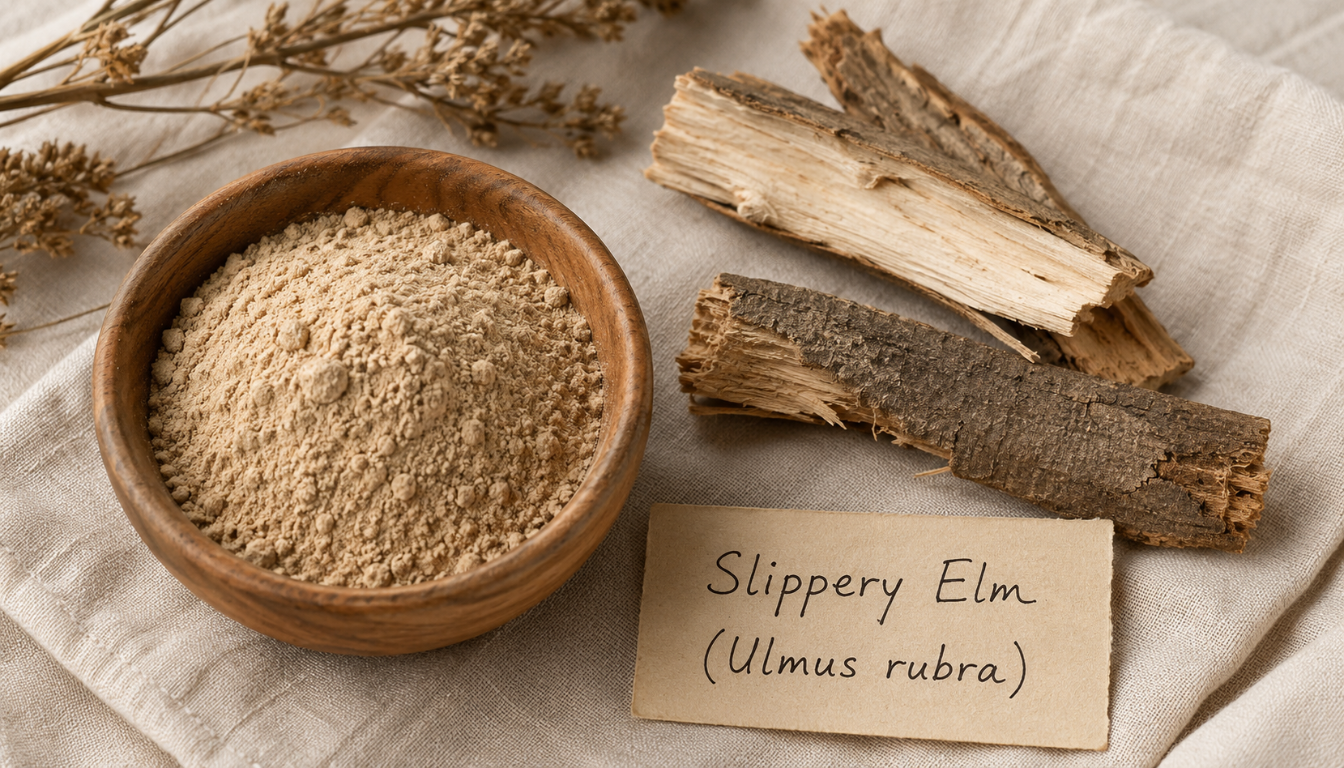
Slippery elm comes from the inner bark of the Ulmus rubra tree and has been valued for centuries as a soothing, protective herbal remedy. When mixed with water, its mucilage forms a soft, gel‑like coating that can calm irritated tissues in the throat, digestive tract and beyond.
Traditional healers and modern herbalists alike turn to slippery elm for sore throats, digestive complaints and other situations where the mucous membranes need gentle support. While modern clinical trials are limited, there is a long record of use and early evidence that support its demulcent, “coating” effect.
In this guide, we’ll look at what slippery elm is, how it works, where it shines (and where it does not), safe ways to use it, and when to be cautious.
What Is Slippery Elm and How Does It Work?
Slippery elm is a medium‑sized elm native to North America, known botanically as Ulmus rubra. Herbalists use the inner bark, which is rich in mucilage – long, complex polysaccharides that swell in water and form a soothing, slippery gel.
When you take slippery elm as a tea, gruel, lozenge or powder:
- The mucilage coats the mouth, throat, oesophagus and digestive tract, creating a temporary protective film over irritated tissue.
- This coating can reduce the feeling of scratchiness, burning or rawness, especially in sore throat and reflux‑type symptoms.
- The fibre content may also add gentle bulk in the gut, helping to normalise bowel movements while absorbing some toxins.
Modern references describe slippery elm as a demulcent (soothing mucous membranes), a mild emollient (softening and protective), and a vulnerary (supporting the surface while it heals). These effects are soothing and supportive, but they do not replace diagnosis or treatment for serious conditions.
Soothing Throat and Cough
One of the best‑known uses of slippery elm is for sore throat, dry cough, and irritation high in the chest.
How it may help
- The mucilage creates a protective layer over an inflamed throat, which may reduce pain and the urge to cough.
- The coating effect can last for a short period after each dose, so regular use through the day is often recommended in traditional practice.
Conventional references note that slippery elm lozenges and teas are widely used for throat irritation, even though large modern trials are still lacking.
Ways to use it for throat support
Common traditional ways of using slippery elm for the throat include:
- Lozenges: Sucked slowly as needed for soreness or hoarseness.
- Tea or infusion:
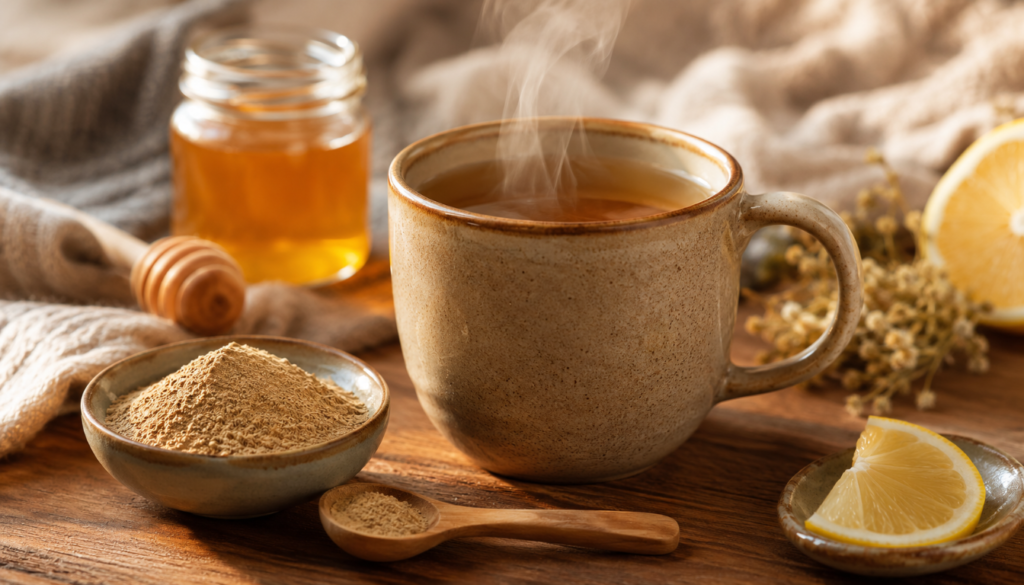
- 1 tablespoon of powdered inner bark in about 240 ml of hot (not boiling) water, steeped for several minutes, up to three times per day.
- Thick “gruel”:
- Powder mixed with warm water to a porridge‑like texture, sometimes flavoured with cinnamon or honey, sipped slowly to coat the throat and upper chest.
Slippery elm does not treat infections on its own. It is best viewed as a soothing ally alongside rest, hydration, and, when needed, appropriate medical care.
Support for Digestion and Acid Reflux
Slippery elm has a long traditional history in digestive support, particularly where there is irritation, burning, or sensitivity in the gut.
People use it as a gentle demulcent for:
- Acid reflux and heartburn
- Gastric irritation and ulcers
- Irritable bowel syndrome (IBS) and inflammatory bowel conditions
- Diarrhoea or constipation with irritated mucosa
What the evidence says
Modern reviews note that:
- Slippery elm may form a soothing barrier in the oesophagus and stomach, which could reduce the burning sensation in acid reflux.
- There is some preliminary evidence and many anecdotal reports for digestive comfort, but large, high‑quality clinical trials are still limited.
So, it is best thought of as a supportive, symptom‑relieving herb, not a proven cure for underlying conditions.
Traditional digestive uses
Herbal references suggest several practical forms:
- Tea
- 1 tablespoon of powdered inner bark per 240 ml hot water, steeped for 3–5 minutes.
- Often taken up to three times per day during flare‑ups.
- Gruel / “elm food”
- Powder mixed with warm water to a porridge consistency, sometimes with a little honey or spice.
- Traditionally used in small, frequent servings for people with weak digestion, gastritis or recovery after illness.
- Capsules or blends
- Some modern gut formulas combine slippery elm with other demulcents such as marshmallow root, or with fibres like psyllium.
Example capsule product: Many people use capsule forms such as Nature’s Way Slippery Elm Bark for convenience, following the label directions and taking it at a different time from prescription medicines.
If you have ongoing digestive pain, unexplained weight loss, difficulty swallowing, or blood in the stool, you should seek medical evaluation before relying on herbal remedies.
Skin, Poultices and Topical Use
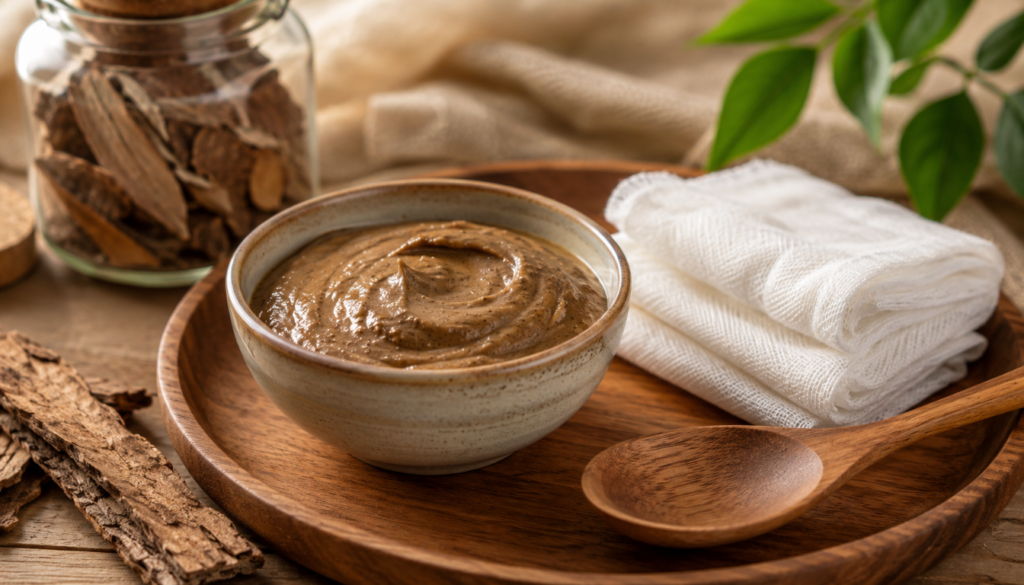
Externally, the moist inner bark has been used as a base for poultices and topical preparations for irritated or damaged skin.
- Soothing minor burns and scalds
- Covering boils, ulcers, inflamed or infected wounds
- Supporting healing of bedsores or slow‑healing skin problems
Usually the powdered inner bark is mixed with a little warm water to make a paste, applied on clean skin, and covered with clean cloth. Modern practice emphasises:
- Gentle cleansing first
- Watching for any sign of infection that needs medical care
- Avoiding use on deep, serious or unexplained wounds without professional guidance
For many people, internal use (throat and digestion) is more practical than routine external poulticing in everyday life.
How to Take Slippery Elm: Forms and Typical Amounts
Slippery elm is available in several forms: powdered bark, capsules, lozenges, teas and sometimes liquid extracts.
Typical traditional ranges (for adults) from herbal references include:
- Powdered inner bark (tea or gruel)
- About 1–4 g (roughly ½–1½ teaspoons) up to 3 times daily.
- Tea
- 1 tablespoon powdered bark in 240 ml hot water, steep 3–5 minutes, up to 3 cups per day.
- Lozenges
- Used as needed for throat irritation, following the manufacturer’s instructions.
These are general traditional ranges and not personalised medical advice. It is usually best to start low and go slowly, especially if you have a sensitive digestive system.
For children, during pregnancy, for long‑term daily use, or together with prescription medicines, it is wise to work with a practitioner familiar with herbs and your health history.
Safety, Side Effects and Interactions
Slippery elm’s inner bark is widely regarded as gentle and generally well tolerated when used in traditional amounts. However, there are some important points to keep in mind.
Possible side effects
Most references describe side effects as uncommon and usually mild:
- Occasional digestive upset or a feeling of fullness
- Rare allergic reactions in sensitive individuals
If you notice worsening symptoms, breathing difficulty, hives, or persistent discomfort, stop and seek professional advice.
Interactions and timing with medications
Because slippery elm’s mucilage can coat the gut, it may slow or reduce absorption of some medicines if taken at the same time.
To reduce this risk, many sources recommend:
- Taking slippery elm and prescription drugs at separate times, for example leaving at least 1–2 hours between them.
If you are on essential medications (for blood pressure, heart disease, seizures, etc.), check with your prescriber or a knowledgeable practitioner before regular use.
Pregnancy and breastfeeding
Safety data in pregnancy and breastfeeding are limited, and historical concerns have been raised about use of whole bark preparations. Modern sources often advise avoiding slippery elm in pregnancy and breastfeeding unless supervised by a professional who understands both your situation and the herb.
When Slippery Elm May Be Helpful – And When to See a Doctor
Slippery elm can be a useful ally when you want gentle, local soothing of irritated mucous membranes in the throat or digestive tract.
It may be reasonable to consider (with appropriate guidance) when you are dealing with:
- Mild, short‑term sore throat or hoarseness
- Occasional heartburn, reflux discomfort or “acid” feeling
- Sensitive digestion, IBS‑type symptoms or gut irritation
- Recovery after illness, when very soft, easy‑to‑digest foods are needed
However, you should seek medical attention promptly if you experience:
- High fever, difficulty breathing, or severe throat pain
- Trouble swallowing, drooling, or chest pain
- Unexplained weight loss, persistent vomiting, or black/bloody stools
- Severe abdominal pain or long‑lasting digestive changes
In these situations, slippery elm is not enough on its own and may delay diagnosis if used as the only response.
Integrating Slippery Elm into a Herbal Approach
For many people, slippery elm works best as one part of a broader, gentle strategy:
- Pairing it with other demulcent herbs such as marshmallow root or licorice (where appropriate).
- Supporting digestion with a balanced, simple diet, adequate hydration, and mindful eating.
- Using it alongside, not instead of, any essential medical treatments.
Used with respect and understanding, slippery elm can offer real comfort for irritated throats and sensitive digestion, while you address the deeper causes of your symptoms with appropriate professional help.
Before You Go – Slippery Elm
Slippery elm is a gentle, mucilage‑rich herb that can help soothe sore throats and calm irritated digestion, especially when you use it as tea, thick “elm food”, or lozenges alongside rest, hydration and a simple diet. Many people find it most helpful when they use it consistently for a short period, take it away from essential medications, and combine it with a generally supportive lifestyle.
If you’re curious about the tree itself and how it differs from its close relative, take a look at American Elm vs Slippery Elm: Characteristics Comparison.
References – Slippery Elm
Little Herb Encyclopedia, by Jack Ritchason; N.D., Woodland Publishing Incorporated, 1995
The Ultimate Healing System, Course Manual, Copyright 1985, Don Lepore
Planetary Herbology, Michael Tierra, C.A., N.D., Lotus Press, 1988
Handbook of Medicinal Herbs, by James A. Duke, Pub. CRP Second Edition 2007
The Complete Medicinal Herbal, by Penelope Ody, Published by Dorling Kindersley
Related Articles
Top 3 Herbal Supplements for Improved Digestive Health
American Elm vs Slippery Elm: Characteristics Comparison
Frequently Asked Questions – Slippery Elm
What is slippery elm used for most often?
Slippery elm is most commonly used to soothe sore throats, calm acid reflux and heartburn, support irritated digestion and IBS‑type symptoms, and provide a protective coating to sensitive mucous membranes.
How do you take slippery elm for sore throat?
Many people use slippery elm as lozenges sucked slowly, or as a tea or thick gruel made from the powdered inner bark, taken several times per day to keep the throat coated and comfortable for short periods.
Can slippery elm help with acid reflux or GERD?
Slippery elm may help ease the burning sensation of reflux by forming a soothing barrier in the oesophagus and stomach, but evidence is still limited and it should be seen as a supportive measure, not a stand‑alone treatment for GERD.
What is a typical amount of slippery elm to use?
Herbal references often suggest around 1–4 g of powdered inner bark up to three times daily, or about 1 tablespoon of powder per 240 ml of hot water for tea or gruel, always adjusted to the individual and not as a personal prescription.
Are there any side effects or interactions to watch for?
Slippery elm is generally well tolerated, but its mucilage can interfere with absorption of medicines if taken at the same time, so it is usually spaced at least 1–2 hours away from prescription drugs; rare allergic reactions and mild digestive upset are also reported.
Is slippery elm safe in pregnancy or while breastfeeding?
Because safety data are limited and there have been historical concerns with some bark preparations, most modern sources advise avoiding slippery elm in pregnancy and breastfeeding unless you are under the care of a practitioner who knows your full medical history.
How long can I use slippery elm for?
Short‑term use during a flare of throat or digestive irritation is common, but for longer‑term daily use it is best to work with a knowledgeable practitioner, especially if you take medications or have chronic health conditions.