
The Herb Prof Team researches and writes our herbal guides, drawing on published research, traditional herbal references, and hands-on growing experience.
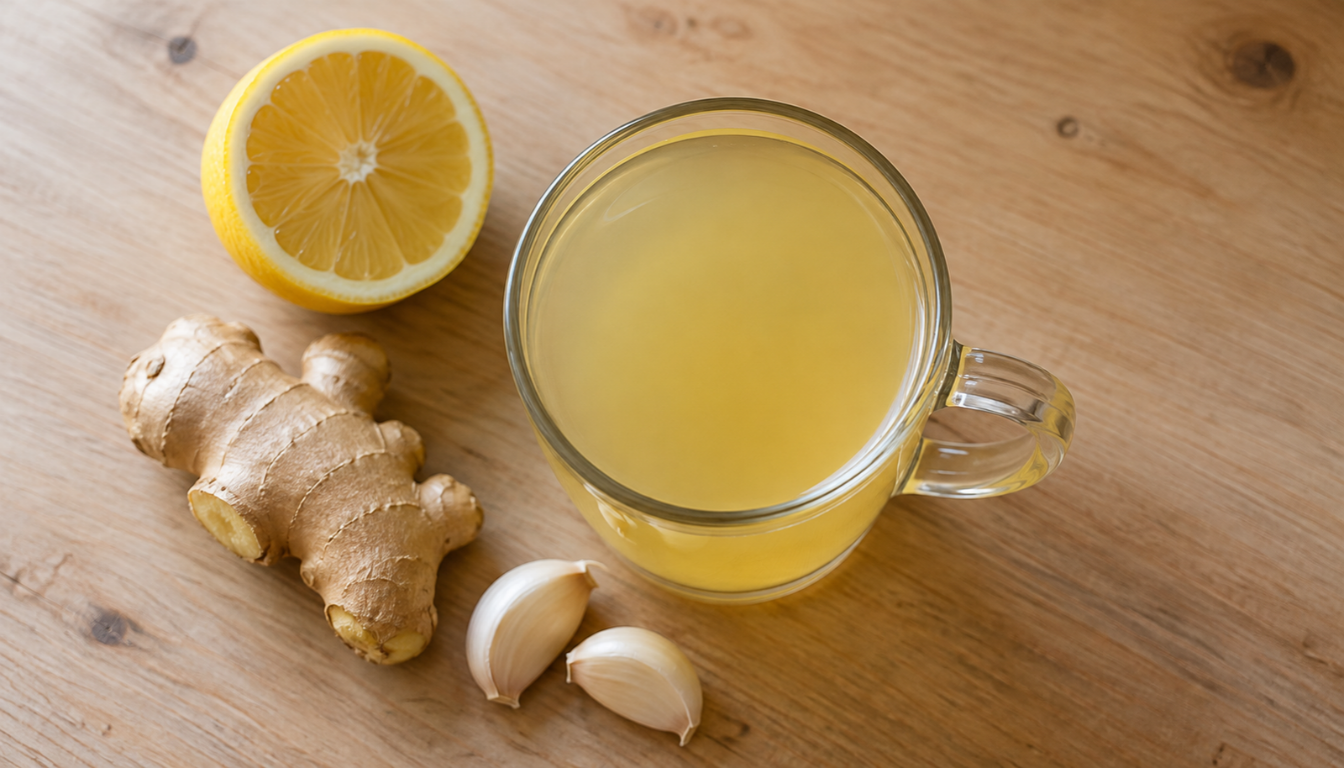
A garlic, ginger and lemon drink is a sharp, warming mix that many people sip in the morning or when they want something comforting. This guide gives you a simple recipe, a boiled tea version, easy variations, and a clear look at what the drink can and can’t do.
This article is for general information only. It is not medical advice, and this drink is not a treatment for any condition.
What Is a Garlic, Ginger and Lemon Drink?
It is fresh lemon juice, grated ginger and crushed garlic in warm water. As a result, the flavour is bright, spicy and savoury, and most people sweeten it a little. Each ingredient has a long history in home cooking and traditional remedies, but the drink itself has not been proven to prevent or treat illness.
Choosing and Preparing the Ingredients
Fresh ingredients give the best flavour.
- Lemon. Pick a firm lemon that feels heavy for its size. Roll it on the counter before cutting to get more juice and then remove the seeds.
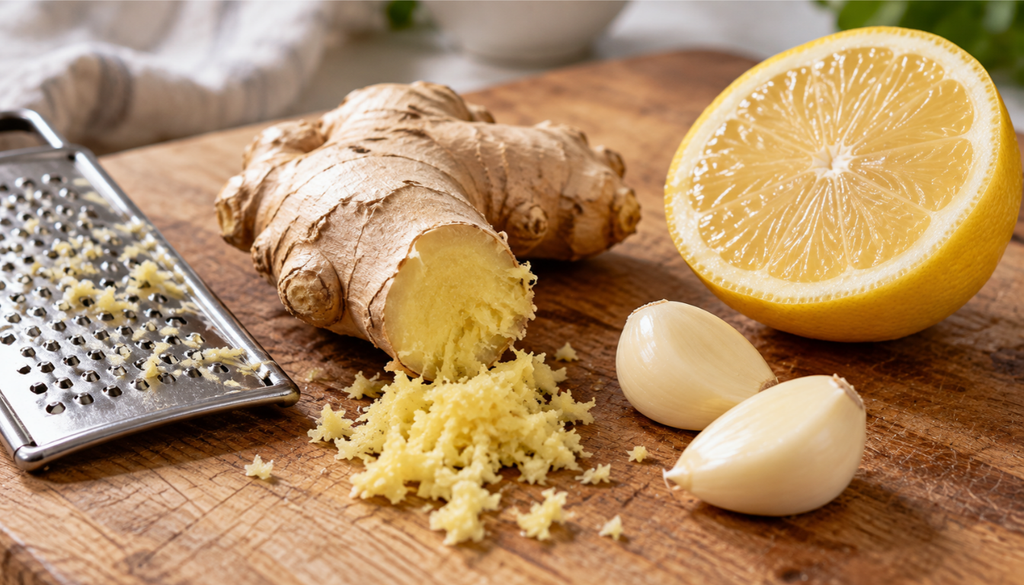
- Ginger. Choose a firm root with smooth skin. You can leave the skin on if the root is clean, or scrape it off with a spoon. Grate it finely so it blends into the water.
- Garlic. Use a fresh, firm bulb. Crush or finely chop the clove and let it rest for about ten minutes before using it.
- Water. Warm, not boiling. Very hot water can make the lemon taste bitter , so let the kettle cool for a minute.
Basic Recipe for Garlic, Ginger and Lemon
Ingredients (1 serving)
- 1 cup (240 ml) warm water, not boiling
- Juice of half a lemon
- ½ teaspoon freshly grated ginger
- 1 small garlic clove, crushed
- Honey, to taste (optional)
Method
- Crush the garlic and let it sit for about ten minutes. This gives the flavour compounds time to develop.
- Add the grated ginger and crushed garlic to a mug.
- Pour in the warm water and stir.
- Add the lemon juice and honey, if using. Stir again and drink while warm.
Start with one small clove. Raw garlic is strong, and too much can upset the stomach.
Boiled Garlic, Ginger and Lemon Tea
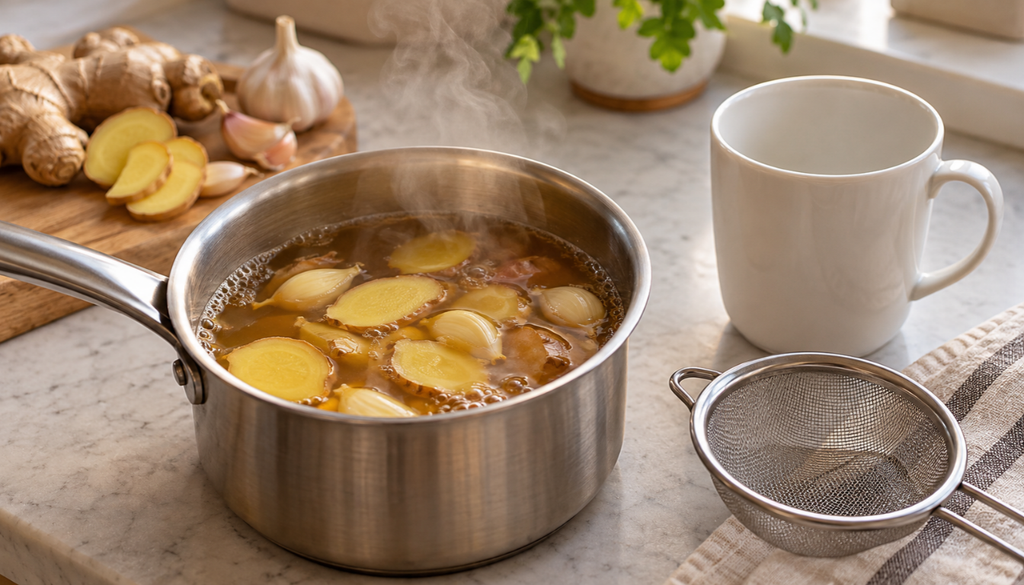
A simmered version is milder, so it is easier to drink for many people.
- Roughly chop 2 garlic cloves and a thumb-sized piece (about 1 inch) of ginger.
- Add them to 2 cups (480 ml) of water and bring to a boil.
- Reduce the heat and simmer for about 10 minutes.
- Strain into a mug and add the juice of half a lemon once it has cooled slightly.
Variations
- Honey. One or two teaspoons softens the sharpness. However, do not give honey to children under one year old.
- Turmeric. Add about ½ teaspoon of ground turmeric for colour and an earthy flavour. For example, it pairs well with the honey version.
- Mint. For a fresher taste, muddle a few mint leaves in the bottom of the mug first.
- Other citrus. Instead of using only lemon, replace part of the juice with orange or lime.
- Apple juice. A splash of apple juice also sweetens the drink, so it works well without honey.
- Greens. Blend in a small handful of spinach or kale with a little water. Because the greens are mild, they add nutrients and a green colour without changing the flavour much.
- Iced. For a cold drink, let the simmered tea cool, and then pour it over ice with a slice of lemon.
- Blended shot. Blend 1 lemon (juiced), 1 to 2 inches of ginger, 2 garlic cloves and 1 cup of water. Then strain and chill it. Because this makes a stronger drink, take it in small amounts.
What Each Ingredient Brings
Lemon
Lemon juice is a source of vitamin C and adds acidity and brightness. Vitamin C is part of a normal, balanced diet, but a glass of lemon water does not prevent colds. Citrus juice is acidic, so some people rinse their mouth with plain water afterward to protect tooth enamel.
Ginger
Ginger gets its heat from compounds called gingerols. It has a long history of use for settling the stomach, and some studies have looked at it for nausea. Results are mixed, and study doses are often higher than the amount in one cup of this drink.
Garlic
When a clove is crushed, its sulfur compounds react and form allicin, which gives garlic its sharp smell. Garlic also shows antimicrobial activity in laboratory studies. That does not mean drinking garlic treats an infection. For more detail, see our guide on antibiotics and garlic.
The Bottom Line
Overall, the drink can be a pleasant, warming habit and a way to drink more fluids. It does not detoxify the body or change your body’s pH, and it should not replace medical care.
When to Drink Garlic Ginger and Lemon
There is no proven best time. Many people have it first thing in the morning as a warm start to the day, and some prefer it in the evening as a soothing drink. If it bothers your stomach on its own, drink it after food. If you are taking it as a routine, make it fresh each day rather than batch-preparing it.
Who Should Be Careful
Check with your doctor or pharmacist before making this a regular habit if you:
- Take blood-thinning medicine such as warfarin, aspirin or clopidogrel. Garlic and ginger can both affect bleeding.
- Take other prescription medicine. Garlic and ginger can interact with some drugs.
- Have acid reflux or a sensitive stomach. Raw garlic, ginger and lemon juice can all trigger heartburn.
- Are pregnant or breastfeeding.
- Have a planned operation.
If you have a fever that won’t settle, trouble breathing, or symptoms that are getting worse, see a doctor. A home drink is not a substitute.
Storage
Make it fresh when you can. If you have some left over, keep it covered in the fridge and drink it within 24 hours.
Before You Go – Garlic, Ginger and Lemon
A garlic, ginger and lemon drink is a simple kitchen recipe you can adjust to your taste. Enjoy it for what it is, keep an eye on the cautions above, and see a healthcare professional for any health concern.
References – Garlic, Ginger and Lemon
Little Herb Encyclopedia, by Jack Ritchason; N.D., Woodland Publishing Incorporated, 1995
The Ultimate Healing System, Course Manual, Copyright 1985, Don Lepore
Planetary Herbology, Michael Tierra, C.A., N.D., Lotus Press, 1988
Handbook of Medicinal Herbs, by James A. Duke, Pub. CRP Second Edition 2007
The Complete Medicinal Herbal, by Penelope Ody, Published by Dorling Kindersley
Related Articles
Caffeinated Herbal Tea: The Caffeine Chronicles
Top 7 Healthy Caffeine-Free Herbal Teas
Growing Medicinal Herbs: The Complete Home Guide
The Most Profitable Herbs To Grow
Frequently Asked Questions – Garlic, Ginger and Lemon
When is the best time to drink it?
There is no proven best time. Many people have it in the morning. If it irritates your stomach on its own, have it after food.
Is it okay to drink every day?
Most healthy people can enjoy it in small amounts, but there is no evidence that daily use is needed. If it causes heartburn, stomach upset or any other discomfort, stop and talk to a healthcare professional.
Can it cure a cold or help asthma?
No. There is no good evidence that this drink treats colds or asthma. If you have asthma, follow your prescribed treatment.
Does it detox the body?
No. Your liver and kidneys do that job.
How can I make it taste better?
Add a little honey, use less garlic, or try the simmered tea version.