
The Herb Prof Team researches and writes our herbal guides, drawing on published research, traditional herbal references, and hands-on growing experience.
Bay leaves benefits are often described online as proven cures, but the research is limited. Bay leaves are the dried or fresh leaves of the bay laurel tree, and cooks have used them for centuries to add depth to soups, stews and sauces. In this guide, you will learn what bay leaves are, what studies have found so far, how to cook with them, how to grow your own, and how to use them safely.
This article is for general information only. It is not medical advice, and bay leaves are not a treatment for any condition.
What Are Bay Leaves?
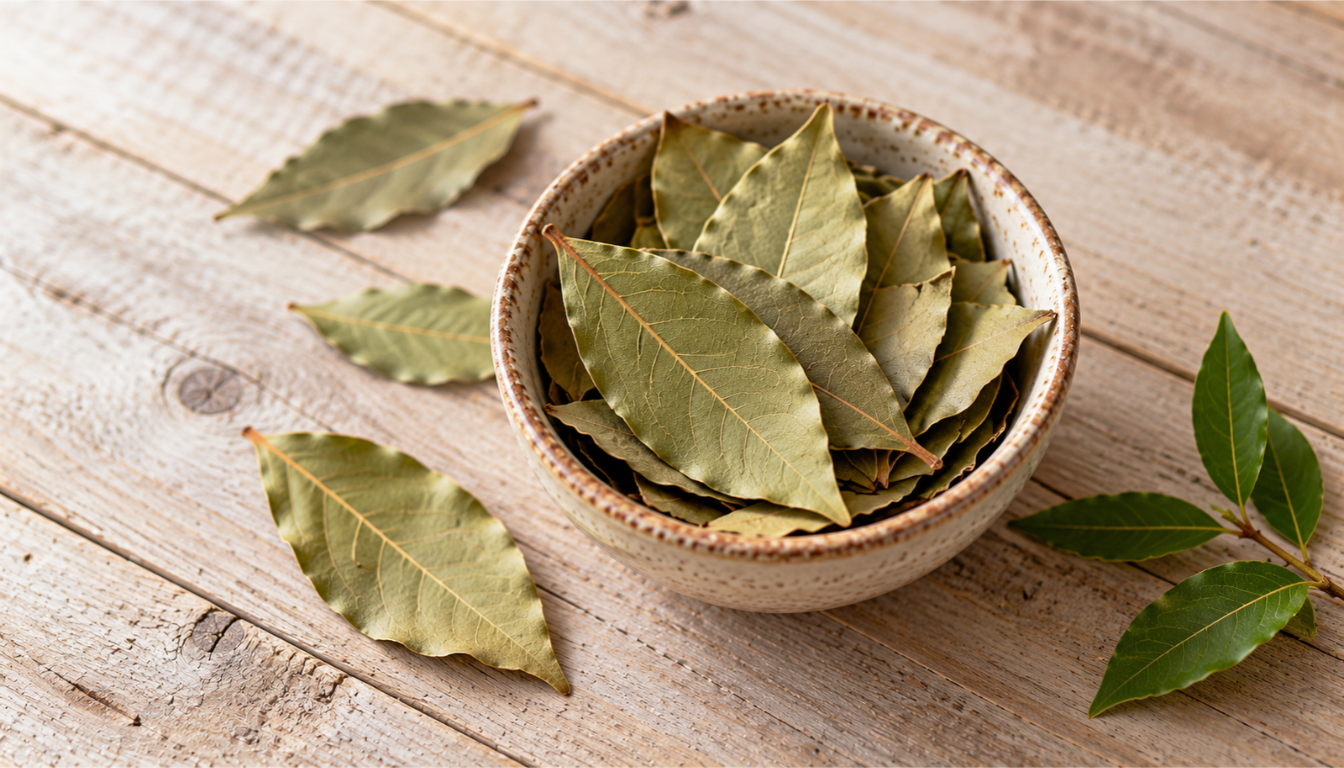
Bay leaves come from the bay laurel (Laurus nobilis), an evergreen tree native to the Mediterranean region. The leaves are stiff, glossy and dark green. Also, they have a subtle, savory flavor that builds slowly as they simmer.
Shops sell other leaves under similar names, but these come from different plants and taste different. Check the label if a recipe calls for bay laurel.
Also, do not confuse bay laurel with cherry laurel. The two look similar, but the RHS lists cherry laurel as potentially harmful if eaten. Healthline gives the same warning.
Bay Leaves Benefits: What Does the Research Say?
Overall, research on bay leaves is limited. Most studies use lab tests, animal models or small groups of people. As a result, no health claim about bay leaves is proven. Here is how the evidence looks.
Blood Sugar and Cholesterol
One small study looked at ground bay leaves in people with type 2 diabetes. Researchers gave 40 people capsules of ground bay leaf or a placebo for 30 days. They reported lower blood sugar and cholesterol in the bay leaf groups, and no significant changes in the placebo group.
However, the study was small and short, and the abstract does not describe how people were assigned to groups. Therefore, it cannot show that bay leaves work, and it does not tell us whether the effect lasts. Bay leaves should never replace diabetes medicine or your doctor’s advice. If you take diabetes medicine, ask your doctor before using bay leaves in larger amounts than normal cooking.
Digestion, Inflammation and Infection
You will often see claims that bay leaves help digestion, reduce inflammation or fight infection. Lab studies have tested bay leaf extracts and oils. However, a result in a lab dish does not show what happens in the human body. This guide does not make these claims, because we could not find strong human evidence for them.
What About Bay Leaf Water and Tea?
Bay leaf water and tea are popular online, but there is no good evidence that they have health benefits. Treat them as lightly flavored drinks. You will find simple recipes below.
How to Cook with Bay Leaves
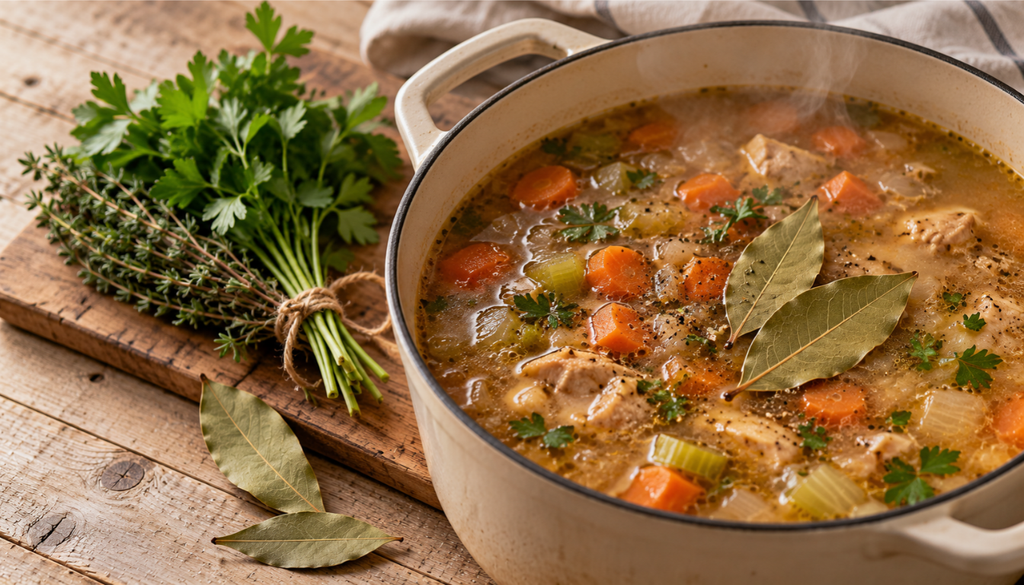
In the kitchen, bay leaves are valued for flavor, not for health claims. Use one or two leaves per pot and adjust to taste.
- Add early. Drop whole leaves into soups, stews, stocks, beans and rice at the start of cooking, so the flavor has time to develop.
- Use a bouquet garni. Tie bay leaves with thyme and parsley, and lift the bundle out when the dish is done.
- Remove before serving. Bay leaves stay hard even after hours of cooking. See the safety section below.
- Choose fresh or dried. The Royal Horticultural Society (RHS) notes that fresh leaves taste stronger and slightly more bitter. Dried or frozen leaves keep their flavor longer.
- Store well. Finally, keep dried leaves in an airtight container in a cool, dark place.
Bay Leaf Water
- Place two or three bay leaves in a jug of water.
- Cover the jug and chill it in the fridge for a few hours or overnight.
- Remove the leaves and drink the water cold.
Cinnamon and Bay Leaf Tea
- Add a cinnamon stick and two or three dried bay leaves to a pot of water.
- Bring the water to a boil, then simmer for a few minutes.
- Strain the tea and serve it warm.
Both are drinks for flavor, not remedies.
How to Grow a Bay Laurel
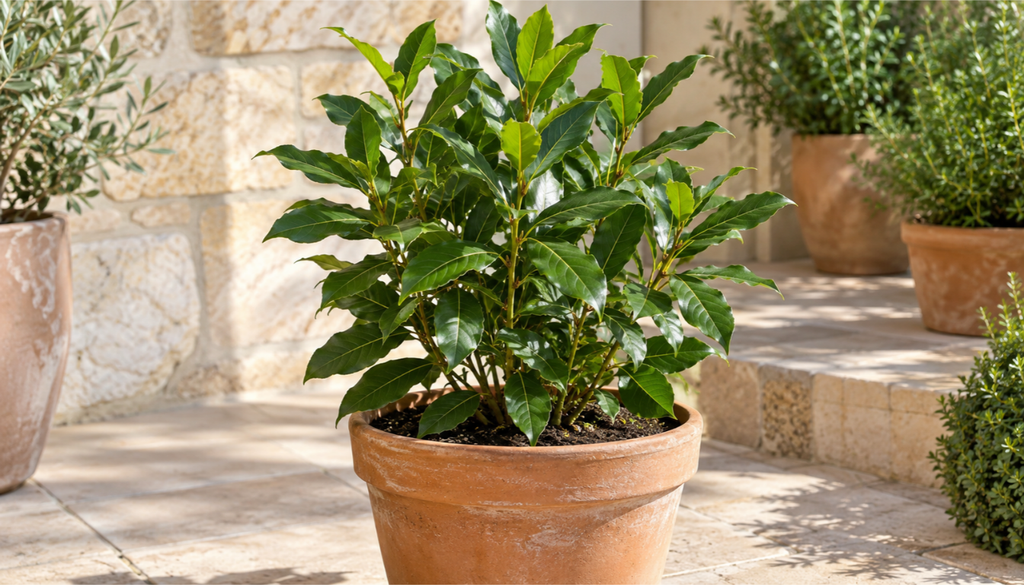
Bay is easy to grow at home, and it does well in a pot. The RHS gives these basics:
- Position. Bay suits a warm, sheltered spot. It tolerates full sun or light shade, but it needs protection from strong wind.
- Soil. Plant bay in free-draining soil, and avoid damp ground, because waterlogging can rot the roots.
- Containers. Bay grows well in pots. Use a loam-based compost mixed with horticultural grit, and repot every two or three years.
- Cold weather. Bay is hardy, but move potted plants to a sheltered spot in cold spells. Cover young plants with fleece when hard frost is forecast.
- Harvest. Bay is evergreen, so you can pick leaves whenever you need them.
- Problems. Watch for bay sucker, which distorts shoot-tip leaves, and scale insects. Yellowing or spotted leaves can signal soggy roots.
Safety: Who Should Be Careful?
Bay leaves are safe as a seasoning when you use them as cooks do. However, a few points matter.
- Do not swallow whole leaves. Bay leaves are rigid, and they stay almost intact in the digestive tract. A published case report describes a swallowed bay leaf that perforated the bowel, and the authors note that the traditional habit of removing the leaves before serving has a sound basis. In addition, a leaf can cause choking. Always remove whole leaves before serving, and warn guests who might bite into one.
- Do not eat look-alike plants. The RHS lists cherry laurel as potentially harmful if eaten. Only use leaves from a plant you know is bay laurel.
- Supplements and teas. If you are pregnant or breastfeeding, take medicine, or have a medical condition, speak to a healthcare professional before using bay leaf supplements or large amounts of bay tea.
- Allergy. As with any plant, stop using bay leaves and seek medical help if you develop a rash, swelling or trouble breathing.
Before You Go – Bay Leaves Benefits
Overall, bay leaves are a flavorful herb with a long history in cooking and traditional use. The health research is limited, so enjoy them in food. Always remove whole leaves before serving, and ask a healthcare professional before using bay leaf supplements or teas.
Sources – Bay Leaves Benefits
- Khan A, Zaman G, Anderson RA. Bay leaves improve glucose and lipid profile of people with type 2 diabetes. Journal of Clinical Biochemistry and Nutrition. 2009.
- Canadian Journal of Surgery. Case report: bay leaf perforation of a Meckel’s diverticulum.
- Royal Horticultural Society. Bay: growing guide.
- Healthline. Can you eat bay leaves?
- Royal Horticultural Society. Cherry laurel (Prunus laurocerasus).
Related Articles
Oregano Oil Benefits: A Complete Overview
Tulsi Holy Basil Benefits: The Ultra Guide
Frequently Asked Questions – Bay Leaves Benefits
What are the main bay leaves benefits?
Bay leaves are mainly valued for flavor. Small studies have looked at blood sugar and cholesterol, but the evidence is limited.
Can you eat bay leaves?
It is best not to. Whole bay leaves stay hard and can cause choking or injury, so remove them before serving.
Is bay leaf water healthy?
There is no good evidence that it has health benefits. Treat it as a lightly flavored drink.
Can bay leaves lower blood sugar?
One small study reported lower blood sugar in people with type 2 diabetes. It was short and small, so it does not prove bay leaves work. Speak to your doctor first.
Are fresh or dried bay leaves better?
Fresh leaves taste stronger and a little more bitter. Dried leaves are milder and keep well.
Can I use cherry laurel instead of bay leaves?
No. The RHS lists cherry laurel as potentially harmful if eaten. Only use leaves from a plant you know is bay laurel.
Where can I buy bay leaves?
Most supermarkets sell dried bay leaves in the spice aisle. Garden centers sell bay laurel plants.