
The Herb Prof Team researches and writes our herbal guides, drawing on published research, traditional herbal references, and hands-on growing experience.
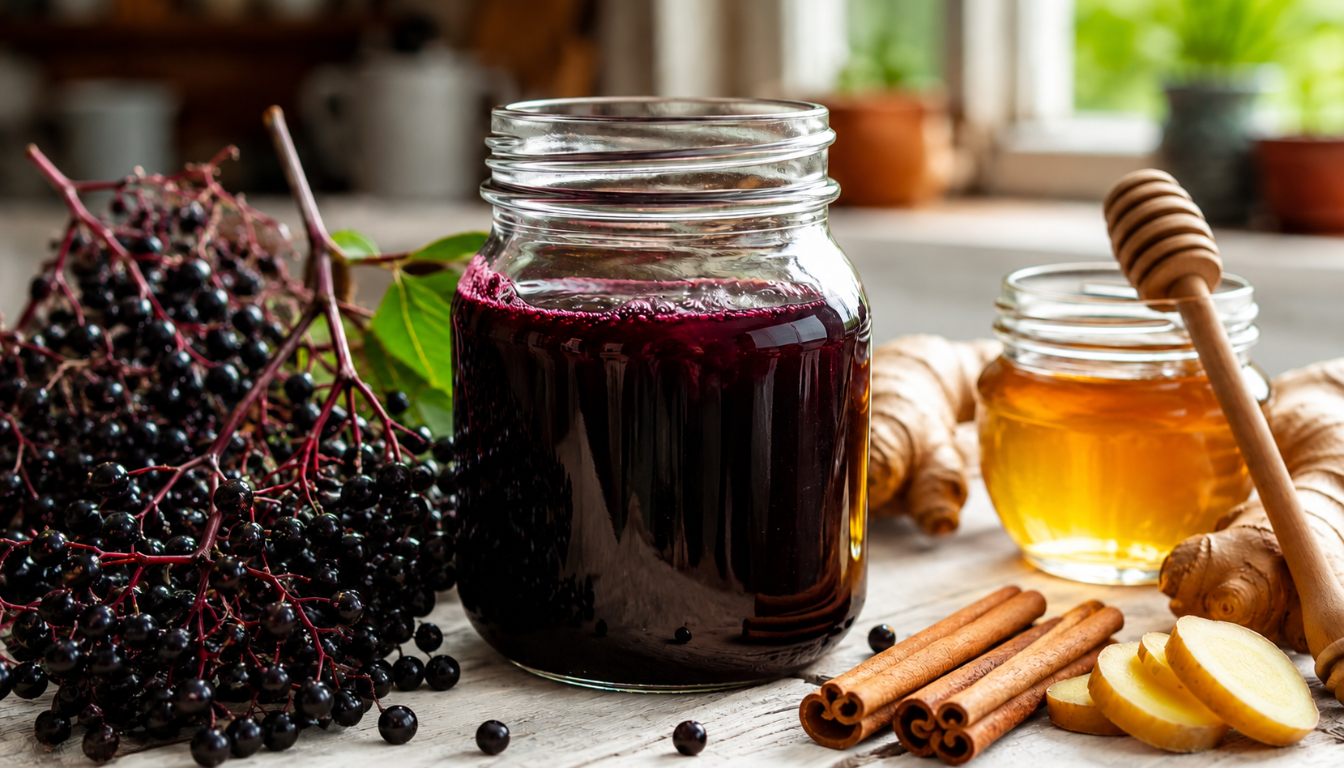
This simple elderberry syrup recipe is one of the easiest and most effective natural remedies you can make at home. Sweet, deeply flavoured, and packed with immune-supporting compounds, elderberry syrup has been used for generations to help the body fight off colds and flu, and with just a handful of ingredients, you can have a fresh batch ready in under an hour.
What Is Elderberry Syrup?
Elderberry syrup is a concentrated liquid remedy made by simmering elderberries with water and sweetening the strained liquid with honey. Unlike a tincture, which uses alcohol as the solvent, elderberry syrup is water-based, making it gentler, more accessible, and suitable for the whole family including older children.
It is one of the most popular herbal immune remedies in the world for good reason. The berries are rich in anthocyanins, flavonoids, and vitamin C, compounds that support immune function, reduce inflammation, and provide potent antioxidant protection. Taken daily during cold and flu season, elderberry syrup is a simple, enjoyable way to keep your immune system primed.
Health Benefits of Elderberry Syrup
Immune Support
Elderberry’s reputation as an immune booster is well supported by research. Multiple clinical studies have found that standardised elderberry extracts can reduce the duration of cold and flu symptoms by two to four days compared to placebo. The berries appear to inhibit viral replication and stimulate the production of cytokines, signalling proteins that help coordinate the immune response.
Antioxidant Protection
Elderberries are among the most antioxidant-rich fruits available. Their deep purple colour comes from anthocyanins, which neutralise free radicals and help protect cells from oxidative damage. Regular consumption supports long-term cellular health beyond just immune function.
Nutritional Profile
Each tablespoon of homemade elderberry syrup provides a meaningful dose of:
- Vitamin C – supports immune function and collagen production
- Vitamin A – important for immune defence and skin health
- Flavonoids and anthocyanins – potent antioxidant and anti-inflammatory compounds
- Dietary fibre – supports digestive health
- Potassium – supports cardiovascular and muscle function
Ingredients
Elderberries: Fresh vs Dried
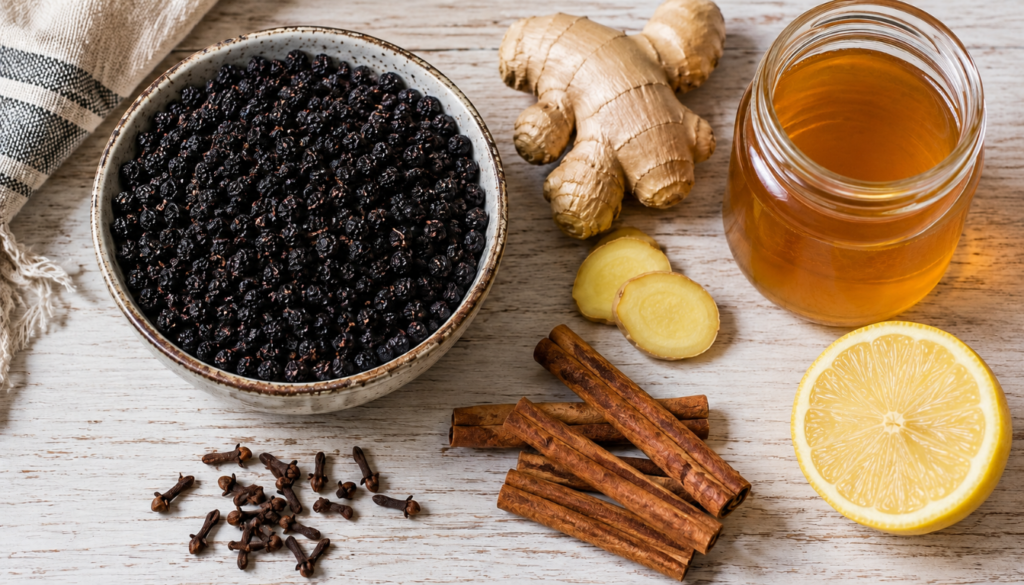
Both fresh and dried elderberries work well in this recipe. Fresh elderberries have a brighter flavour and slightly higher nutrient levels, but they are only available in late summer and early autumn. Dried elderberries are available year-round, highly concentrated, and produce an excellent syrup.
If using dried elderberries: use 1 cup dried to 4 cups water.
If using fresh elderberries: use 2 cups fresh to 4 cups water, as fresh berries have a higher water content.
Always use black elderberry (Sambucus nigra). Never use red elderberry (Sambucus racemosa), which is not safe for consumption.
Additional Ingredients for Flavour and Immune Support
These additions are optional, but each one brings genuine health benefits alongside the elderberries:
- Raw honey – natural sweetener with antimicrobial properties; soothes sore throats and acts as a natural preservative. Use after cooling to preserve its enzymes and beneficial compounds.
- Fresh ginger root – anti-inflammatory and warming; supports circulation and eases digestive discomfort. Particularly beneficial during winter illness.
- Cinnamon – antioxidant-rich and naturally antibacterial; adds warmth and depth of flavour.
- Cloves – contain eugenol, which has antiviral and analgesic properties; adds a robust, spiced note.
- Fresh lemon juice – adds vitamin C and brightens the flavour; balances the richness of honey and spices.
Equipment
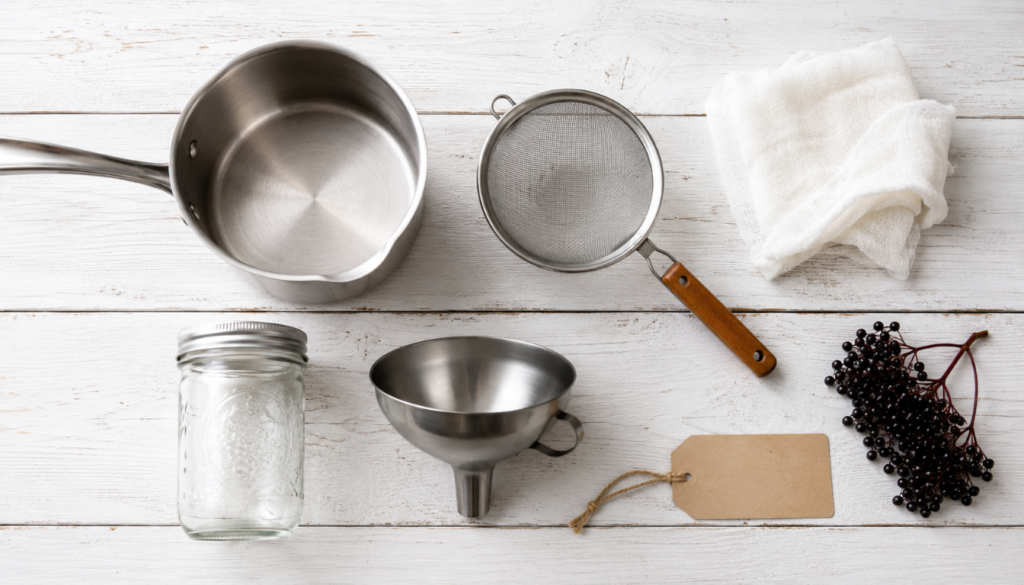
- A medium saucepan
- Fine-mesh strainer or cheesecloth
- A large bowl or jug for straining into
- Clean glass jars or bottles with tight-fitting lids
- Labels
Sterilise your jars before use. Wash in hot soapy water, rinse thoroughly, and either boil for 10 minutes or run through a hot dishwasher cycle. Allow to dry completely before filling.
Simple Elderberry Syrup Recipe: Step by Step
Preparation time: 10 minutes
Cook time: 30–45 minutes
Yield: Approximately 2 cups of finished syrup
Cooking the Syrup
Step 1: Combine elderberries and water
Place 1 cup of dried elderberries (or 2 cups fresh) in a medium saucepan with 4 cups of cold water. If using spices, add your ginger, cinnamon, and cloves at this stage.
Step 2: Bring to the boil
Place the pan over a medium-high heat and bring to a full boil, stirring occasionally.
Step 3: Simmer and reduce
Reduce the heat to low and simmer uncovered for 30–45 minutes, until the liquid has reduced by roughly half. The mixture will deepen in colour and thicken slightly as it reduces.
Step 4: Cool slightly
Remove from the heat and allow to cool for 10–15 minutes. Do not add honey while the liquid is still hot, as heat destroys honey’s beneficial enzymes and antimicrobial compounds.
Straining and Finishing
Step 5: Strain the berries
Pour the mixture through a fine-mesh strainer or cheesecloth into a clean bowl or jug. Press the berries firmly with the back of a spoon to extract every drop of liquid. Discard the spent berry material, do not eat the cooked berries directly as the seeds remain.
Step 6: Add honey
Once the liquid has cooled to a warm but not hot temperature (below 40°C / 104°F), stir in 1 cup of raw honey until fully dissolved. Taste and adjust, add more honey if you prefer a sweeter syrup.
Step 7: Add lemon juice (optional)
Stir in the juice of half a lemon for brightness and an extra boost of vitamin C.
Step 8: Bottle and label
Pour the finished syrup into sterilised glass jars or bottles. Label with the contents, date of production, and storage instructions.
Tips for the Best Syrup
- Do not skip the reduction step – simmering the berries concentrates the active compounds and gives you a more potent, flavourful syrup
- Always add honey off the heat – boiling honey destroys its beneficial properties
- Use dark glass jars if possible – they protect the syrup from light degradation
- Press the berries firmly when straining – this extracts the most flavour and nutrients
- Adjust sweetness to taste – some prefer a more medicinal, less sweet syrup; simply reduce the honey
Storage and Shelf Life
Store elderberry syrup in a sealed glass jar in the refrigerator. It does not contain enough alcohol or sugar to be shelf-stable at room temperature.
| Preparation | Storage | Shelf life |
|---|---|---|
| Standard honey-based syrup | Refrigerator | 2–3 weeks |
| Syrup with added alcohol (1–2 tbsp vodka) | Refrigerator | Up to 3 months |
| Frozen in ice cube trays | Freezer | Up to 12 months |
To extend shelf life: add one to two tablespoons of brandy or vodka to the finished syrup before bottling. This is a traditional preservation method that does not significantly affect the taste and makes the syrup suitable for adults who want a longer-lasting preparation.
How to Use Elderberry Syrup
Dosage Guidelines
| User | Preventative dose | Acute dose (illness) |
|---|---|---|
| Adults | 1 tablespoon daily | 1 tablespoon 3–4x daily |
| Children 1–12 | 1 teaspoon daily | 1 teaspoon 2–3x daily |
| Children under 1 | Not suitable — never give honey to infants under 12 months | Not suitable |
When to Take It
- Daily through autumn and winter as a preventative immune tonic
- At the first sign of symptoms like sore throat, sniffles, fatigue for best results
- After exposure to illness after travelling, crowded spaces, or contact with sick individuals
- During recovery to help rebuild immune strength
Ways to Enjoy It
Elderberry syrup is versatile and pleasant to take. You can:
- Take it straight from a spoon
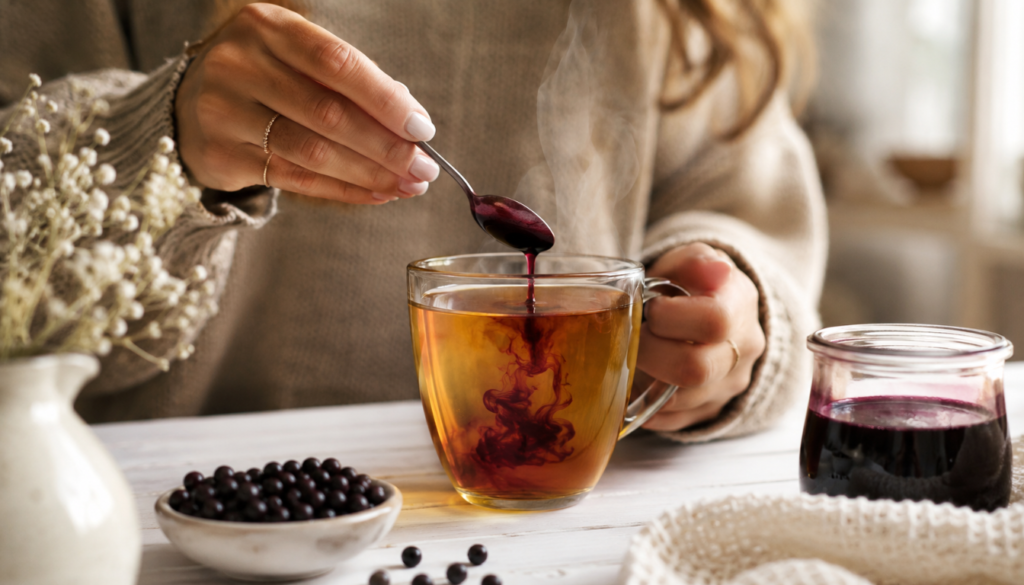
- Stir into warm water or herbal tea
- Add to sparkling water for a refreshing immune drink
- Drizzle over porridge, yoghurt, or pancakes
- Mix into salad dressings for a fruity antioxidant boost
Who Should Avoid Elderberry Syrup
- Children under 12 months – never give honey to infants under one year old due to the risk of infant botulism. Use a honey-free version with maple syrup or leave unsweetened.
- Pregnant and breastfeeding women – consult your midwife or doctor before use; safety data is limited
- People with autoimmune conditions – elderberry stimulates immune activity, which may be contraindicated in lupus, rheumatoid arthritis, or multiple sclerosis
- People taking immunosuppressant medications – the immune-stimulating effect may interfere with these drugs
- Diabetics – elderberry syrup contains significant amounts of honey and natural fruit sugars; monitor blood sugar carefully and consult your doctor
Always check with your doctor or a qualified medical herbalist before starting elderberry syrup if you have any existing health condition or take regular medication.
Elderberry in Traditional Medicine
Elderberry has been a cornerstone of European folk medicine for thousands of years. Historically it was used across the continent to treat fevers, respiratory infections, and winter illness. In Native American healing traditions, elder bark, leaves, and berries were used for infections and as a general tonic. The plant’s long history of use across such diverse cultures reflects the genuine breadth of its medicinal properties.
Today elderberry syrup is one of the most widely used herbal remedies in the world, sitting comfortably at the intersection of traditional wisdom and modern research.
Before You Go – Elderberry Syrup Recipe
Elderberry syrup is one of the most rewarding herbal preparations to keep in your kitchen. It takes less than an hour to make, tastes genuinely good, and provides real immune support backed by both centuries of traditional use and modern clinical research. A jar in your refrigerator from October through March is one of the simplest investments you can make in your family’s winter health.
For a stronger, longer-lasting elderberry preparation, see our full guide to elderberry tincture, an alcohol-based extract that keeps for up to three years and is ideal for therapeutic use.
References – Elderberry Syrup Recipe
Little Herb Encyclopedia, by Jack Ritchason; N.D., Woodland Publishing Incorporated, 1995
The Ultimate Healing System, Course Manual, Copyright 1985, Don Lepore
Planetary Herbology, Michael Tierra, C.A., N.D., Lotus Press, 1988
Handbook of Medicinal Herbs, by James A. Duke, Pub. CRP Second Edition 2007
The Complete Medicinal Herbal, by Penelope Ody, Published by Dorling Kindersley
Related Articles
DIY Calendula Salve: Natural Healing for Cuts and Scrapes
Bee Pollen Benefits Unveiled: A Guide to Safe Consumption
Elderberry Tincture Recipe: A Complete Homemade Guide
How to Store and Label Homemade Tinctures for Freshness
Frequently Asked Questions – Elderberry Syrup Recipe
What is elderberry syrup used for?
Elderberry syrup is primarily used to support immune health during cold and flu season. Clinical research suggests it can reduce the duration and severity of cold and flu symptoms. It is also used as a daily antioxidant tonic and general wellness supplement.
How long does homemade elderberry syrup last?
A standard honey-based elderberry syrup kept in the refrigerator will last two to three weeks. Adding one to two tablespoons of brandy or vodka extends the shelf life to up to three months. Elderberry syrup can also be frozen in ice cube trays for up to twelve months.
Can I give elderberry syrup to children?
Yes, for children over twelve months. The standard children’s dose is one teaspoon daily as a preventative, or one teaspoon two to three times daily during illness. Never give honey-containing preparations to infants under twelve months due to the risk of infant botulism.
What is the difference between elderberry syrup and elderberry tincture?
Elderberry syrup is water-based, sweetened with honey, and has a shelf life of two to three weeks in the refrigerator. A tincture uses alcohol as the solvent, is far more concentrated, and lasts two to three years. Syrup is better for daily family use; tincture is better for therapeutic or long-term use.
Can I use frozen elderberries?
Yes. Frozen elderberries work well and are a convenient alternative when fresh berries are out of season. Use the same quantity as you would fresh berries.
How much elderberry syrup should I take daily?
Adults can take one tablespoon daily as a preventative dose during cold and flu season. During illness, increase to one tablespoon three to four times daily. Children aged one to twelve can take one teaspoon daily as a preventative dose.
Can elderberry syrup be taken alongside other herbal remedies?
Elderberry syrup combines well with echinacea, ginger, and rosehip for enhanced immune support. However, if you take any prescription medication, always check with your doctor or pharmacist before combining herbal remedies.
Is elderberry syrup safe during pregnancy?
Safety data for elderberry during pregnancy is limited. Most authoritative sources recommend avoiding it unless specifically approved by your midwife or doctor.