
The Herb Prof Team researches and writes our herbal guides, drawing on published research, traditional herbal references, and hands-on growing experience.
Learning how to grow lavender is one of the most rewarding things you can do in a herb garden. Hardy, drought-tolerant, and extraordinarily versatile, lavender rewards even beginner gardeners with years of fragrant flowers, medicinal benefits, and culinary possibilities. This complete guide covers everything from choosing the right variety and planting conditions to harvesting, using, and troubleshooting your lavender plants.
What Is Lavender?
Lavender (Lavandula) is a flowering herb in the mint family (Lamiaceae), native to the Mediterranean region and widely cultivated across Europe, North America, and beyond. It is one of the most recognisable and beloved herbs in the world, valued equally for its distinctive fragrance, its striking purple flowers, and its long history of medicinal and culinary use.
There are over 45 species of lavender, but the most commonly grown and medicinally useful is English lavender (Lavandula angustifolia), also known as true lavender. It is the hardiest, most fragrant, and most widely researched species, and the one this guide primarily focuses on.
Choosing the Right Lavender Variety
Selecting the correct variety for your climate and purpose is the single most important decision you will make. Not all lavenders are equally hardy, fragrant, or medicinal.
English Lavender (Lavandula angustifolia)
The gold standard for medicinal and culinary use. English lavender produces the highest quality essential oil, has the sweetest fragrance, and is the hardiest variety, surviving winters down to -15°C (5°F) in well-drained soil. Best varieties include:
- Hidcote – compact, deep purple, excellent for hedging and containers
- Munstead – early flowering, compact, very hardy, ideal for cooler climates
- Vera – larger plant, high oil yield, classic cottage garden lavender
French Lavender (Lavandula dentata)
Distinguished by its toothed leaves and longer flowering season. Less hardy than English lavender and not suitable for cold climates, but excellent in mild or Mediterranean conditions. More ornamental than medicinal.
Spanish Lavender (Lavandula stoechas)
Recognisable by its distinctive “rabbit ear” petals. Highly ornamental, heat-tolerant, and a long bloomer, but with a stronger, more camphor-like scent that is less suitable for culinary use. Not fully hardy in cold winters.
Lavandin (Lavandula x intermedia)
A hybrid of English and spike lavender. Produces large quantities of flowers and is widely used in the perfume industry. Good garden performer but lower medicinal quality than true English lavender. Best varieties: Grosso, Provence, Super.
What Lavender Needs to Thrive
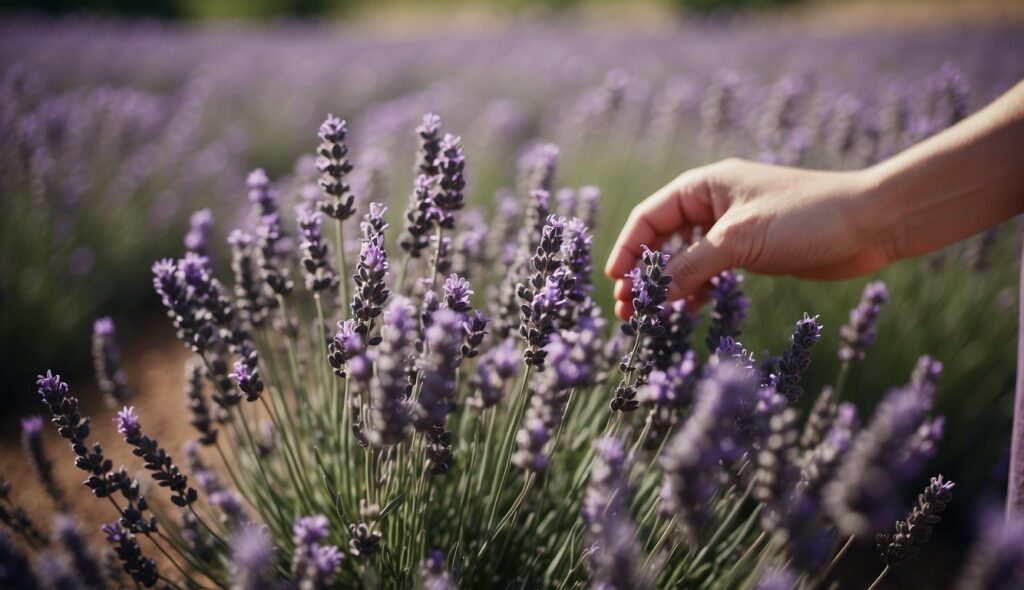
Lavender is famously low-maintenance once established, but it has specific requirements that must be met from the start.
Sunlight
Lavender demands full sun, a minimum of six to eight hours of direct sunlight daily. It will survive in partial shade but will produce fewer flowers, weaker fragrance, and be far more susceptible to disease. In the UK and northern climates, choose the sunniest spot available.
Soil
Well-drained, lean, slightly alkaline soil is essential. Lavender originates from rocky Mediterranean hillsides and has evolved to thrive in poor, fast-draining conditions. The single most common cause of lavender death is waterlogged soil.
- Ideal soil pH: 6.5–7.5
- Avoid: clay-heavy, moisture-retaining soils
- Improve drainage: add horticultural grit, coarse sand, or perlite before planting
- Raised beds are an excellent solution in gardens with heavy or poorly draining soil
Lavender does not need rich, fertile soil. Avoid adding compost or manure as this encourages soft, lush growth that is more susceptible to frost and disease, with weaker fragrance.
Watering
Once established, lavender is highly drought-tolerant. Overwatering is far more damaging than underwatering.
- Newly planted lavender: water regularly for the first growing season to establish roots
- Established plants: water deeply but infrequently so you allow the soil to dry completely between waterings
- Never let lavender sit in standing water
- In wet climates, ensure excellent drainage rather than reducing rainfall
Temperature and Hardiness
English lavender is fully hardy in most of the UK and northern Europe. In areas with very cold, wet winters, mulch around the base with horticultural grit (not organic mulch, which retains moisture) to protect the roots. French and Spanish lavenders need winter protection or overwintering indoors in cold climates.
How to Plant Lavender?
When to Plant
- Spring (April–May): ideal for most varieties – gives plants the full growing season to establish before winter
- Early autumn (September): also suitable in mild climates with well-drained soil
- Avoid planting in the height of summer or during frost periods
Spacing
Correct spacing is critical for air circulation, which prevents fungal disease:
- Small varieties (Hidcote, Munstead): 30–45cm (12–18 inches) apart
- Medium varieties: 45–60cm (18–24 inches) apart
- Large varieties and lavandins: 60–90cm (24–36 inches) apart
How to Grow Lavender: Planting Steps
Step 1: Prepare the site
Dig over the planting area and improve drainage by incorporating horticultural grit at a ratio of roughly one part grit to two parts soil. If the soil is acidic, add a small amount of garden lime to raise the pH toward 7.0.
Step 2: Dig the planting hole
Dig a hole slightly larger than the root ball. The crown of the plant, where the stems meet the roots, should sit at or just above soil level. Never bury the crown.
Step 3: Plant and firm in
Place the lavender in the hole, backfill with the improved soil, and firm down gently. Water in well.
Step 4: Mulch with grit
Spread a 2–3cm layer of horticultural grit around the base of the plant, keeping it away from the stems. This improves drainage, reflects heat onto the plant, and reduces weed competition.
Step 5: Water regularly for the first season
Water every few days for the first four to six weeks, then reduce frequency as the plant establishes.
How to Grow Lavender in Containers
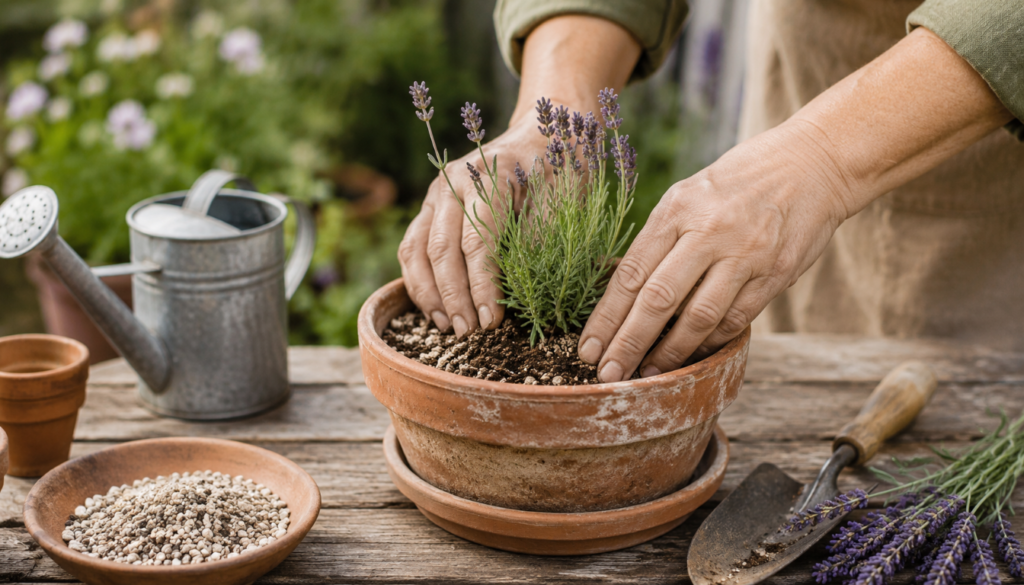
Containers are an excellent option for lavender, particularly in gardens with poor drainage or for growing French and Spanish lavenders that need to come indoors for winter.
- Use a terracotta pot with generous drainage holes as terracotta breathes and dries out faster than plastic
- Fill with a mixture of compost and horticultural grit in a 50:50 ratio, or use a specialist alpine or Mediterranean compost
- Choose compact varieties such as Hidcote or Munstead
- Water more frequently than garden-grown plants but never allow to sit in a saucer of water
- Repot every two to three years as the plant grows
Caring for Lavender
Pruning: The Most Important Maintenance Task
Pruning is essential to keep lavender productive, shapely, and long-lived. Unpruned lavender becomes woody and straggly within a few years and produces far fewer flowers.
When to prune:
- First prune: late summer or early autumn, immediately after flowering
- Second prune: early spring, once the risk of hard frost has passed
How to prune:
Autumn prune: Cut back the flower stems and about one third of the current season’s growth. This tidies the plant, removes spent flowers, and encourages a compact shape going into winter.
Spring prune: Cut back to just above where fresh green growth is emerging from the woody stems. Never cut into old, brown, leafless wood because lavender will not regenerate from old wood and cutting into it will kill the plant or leave it permanently disfigured.
The golden rule: always leave green growth below your cut. If you can see fresh green shoots, you can cut above them safely.
How to Grow Lavender: Feeding
Lavender thrives in poor soil and requires very little feeding. Excessive nitrogen encourages lush leafy growth at the expense of flowers and fragrance.
- A light dressing of slow-release fertiliser in spring is sufficient for container-grown plants
- Garden-grown lavender in lean soil needs no feeding at all
- Never use high-nitrogen feeds
Weeding
Keep the area around lavender plants weed-free, particularly in the first year. A grit mulch significantly reduces weed competition and makes removal easier.
How to Grow Lavender: Propagating
Growing new plants from cuttings is easy, free, and the best way to maintain the qualities of a named variety. Lavender grown from seed is unreliable in variety and quality.
Softwood Cuttings (Spring–Early Summer)
- Select a healthy, non-flowering shoot and cut a 7–10cm length just below a leaf node
- Strip the lower leaves, leaving two to three pairs at the top
- Dip the cut end in rooting hormone powder
- Insert into small pots filled with a 50:50 mix of compost and horticultural grit
- Water lightly, place in a warm bright spot out of direct sun, and keep consistently moist
- Roots should develop within four to six weeks
Semi-Ripe Cuttings (Late Summer)
The same process as above, using slightly firmer, more mature shoots taken after flowering. These are the most reliable cuttings and the method professional growers prefer.
How to Grow Lavender: Harvesting
When to Harvest
Harvest lavender just as the flower buds are opening, typically when around half the buds on each stem have opened. At this stage the essential oil content is at its peak. Fully open flowers have already begun to release their oils and will have lower fragrance intensity.
In the UK, English lavender typically flowers from June to August depending on the variety and location.
How to Harvest
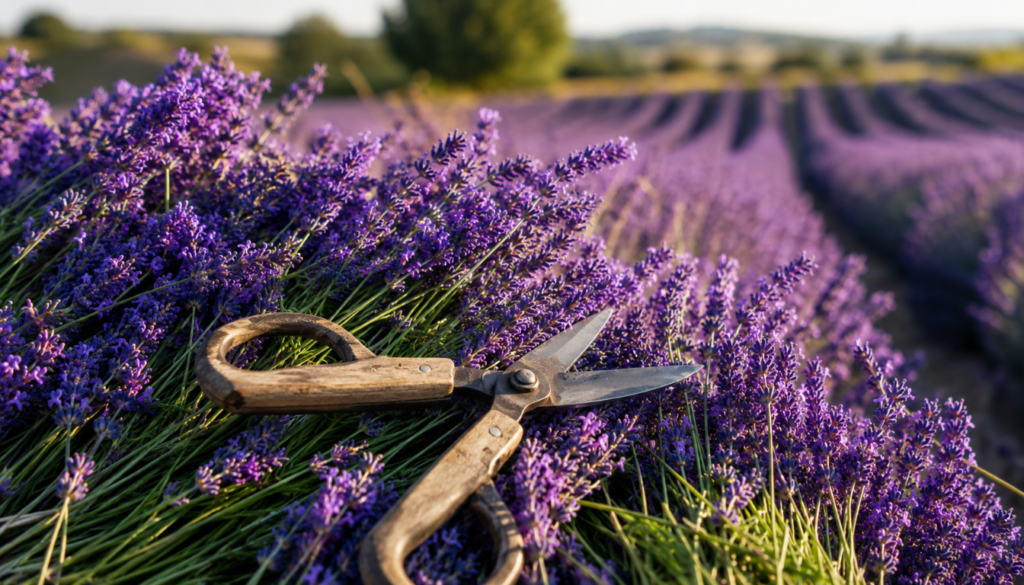
- Cut the stems in the morning after the dew has dried but before the heat of the day – this is when the essential oil concentration is highest
- Use clean, sharp secateurs or scissors
- Cut stems as long as possible – this also serves as your summer pruning
- Bundle stems loosely and hang upside down in a warm, dry, well-ventilated space away from direct light
- Drying takes one to three weeks depending on conditions
Storing Dried Lavender
Store dried lavender in airtight glass jars, away from light and heat. Properly stored, dried lavender retains its fragrance and medicinal properties for one to two years.
Lavender Flower Uses and Benefits
The flowers are the most potent part of the lavender plant and the part most commonly used in both traditional medicine and modern herbal practice. Once harvested and dried, they have an extraordinary range of uses.
Medicinal Uses
Anxiety and stress relief
Lavender is one of the most extensively researched herbs for anxiety. The aroma of lavender, specifically the compound linalool, has been shown in multiple clinical studies to reduce anxiety, lower heart rate, and promote relaxation. A standardised oral lavender oil preparation (Silexan) has been found in clinical trials to be as effective as lorazepam for generalised anxiety disorder.
Sleep support
Lavender’s calming effects extend to sleep quality. Studies show that lavender aromatherapy improves sleep quality, increases slow-wave sleep, and reduces night waking. A lavender sachet under the pillow or a few drops of essential oil on the pillowcase are simple and effective sleep aids.
Pain relief
Lavender essential oil applied topically has demonstrated mild analgesic and anti-inflammatory properties. It has been used traditionally for headaches, muscle aches, and minor joint pain. Always dilute in a carrier oil before applying to skin, never apply undiluted essential oil directly.
Wound healing and skin care
Lavender has genuine antimicrobial and antiseptic properties. It has been used for centuries to clean minor wounds, soothe burns, and reduce inflammation. Modern research supports its antibacterial activity against several common pathogens.
Digestive support
Lavender tea has a long history of use for digestive discomfort, bloating, and nausea. Its antispasmodic properties help relax the smooth muscle of the digestive tract.
Culinary Uses
Lavender is a culinary herb as well as a medicinal one. Use the dried flowers of English lavender (Lavandula angustifolia) only, as other varieties can be too strongly flavoured or camphor-like.
- Baked goods: lavender shortbread, scones, cakes, and biscuits
- Savoury dishes: pairs beautifully with lamb, chicken, and roasted vegetables (use sparingly)
- Drinks: lavender tea, lavender lemonade, lavender-infused honey, cocktail syrups
- Infused honey: pack dried lavender buds into a jar, cover with raw honey, and leave for two weeks. It is wonderful on toast, cheese, or stirred into tea
- Herb blends: lavender is a key ingredient in Herbes de Provence
Culinary rule: lavender is powerful. Start with half the amount you think you need. Too much lavender in food tastes soapy.
Household and Craft Uses
- Sachets and pillows: dried lavender sachets in drawers and wardrobes naturally repel moths and keep linens fresh
- Cleaning: lavender’s antimicrobial properties make it a useful addition to homemade cleaning products
- Potpourri: dried lavender mixed with other dried herbs and flowers makes a long-lasting room fragrance
- Lavender wands: a traditional craft using fresh stems woven around the flower heads to create fragrant decorations
- Bath and body: add dried lavender to a muslin bag and hang under the hot tap for a deeply relaxing lavender bath
How to Grow Lavender: Troubleshooting Common Problems
Lavender Not Flowering
Most likely cause: insufficient sunlight or over-fertilising with nitrogen.
Solution: move to a sunnier position; stop feeding entirely or switch to a low-nitrogen, high-potassium feed.
Yellowing Leaves
Most likely cause: overwatering or waterlogged soil.
Solution: improve drainage immediately; reduce watering frequency; check that the pot or bed drains freely.
Woody, Leggy Growth with Few Flowers
Most likely cause: insufficient pruning over several years.
Solution: hard prune in early spring, cutting back as far as green growth is visible. If no green growth remains on the lower stems, the plant may be past saving and should be replaced with improved soil preparation.
Grey Mould (Botrytis)
Most likely cause: poor air circulation, wet conditions, or overcrowding.
Solution: remove affected material, improve air circulation by pruning and spacing, ensure good drainage. Avoid wetting the foliage when watering.
Root Rot
Most likely cause: waterlogged soil or overwatering.
Solution: improve soil drainage immediately. In severe cases the plant will not recover and should be removed. Replant in improved, well-draining soil.
Lavender in Traditional Medicine
Lavender has one of the longest documented histories of any medicinal herb. The Romans used it to scent baths and clean wounds, the name lavender derives from the Latin lavare, meaning “to wash.” Medieval European herbalists prescribed it for headaches, anxiety, and as a general tonic. The English herbalist Nicholas Culpeper described it in the 17th century as beneficial for “all griefs and pains of the head and brain.”
In the First World War, lavender essential oil was used by military surgeons as an antiseptic when conventional supplies ran short. Today it remains one of the most widely used essential oils in the world and one of the best-supported herbal remedies in clinical research.
How to Grow Lavender: Safety and Precautions
Lavender is generally very well tolerated, but there are some important safety considerations:
- Topical use: always dilute essential oil in a carrier oil (sweet almond, jojoba, or coconut) at a ratio of 2–3% before applying to skin. Undiluted essential oil can cause skin irritation or sensitisation
- Oral use: culinary amounts in food and tea are safe for most adults. Do not take large doses of lavender essential oil internally without professional guidance
- Pregnancy: lavender essential oil used in aromatherapy in normal amounts is generally considered safe during pregnancy, but avoid therapeutic oral doses
- Hormone-sensitive conditions: some research suggests lavender essential oil may have mild oestrogenic activity. People with hormone-sensitive conditions should consult their doctor before regular therapeutic use
- Children: dilute more carefully for children – use a 1% dilution for topical applications. Lavender tea in small amounts is generally safe for children over two years old
- Drug interactions: lavender may enhance the effects of sedative medications. If you take sedatives, sleeping pills, or anti-anxiety medication, consult your doctor before using lavender therapeutically
Before You Go – How to Grow Lavender
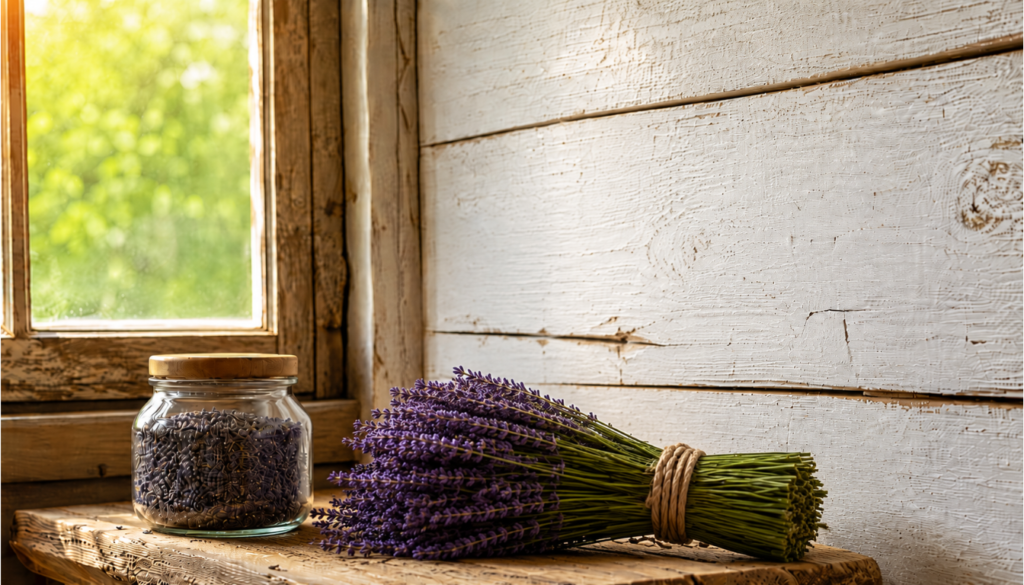
Lavender is one of the most forgiving and generous herbs you can grow. Give it sun, sharp drainage, and an annual prune, and it will reward you with years of fragrant flowers, medicinal benefits, and culinary possibilities. Whether you are growing a single pot on a windowsill or planting a lavender hedge along a garden path, the principles are the same and the rewards are well worth the small amount of effort required.
Once your lavender is established and you are ready to start using it, our Lavender Tea Recipe: Benefits, Blends and How to Make It is the perfect place to start, a simple and rewarding way to put your harvest to immediate use. If you want to explore the calming and wellness uses of lavender further, the Chamomile vs Lavender guide is an excellent next read.
References – How to Grow Lavender
Little Herb Encyclopedia, by Jack Ritchason; N.D., Woodland Publishing Incorporated, 1995
The Ultimate Healing System, Course Manual, Copyright 1985, Don Lepore
Planetary Herbology, Michael Tierra, C.A., N.D., Lotus Press, 1988
Handbook of Medicinal Herbs, by James A. Duke, Pub. CRP Second Edition 2007
The Complete Medicinal Herbal, by Penelope Ody, Published by Dorling Kindersley
Related Articles
How to Harvest Basil: A Clear and Confident Guide
A Clear and Knowledgeable Guide: How to Grow Cilantro
How to Grow Coriander: A Step-by-Step Guide
Frequently Asked Questions – How to Grow Lavender
How much sun does lavender need?
Lavender requires a minimum of six to eight hours of direct sunlight daily. It will survive in partial shade but will produce significantly fewer flowers and weaker fragrance, and will be more susceptible to disease.
Why is my lavender dying?
The most common causes of lavender death are waterlogged soil, insufficient sunlight, and cutting into old wood when pruning. Ensure your soil drains freely, position the plant in full sun, and never cut below the point where green growth is visible on the stems.
Can lavender grow in pots?
Yes, lavender grows very well in containers. Use a terracotta pot with generous drainage holes, fill with a 50:50 mix of compost and horticultural grit, and choose a compact variety such as Hidcote or Munstead. Water more frequently than garden-grown plants but never allow the pot to sit in standing water.
When should I prune lavender?
Prune lavender twice a year: once in late summer immediately after flowering, and once in early spring when fresh green growth is beginning to emerge. Never cut into old, leafless, brown wood as lavender will not regenerate from it.
How do I harvest lavender?
Harvest lavender just as the buds are beginning to open, at this point the essential oil content is at its peak. Cut in the morning after the dew has dried. Bundle loosely and hang upside down in a warm, dry, well-ventilated spot away from direct light for one to three weeks.
Is lavender safe to eat?
Yes, the flowers and leaves of English lavender (Lavandula angustifolia) are edible and have a long history of culinary use. Use sparingly as the flavour is potent. Avoid using other lavender species for cooking as they can taste bitter or soapy.
How long does lavender live?
A well-maintained lavender plant can live for fifteen to twenty years. Regular pruning is the key to longevity, unpruned lavender becomes woody and unproductive within three to five years.
Does lavender spread?
Lavender does not spread aggressively but will gradually increase in size over the years. It does not spread by runners like mint. New plants are most reliably propagated from cuttings.