
The Herb Prof Team researches and writes our herbal guides, drawing on published research, traditional herbal references, and hands-on growing experience.
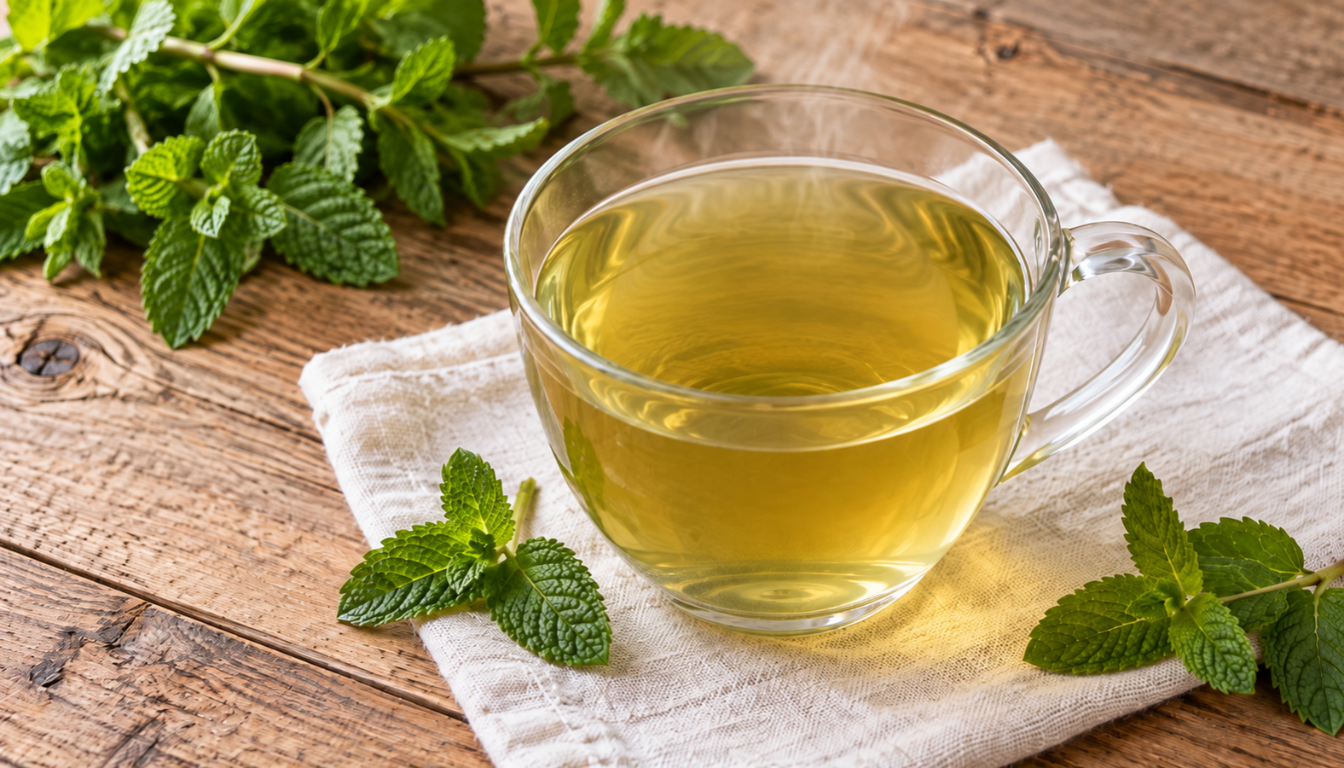
This herbal mint tea recipe shows you how to turn fresh or dried mint leaves into a fragrant, caffeine-free drink in about 10 minutes. In addition, you can serve it hot or iced, and you can change the flavor with a few simple additions. In this guide, you will learn which mint to use, how to brew it, how to make it iced, and who should be careful with it.
This article is for general information only. It is not medical advice, and mint tea is not a treatment for any condition.
Herbal Mint Tea Recipe
Makes: 1 large mug Time: about 10 minutes
Ingredients
- A small handful of fresh mint leaves (about 10 to 15 leaves), or 1 tablespoon of dried mint
- 1 cup of hot water, just off the boil
- Optional: honey, a slice of lemon, or a thin slice of fresh ginger
Steps
- First, rinse the mint leaves under cool water. Then gently bruise them with your fingers or a spoon to release the oils.
- Next, place the leaves in a mug or teapot.
- After that, pour the hot water over the leaves and cover the mug with a small plate or lid. Covering the mug keeps the fragrant steam in the tea.
- Steep for 5 to 10 minutes. Also, a longer steep gives a stronger tea.
- Finally, strain out the leaves and add honey or lemon if you like. Serve warm.
Tip: Do not boil the leaves for a long time. Boiling can give the tea a bitter, grassy taste, so steep the leaves in hot water instead.
Best Mint for a Herbal Mint Tea Recipe
Many kinds of mint make good tea. Each one tastes a little different.
- Peppermint. It has a strong, cool, menthol flavor and is the classic choice.
- Spearmint. In contrast, it tastes milder and slightly sweet.
- Other mints. Apple mint, chocolate mint and lemon mint give softer or more unusual flavors, so try a few to find your favorite.
Fresh leaves give a brighter, stronger flavor. However, dried mint is handy, and it keeps well. Use about one tablespoon of dried mint in place of a small handful of fresh leaves.
How to Make Iced Mint Tea
- Make a double-strength batch. Use twice as many leaves for the same amount of water.
- Steep for 10 minutes, then strain.
- Let the tea cool to room temperature, then chill it in the fridge.
- Serve over ice with lemon slices and a few fresh mint leaves.
Because the ice melts, a stronger brew keeps the flavor from tasting watery.
Ways to Change the Flavor
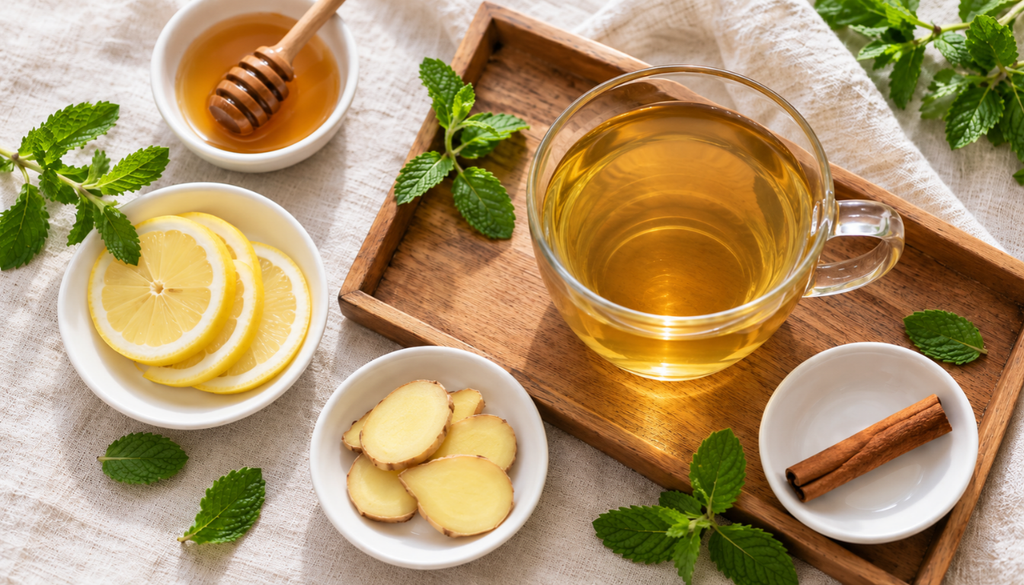
- Lemon or lime. A slice or a squeeze adds a fresh, tangy note.
- Ginger. A thin slice of fresh ginger adds a warm, spicy edge.
- Honey. A small spoonful softens the cooling taste of the mint.
- Cinnamon. A cinnamon stick adds warmth, especially in cold weather.
- Fruit. Sliced peaches, strawberries or raspberries work well in iced tea.
- Other herbs. Chamomile, lemon balm or lemon verbena blend well with mint. Start with a small amount of each.
- Moroccan-style mint tea. This version uses green tea leaves and sugar along with fresh mint. Because green tea contains caffeine, this tea is not caffeine-free.
What Does the Research Say About Mint Tea?
Mint tea is mainly a flavorful drink, and the research on it is limited. The U.S. National Center for Complementary and Integrative Health (NCCIH) says peppermint tea, which is made from peppermint leaves, appears to be safe. However, NCCIH also says there is not enough evidence to determine whether peppermint leaf helps any health condition. In addition, the long-term safety of large amounts of the leaf is unknown.
Most of the research on peppermint looks at peppermint oil, not tea. For example, NCCIH notes that a small amount of research suggests enteric-coated peppermint oil capsules may improve symptoms of irritable bowel syndrome. Tea is a very different product from concentrated oil capsules, so those results do not show that tea works. For this reason, this guide does not claim that mint tea treats digestion problems, stress, inflammation or infection.
Instead, enjoy mint tea for its taste and aroma. If you have a health concern, speak to a healthcare professional.
Safety and Side Effects
Mint tea is safe for most people in normal amounts, according to NCCIH. Even so, a few cautions matter.
- Heartburn. Memorial Sloan Kettering Cancer Center (MSK) advises people with gallstones, gallbladder inflammation, hiatal hernia or gastroesophageal reflux disease (GERD) to consult a physician before consuming peppermint. If mint tea gives you heartburn, stop drinking it.
- Medicine interactions. MSK lists several medicines that may interact with peppermint, and most of that information comes from oil rather than tea. It also describes a case report in which a transplant patient’s level of the drug cyclosporine fell after drinking peppermint tea. Therefore, ask your doctor or pharmacist before drinking it regularly if you take any medicine.
- Large amounts. NCCIH says the long-term safety of large amounts of peppermint leaf is unknown. Keep to a few cups a day.
- Babies and young children. NCCIH warns that menthol, found in peppermint oil, should not be applied to the face of an infant or small child. Do not use peppermint oil on young children, and ask a pediatrician before giving mint tea.
- Allergy. Stop drinking the tea and seek medical help if you develop a rash, swelling or trouble breathing.
Before You Go – Herbal Mint Tea Recipe
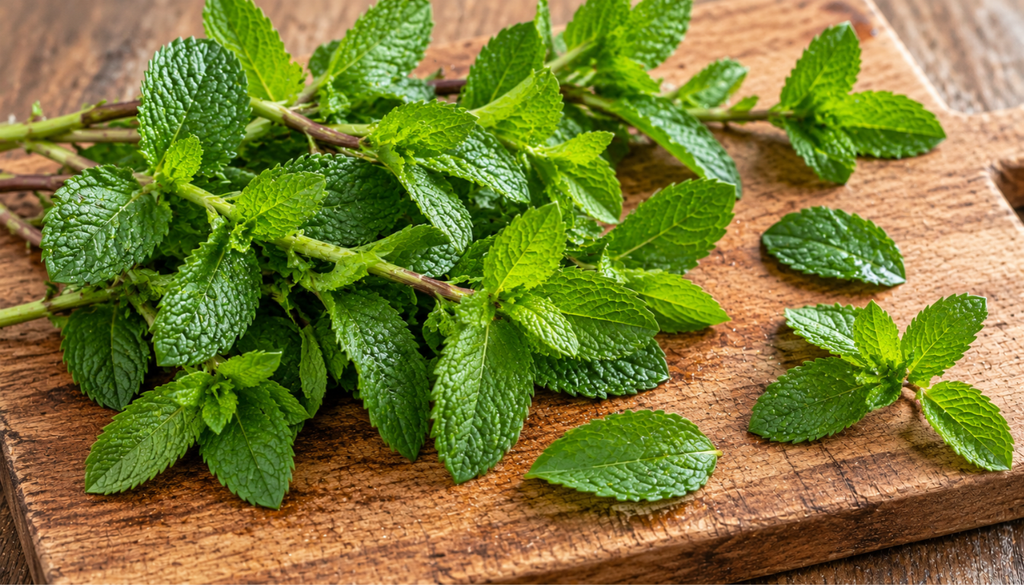
A herbal mint tea recipe is one of the easiest ways to enjoy fresh herbs from your garden or shop. The health research is limited, so enjoy the tea for its flavor. If you have reflux, take medicine or have a medical condition, check with a healthcare professional first.
References – Herbal Mint Tea Recipe
Little Herb Encyclopedia, by Jack Ritchason; N.D., Woodland Publishing Incorporated, 1995
The Ultimate Healing System, Course Manual, Copyright 1985, Don Lepore
Planetary Herbology, Michael Tierra, C.A., N.D., Lotus Press, 1988
Handbook of Medicinal Herbs, by James A. Duke, Pub. CRP Second Edition 2007
The Complete Medicinal Herbal, by Penelope Ody, Published by Dorling Kindersley
Sources
- National Center for Complementary and Integrative Health (NCCIH). Peppermint Oil.
- Memorial Sloan Kettering Cancer Center. Peppermint.
Related Article
Dandelion Root Tea Recipe: A Simple to Boost Your Health
Frequently Asked Questions – Herbal Mint Tea Recipe
How do you make herbal mint tea?
Pour one cup of hot water over a small handful of fresh mint leaves, cover, and steep for 5 to 10 minutes. Strain and serve.
Can you use dried mint instead of fresh?
Yes. Use about one tablespoon of dried mint per cup of water. Fresh leaves taste brighter, but dried mint also makes a good tea.
Is mint tea caffeine-free?
Mint tea made only from mint leaves contains no caffeine. However, if you blend it with green tea or black tea, the drink will contain caffeine.
Is it safe to boil mint leaves?
It is safe, but boiling for a long time can make the tea bitter. For a better flavor, pour hot water over the leaves and steep.
What are the benefits of mint tea?
It is mainly enjoyed for its flavor and aroma. NCCIH says there is not enough evidence to say whether peppermint leaf helps any health condition.
Can you mix mint with other herbs?
Yes. Chamomile, lemon balm, lemon verbena and ginger all pair well with mint.
How do you make Moroccan mint tea?
Steep green tea leaves in hot water for a few minutes. Then add fresh mint and sugar, steep a little longer, and strain.