The Herb Prof Team researches and writes our herbal guides, drawing on published research, traditional herbal references, and hands-on growing experience.
If you are serious about learning herbal medicine, you have probably come across Herbal Academy. In this Herbalist Academy review, I’ll look at what the school offers and who it suits. I will also touch on how it compares with other herbalism study options.
I will walk you through what Herbal Academy actually offers and who their courses are best suited for. We will also look at where they may not be the perfect fit. You will then find a shortlist of reputable alternatives so you can compare options before you commit your time and money.
What Is Herbal Academy?
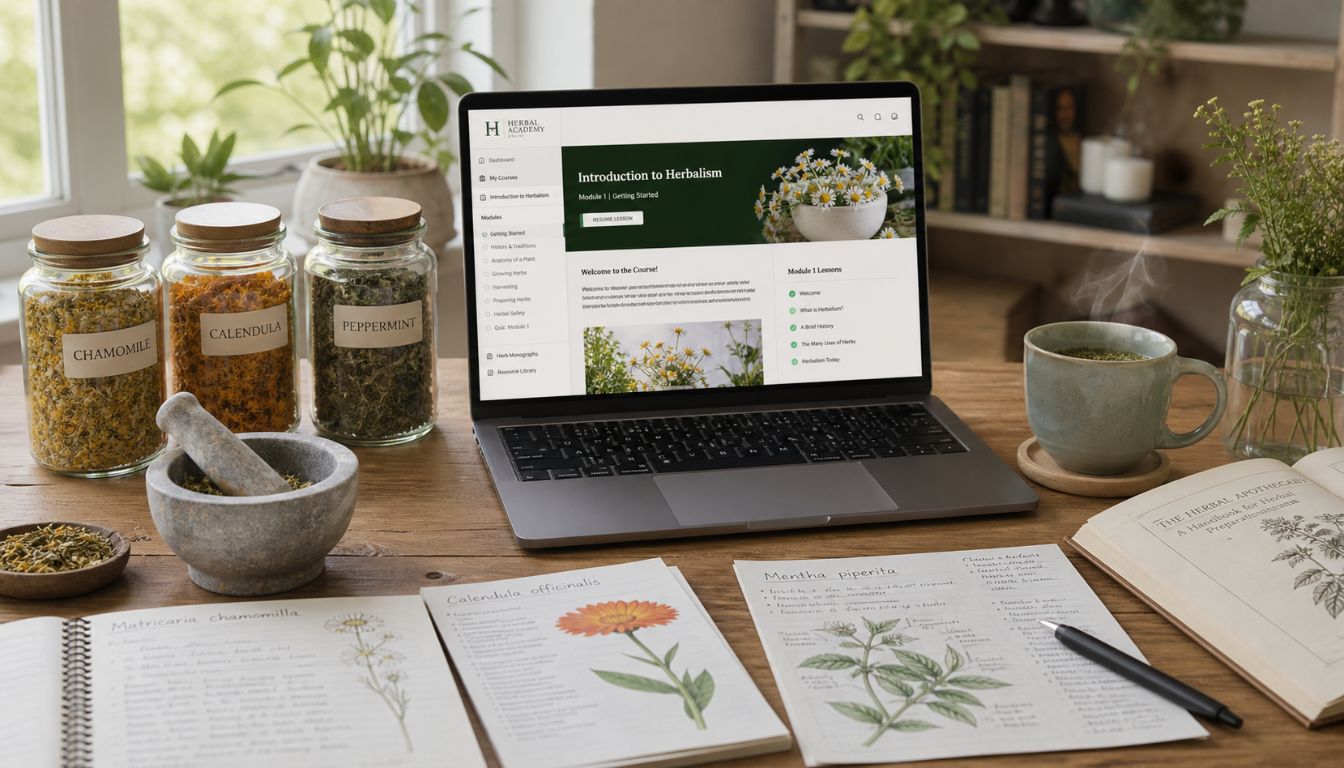
Herbal Academy is an online herbalism school that offers self‑paced courses in herbal medicine. These range from introductory level through to more in‑depth study paths. Their programmes combine written lessons, video classes, quizzes, and downloadable resources. This makes it possible to study from home at your own pace.
The school focuses on practical, Western herbalism with a strong emphasis on materia medica and body systems. There is also a big focus on making herbal preparations such as teas, tinctures, and salves. It is not a university or degree‑granting institution. Instead, it sits in the growing space of online continuing education for herbal enthusiasts and aspiring practitioners.
Herbalist Academy Review: Who Herbal Academy Is Best For?
Herbal Academy is a good fit if you:
- Are a beginner or intermediate student who wants a structured path into herbalism rather than piecing everything together alone.
- Prefer self‑paced online learning with clear modules, quizzes, and plenty of reading material.
- Want to focus on practical skills like remedy making, home and family care, and general wellness support rather than purely academic study.
- Are happy to study independently and do not need a university degree or government‑regulated professional licence from your course provider.
It may be less ideal if you are looking for in‑person clinical mentorship from the outset. The same is true if you specifically need an accredited college or university qualification in herbal medicine. In those cases, a school or programme that aligns more closely with professional bodies such as the American Herbalists Guild may serve you better. Some students also prefer formal herbal science degrees for this reason.
Herbalist Academy Review: Courses Overview
Herbal Academy organises its main curriculum into core herbalism courses at different levels, plus a range of shorter speciality classes. Most students start with the foundational programmes and then add more focused study as their confidence grows.
Introductory Herbal Course
The Introductory Herbal Course is designed for complete beginners who want a gentle but structured start. It covers basic herbal concepts, common kitchen herbs, simple preparations, safety essentials, and ways to bring herbs into daily life through teas, infusions, and food. Lessons are delivered through written modules, videos, and quizzes. The estimated study time is around 100–130 hours, depending on your pace.
Intermediate Herbal Course
The Intermediate Herbal Course steps up both depth and workload. It moves into body‑system‑based herbalism and basic anatomy and physiology. You also cover formulation ideas and more detailed materia medica on a wider range of plants. There is more emphasis on safety, contraindications, and understanding how herbs interact with the body. This makes it a natural follow‑on once you have a handle on the basics.
Speciality and Skills‑Based Courses
Alongside the main levels, Herbal Academy also offers more focused courses on topics such as medicine making, foraging, and specific areas of herbal practice. These classes tend to concentrate on practical skills like preparing tinctures and salves and harvesting and processing wild plants responsibly. Many students also use them to build confidence around a particular theme. They work well as add‑ons to the core curriculum rather than as standalone professional training.
Herbal Academy Path Packages
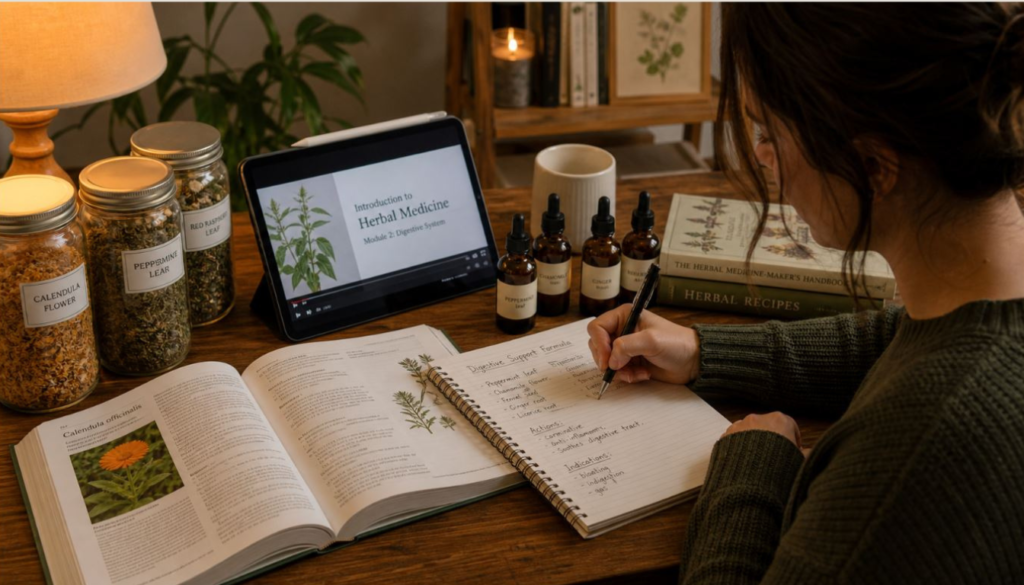
Herbal Academy also bundles some of its courses into longer “path packages” aimed at students who want a more continuous study route. These combine multiple levels and speciality modules at a discounted rate so you can progress through a curated sequence rather than choosing each course separately.
Clinical / Professional‑Focused Paths
For students who hope to work with clients in the future, Herbal Academy offers clinical or professional‑oriented paths that bring together intermediate and advanced coursework with additional training. These paths generally include more in‑depth study of body systems, safety, and case‑based thinking, plus supportive material for building a practice. You will still need further supervised clinical experience and must meet any local guidelines if you plan to practise professionally.
Family and Home Herbalist Paths
There are also paths designed for home and family use, which focus on everyday wellness, kitchen remedies, and practical skills for caring for yourself and loved ones. These bundles suit people who want more structure than a single short course. They are aimed at students who are not necessarily looking for a clinical or career‑focused role in herbalism.
Herbalist Academy Review: Study Format and Learning Experience
Herbal Academy’s courses are delivered fully online and self‑paced, which means you can start at any time and move through the material as your schedule allows. Each course is broken into units and lessons that mix written content, video classes, quizzes, and downloadable charts or handouts. Suggested study hours are included to help you plan your pace.
Because there are no fixed live class times, the experience is very flexible. It also depends on your ability to stay motivated and work independently. Many students appreciate the clear structure and the ability to revisit lessons as needed. However, those who learn best through in‑person interaction or direct mentorship may want to pair online study with local study groups, workshops, or apprenticeships.
Pros and Cons of Herbal Academy
It helps to step back and consider the main strengths and limits of Herbal Academy’s online programmes. That way you can decide more clearly whether to enrol.
Pros
- Offers a clear pathway from beginner to more advanced study through structured online courses.
- Self‑paced format makes it easier to fit herbal study around work, family, and other commitments.
- Strong focus on practical skills such as remedy making, materia medica, and everyday wellness support.
- Wide range of courses and path packages so you can choose a level and theme that match your goals.
Cons
- Online‑only format may not suit students who need face‑to‑face teaching or hands‑on clinical supervision from the outset.
- It is an education provider rather than a university, so it does not grant formal degrees or licences, and you may still need additional training to meet professional expectations in your region.
- The amount of material in longer paths can feel overwhelming if you are not realistic about your available study time and pace.
Herbal Academy Review: Best Alternatives
Herbal Academy is not the only option if you want to study herbal medicine. Several other schools and programmes offer different formats. These range from fully online courses to degree‑level and in‑person clinical training.
- American College of Healthcare Sciences (ACHS) – A fully accredited online college offering certificate, diploma, and degree programmes in herbal studies and holistic health. Best for students who want structured, academic-style distance learning with recognised credentials.
- Bastyr University – A university in Washington State with bachelor’s and master’s degrees in herbal sciences and integrative medicine. Best for those who want a science‑based, campus‑style education with significant clinical and research exposure.
- ArborVitae School of Traditional Herbalism – A New York City school offering in‑person multi‑year programmes grounded in traditional Western herbalism, including clinical components. Best for students who can attend regularly in person and want strong mentorship and community.
- Heart of Herbs Herbal School – An online school with family herbalist, general herbalist, and clinical herbalist programmes, designed to be flexible and relatively affordable. Best for people seeking accessible, at‑home study with options to build towards more advanced training.
- Sacred Plant Traditions – A Virginia‑based school offering multi‑year clinical herbalism training that blends plant work, medicine making, and supervised client work. Best for students who want deep, hands‑on apprenticeship‑style learning in a small cohort setting.
Exploring a mix of these options alongside Herbal Academy can give you a clearer picture of the style of teaching and level of rigour you want. It also helps you decide which long‑term path feels right for you.
How to Choose an Herbalism School
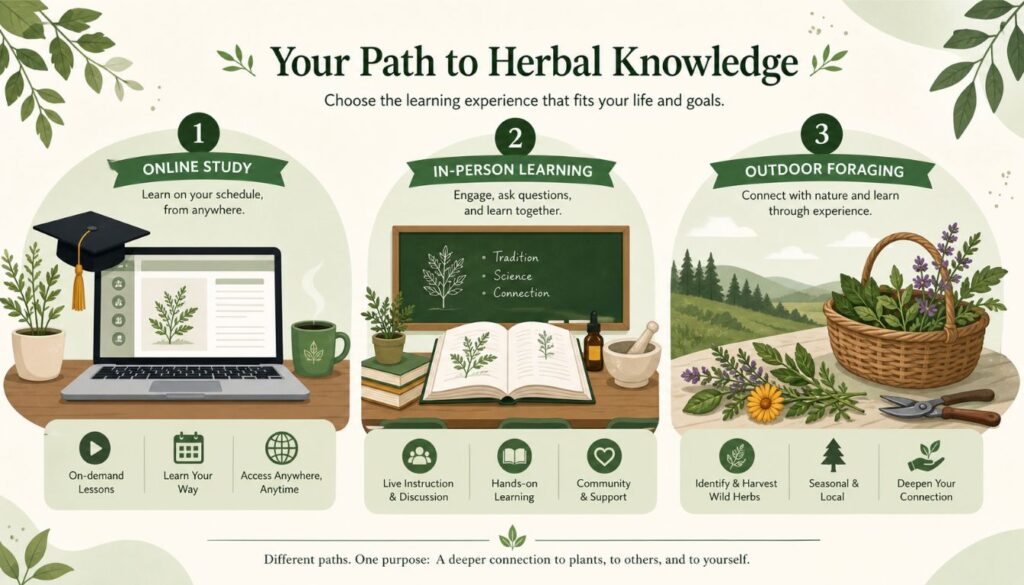
When you compare Herbal Academy with other herbal education options, it helps to ask a few focused questions. This is more useful than only looking at marketing pages.
- What is your main goal: personal/family use, professional clinical practice, product making, or academic study?
- Do you prefer fully online, in‑person, or a blend of both, and can you realistically attend on‑site classes if they are required?
- How much time and money can you commit over the next 6–24 months, and does the course length match that?
- Does the programme’s level (introductory, intermediate, advanced) match your current experience?
- If you aim to practise professionally, does the training broadly align with expectations from bodies such as the American Herbalists Guild or local professional associations, and will you still need supervised clinical hours elsewhere?
- Do you resonate with the school’s philosophy, teachers, and teaching style when you read their material or sample a free lesson?
Answering these questions first makes it easier to see whether Herbal Academy, another online course provider, or a more intensive school is the best next step for you.
Before You Go – Herbalist Academy Review
Choosing where to study herbal medicine is a big decision, and Herbal Academy is one of the more visible online options on the market. It offers structured, self‑paced courses that work well if you want a flexible way to build skills from home, especially at beginner and intermediate levels.
At the same time, it is only one piece of a wider herbal education landscape. That landscape includes accredited colleges, in‑person clinical schools, and other online providers. Taking a little time to compare your goals, budget, and preferred learning style with what each school offers will help you choose a path that feels both realistic and genuinely supportive for where you want to go next.
Enjoyed this article? Add theherbprof.com to your favourites and stay up to date with the latest herbal health guides and supplement reviews.
References – Herbalist Academy Review
Introductory Herbal Course, Herbal Academy – Course overview and curriculum
Intermediate Herbal Course, Herbal Academy – Course outline and study expectations
Herbal Academy – What it is like to study with Herbal Academy
American Herbalists Guild – FAQs and guidance on herbal education and professional expectations
Various herbal schools and programmes mentioned in this article, including ACHS, Bastyr, ArborVitae, Heart of Herbs, and Sacred Plant Traditions.
Related Articles
Herbal Remedies Books: The Best Natural Healing Guides
Frequently Asked Questions – Herbalist Academy Review
Is Herbal Academy good for beginners?
Yes. Herbal Academy’s Introductory Herbal Course is designed specifically for beginners. It covers basic herbal concepts, safety, and simple preparations in a structured, self‑paced format.
How long do Herbal Academy courses take?
Each course lists an estimated study time, with core programmes such as the introductory and intermediate levels running to well over a hundred hours of reading, videos, and assignments, although you can move faster or slower depending on your schedule.
Can Herbal Academy make me a professional herbalist on its own?
Herbal Academy can provide a solid educational foundation, but on its own it does not grant a licence to practise or replace supervised clinical experience or any local requirements for professional herbalists.
Are Herbal Academy courses accredited or degree‑granting?
Herbal Academy offers online herbal education and certificates of completion, but it is not a university and does not award formal academic degrees; students seeking degree‑level or fully accredited programmes usually look to institutions such as ACHS or Bastyr.
What are the best alternatives to Herbal Academy?
Well‑known alternatives include the American College of Healthcare Sciences, Bastyr University, ArborVitae School of Traditional Herbalism, Heart of Herbs Herbal School, and Sacred Plant Traditions, each with its own mix of online, on‑campus, and clinical training options.
How should I decide between Herbal Academy and another herbal school?
Start by clarifying whether you want personal, family, or professional training, then compare programmes on format (online vs in‑person), level, time and cost, and how closely they align with expectations from bodies like the American Herbalists Guild or local professional associations.