
The Herb Prof Team researches and writes our herbal guides, drawing on published research, traditional herbal references, and hands-on growing experience.
When choosing a natural antimicrobial, oregano oil and garlic oil are two of the most studied and widely used options. Both have a long history in traditional medicine, and both contain active compounds with well-documented antibacterial and antifungal effects. However, they work differently, suit different situations, and carry different safety considerations. This article compares oregano oil vs garlic oil across antimicrobial strength, immune support, safety, and practical use. That way, you can decide which one belongs in your natural health routine.
What Is Oregano Oil?
Oregano oil is extracted from the leaves and flowering tops of Origanum vulgare and related Mediterranean species. It has been used for centuries in folk medicine across Greece, the Middle East, and southern Europe, valued for its strong antimicrobial and preservative properties.
Its two most studied active compounds are carvacrol and thymol, both phenolic compounds that have shown antibacterial, antifungal, antioxidant, and anti-inflammatory activity in laboratory and animal research. The concentration of carvacrol in particular varies between products and species, which is why high-quality oregano oil supplements typically standardise and display their carvacrol percentage on the label.
Today, oregano oil is available in three main forms:
- Liquid oil of oregano – oregano extract diluted in a carrier oil such as olive oil, suitable for internal or topical use
- Softgel capsules – pre-measured doses, easier on taste and digestion
- Pure essential oil – a highly concentrated, steam-distilled form intended for aromatherapy or diluted topical use only, not for internal use
For the health comparisons in this article, oil of oregano (liquid or capsule form) is the relevant product, not pure essential oil.
What Is Garlic Oil?
Garlic oil is derived from the cloves of Allium sativum, the common garlic plant. Garlic has one of the longest documented histories of any medicinal plant, with records of its therapeutic use spanning ancient Egypt, China, Greece, and Rome.
The primary active compound in garlic is allicin, a sulphur-containing molecule that forms when raw garlic is crushed or chopped and the enzyme alliinase converts alliin. Allicin is responsible for garlic’s characteristic smell and much of its antimicrobial activity. It is worth noting that garlic oil produced through steam distillation or maceration contains different sulphur compounds to freshly crushed garlic, which can affect its potency and profile compared to raw garlic preparations.
Garlic oil is available in several forms:
- Macerated garlic oil – garlic cloves infused into a carrier oil, common in culinary and home remedy use
- Steam-distilled garlic essential oil – concentrated and used in supplements or diluted topical preparations
- Odourless garlic capsules – enteric-coated supplements designed to reduce digestive discomfort and garlic breath
Beyond its antimicrobial properties, garlic has also been studied for cardiovascular support, including potential effects on blood pressure and lipid profiles, which gives it a somewhat broader traditional use profile than oregano oil.
Oregano Oil vs Garlic Oil at a Glance
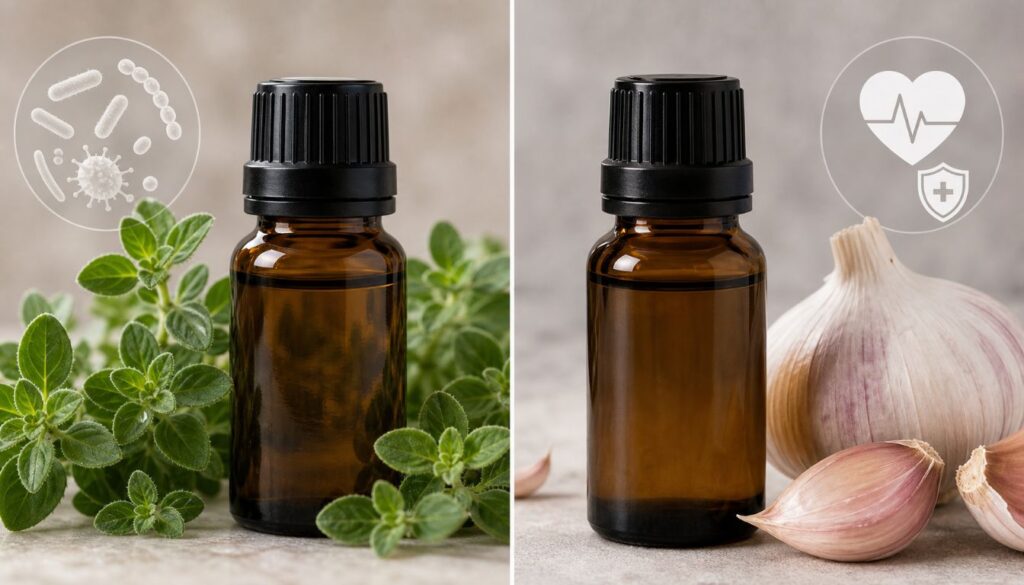
| Property | Oregano Oil | Garlic Oil |
|---|---|---|
| Key active compound | Carvacrol + thymol | Allicin + sulphur compounds |
| Antibacterial strength | Strong | Strong |
| Antifungal strength | Very strong | Moderate |
| Antiviral support | Moderate | Moderate–strong |
| Anti-inflammatory | Yes | Yes |
| Immune support | Yes | Strong |
| Cardiovascular support | Limited evidence | Yes (blood pressure, lipids) |
| Safe during pregnancy | Avoid | Use caution |
| Blood-thinning risk | Yes | Yes |
| Best suited for | Fungal and bacterial infections | General immune, cardiovascular, and antibiotic support |
Antimicrobial Properties Compared
Oregano oil and garlic oil are both genuine broad-spectrum antimicrobials, but their strengths differ depending on the type of microorganism involved. Understanding those differences helps you choose the right tool for the right situation.
Antibacterial Effects
Both oils show strong antibacterial activity in laboratory research, though they work through different mechanisms.
Oregano oil’s carvacrol and thymol disrupt bacterial cell membranes, interfering with membrane permeability and causing cellular damage. Studies have demonstrated activity against a wide range of gram-positive and gram-negative bacteria. These include Escherichia coli, Staphylococcus aureus, Salmonella species, and Pseudomonas aeruginosa. Its broad-spectrum action makes it one of the more studied plant-based antibacterials in preclinical research.
Garlic oil’s allicin and related sulphur compounds inhibit key bacterial enzymes, disrupting normal bacterial metabolism. Research has confirmed antibacterial effects against many of the same pathogens, including E. coli, Staphylococcus aureus, and Salmonella. Some studies have also explored garlic’s potential against antibiotic-resistant strains, with promising but still preliminary results.
In head-to-head terms, the antibacterial evidence for both oils is broadly comparable in lab settings. However, most of this research is preclinical, meaning it was conducted in test tubes or animal models rather than in human clinical trials. Neither oil should be used as a replacement for prescribed antibiotics in the case of a confirmed or serious bacterial infection.
Antifungal Effects
This is where oregano oil pulls clearly ahead. Carvacrol and thymol have been extensively studied for their ability to inhibit the growth of Candida albicans and other fungal species. Multiple studies have found oregano oil to be effective at disrupting fungal cell membranes, and it is one of the most consistently recommended plant oils in natural protocols targeting Candida overgrowth, nail fungus, and skin fungal infections.
Garlic oil also has antifungal properties, primarily through its allicin content, and it does show activity against Candida in laboratory studies. However, its antifungal potency is generally considered moderate compared to oregano oil, and it is less frequently the first-choice natural option for fungal-specific issues.
If antifungal support is your primary goal, oregano oil is the stronger candidate between the two.
Antiviral and Immune Support
Neither oil has strong direct antiviral evidence in human trials, but both contribute to immune support through different pathways.
Oregano oil’s carvacrol has shown some antiviral activity in early cell-based studies, and its anti-inflammatory properties may help the body manage the inflammatory response during viral illness. It is commonly used as a supportive measure at the onset of colds or respiratory infections, though this use is largely based on traditional practice and limited human data.
Garlic oil has a somewhat stronger evidence base for immune modulation. Several human studies have found that regular garlic supplementation is associated with reduced frequency and severity of colds. Garlic compounds also appear to stimulate certain immune cell activity. Beyond infection, garlic also has a more established research profile for cardiovascular benefits, including modest effects on blood pressure and LDL oxidation, which oregano oil does not meaningfully share.
For general immune resilience and longer-term immune maintenance, garlic oil has the broader and better-supported track record of the two.
Anti-inflammatory Effects
Both oregano oil and garlic oil have demonstrated anti-inflammatory activity in laboratory and animal research, though neither is primarily known as an anti-inflammatory remedy in the way that turmeric or boswellia are.
Oregano oil’s carvacrol has been shown to inhibit certain pro-inflammatory enzymes and reduce inflammatory markers such as cytokines in preclinical studies. This may help explain why some people find it useful during respiratory infections or episodes of minor inflammatory discomfort. The anti-inflammatory evidence is real but largely preclinical, and it is better understood as a secondary benefit of oregano oil rather than its primary use case.
Garlic oil similarly shows anti-inflammatory activity through its sulphur compounds, which appear to inhibit pathways involved in inflammation. Some human studies on garlic supplementation have found modest reductions in inflammatory markers such as C-reactive protein (CRP), particularly in people with cardiovascular risk factors. This makes garlic oil’s anti-inflammatory profile slightly better supported in human data than oregano oil’s, though the effects are modest rather than dramatic.
For either oil, anti-inflammatory support should be viewed as a complementary benefit rather than the main reason to choose one over the other. Anyone dealing with significant or chronic inflammation should work with a healthcare provider rather than relying on either oil alone.
How to Use Each Oil
Oregano Oil: Forms and Dosage
For internal use, oil of oregano in liquid or capsule form is the appropriate choice. Pure oregano essential oil is not suitable for ingestion.
With liquid oil of oregano, a common starting approach is 1 to 3 drops diluted in a carrier oil such as olive or coconut oil, taken once or twice daily with food for a short course of one to two weeks. Always follow the manufacturer’s recommended dosage, as carvacrol concentration varies between products. Higher or longer-duration use should only be undertaken with professional guidance.
For topical use, dilute oregano oil in a carrier oil at a ratio of no more than 1 part oregano oil to 3 to 4 parts carrier oil before applying to skin. Never apply it undiluted, and avoid contact with eyes and mucous membranes.
Key points to remember:
- Use short-term (typically one to two weeks) unless advised otherwise by a practitioner
- Always dilute before oral or topical use
- Pregnant or breastfeeding women should avoid it
- Those on blood-thinning medications should consult their doctor first
Garlic Oil: Forms and Dosage
Garlic oil is available in both culinary and supplement forms, and the two serve different purposes.
For culinary use, macerated garlic oil can be added freely to dressings, soups, and cooked dishes. This level of use is generally safe for most healthy adults and contributes the flavour and some of the milder health properties of garlic, though cooking can reduce allicin content.
For supplemental use, enteric-coated garlic oil capsules are a practical option that reduces digestive discomfort and garlic breath. Follow the product label, as standardised doses vary. Most studies on garlic and immune health have used daily supplementation over several weeks to months, suggesting garlic oil is better suited to longer-term, lower-dose use than the short-burst approach typical with oregano oil.
Key points to remember:
- Avoid high-dose garlic oil supplements in the week before surgery due to blood-thinning effects
- Those with garlic allergy should not use it in any form
- High doses can cause digestive upset, particularly bloating and nausea
- Consult a doctor before use if you take anticoagulants or blood pressure medications
Safety and Side Effects
Both oils are generally considered safe for most healthy adults when used appropriately. Each carries specific risks that are worth understanding before you start using them in your routine.
Oregano Oil Safety
Oregano oil is potent and should always be used with care, particularly for internal use.
The most common side effects are digestive: nausea, stomach cramping, or loose stools, especially at higher doses or when taken without food. Topical use without adequate dilution can cause skin burning or irritation. Some people sensitive to plants in the Lamiaceae family (mint, basil, sage, thyme) may also react to oregano oil, so a patch test before topical use is sensible.
More serious considerations include:
- Pregnancy and breastfeeding – oregano oil should be avoided entirely. It has traditionally been associated with stimulating uterine contractions, and there is insufficient safety data to consider it safe during pregnancy or while nursing
- Blood-thinning medications – carvacrol may influence platelet activity and clotting, so anyone taking anticoagulants such as warfarin should consult their doctor before use
- Surgery – stop use at least two weeks before any planned procedure due to potential effects on bleeding
- Long-term use – oregano oil is best used in short courses. Prolonged daily use is not well studied and may disrupt the balance of gut microbiota alongside harmful bacteria
Any signs of a serious allergic reaction, including facial swelling, difficulty breathing, or hives require immediate medical attention.
Garlic Oil Safety
Garlic oil has a well-established safety profile at culinary doses, and supplemental use is generally well tolerated, though side effects do occur.
The most frequently reported issues are gastrointestinal: bloating, gas, nausea, and stomach irritation, particularly with high doses or on an empty stomach. Enteric-coated capsules reduce but do not always eliminate these effects. The characteristic garlic odour on breath and skin is also a common complaint with regular supplementation.
More significant considerations include:
- Blood-thinning effects – allicin and related compounds can inhibit platelet aggregation. Anyone taking anticoagulants, aspirin, or other blood-thinning drugs should consult their doctor before adding garlic oil supplements to their routine
- Surgery – avoid supplemental garlic oil for at least one week before surgery due to increased bleeding risk
- Garlic allergy – though uncommon, true garlic allergy exists and can cause skin reactions, digestive symptoms, or in rare cases anaphylaxis. Anyone with a known allergy to Allium species should not use garlic oil in any form
- Drug interactions – garlic may interact with certain HIV medications (protease inhibitors) and may enhance the effects of blood pressure drugs. Check with a pharmacist if you take regular prescriptions
At culinary doses, garlic oil is safe for most people and does not carry the same short-term use restrictions as oregano oil.
Which One Should You Choose?

When you look at oregano oil vs garlic oil, there is no single winner. The better choice depends on what you are trying to address.
Choose oregano oil if:
- Your primary concern is a fungal issue such as Candida overgrowth, nail fungus, or a skin fungal infection
- You want a strong short-term antimicrobial to use at the onset of a bacterial or mixed infection
- You are looking for a well-studied broad-spectrum option for a defined, short course of use
Choose garlic oil if:
- Your goal is ongoing immune support and general resilience rather than targeting a specific infection
- You are interested in cardiovascular benefits alongside antimicrobial support
- You want something suitable for longer-term daily use, including as part of your regular diet
- You are pregnant or in a population where oregano oil is contraindicated, and your healthcare provider approves garlic supplementation
Consider using both if:
- You are working with a practitioner on a broader natural wellness protocol, as the two oils work through different mechanisms and are not redundant. Oregano oil’s carvacrol-driven membrane disruption and garlic oil’s allicin-driven enzyme inhibition can complement each other when used appropriately and at safe doses
In all cases, neither oil replaces medical care for confirmed or serious infections. If symptoms persist, worsen, or are accompanied by fever, significant pain, or other red flags, seek professional medical advice promptly.
Before You Go – Oregano Oil vs Garlic Oil
Oregano oil vs garlic oil is not a simple “winner takes all” question; both are genuine broad-spectrum antimicrobials, but their strengths differ depending on the type of microorganism involved. Oregano oil stands out for its strong antifungal and broad-spectrum antibacterial activity, making it a better fit for short-term support during acute issues, especially when fungi like Candida may be involved.
Garlic oil, by contrast, has a broader evidence base for long-term immune and cardiovascular support, and several human trials suggest that allicin-containing garlic supplements can modestly reduce cold frequency and improve lipid and blood pressure markers over time. Used thoughtfully, either oil can be a valuable addition to a wider health plan that also prioritises diet, sleep, stress management, and appropriate medical care.
Because both oils are potent and can interact with medications or affect bleeding, it is always wise to check with a healthcare professional before starting regular supplementation, especially if you are pregnant, on blood thinners, or managing chronic health conditions. Think of them as focused tools rather than everyday cure-alls, and choose the oil that best matches your particular goals.
Enjoyed this article? Add theherbprof.com to your favourites and stay up to date with the latest herbal health guides and supplement reviews.
References – Oregano Oil vs Garlic Oil
Manohar V, et al. “Antifungal activities of origanum oil against Candida albicans.” Mol Cell Biochem. 2001.
Azar P, et al. “In vitro activity of Origanum vulgare essential oil against Candida species.” Braz J Microbiol. 2010.
Josling P. “Preventing the common cold with a garlic supplement: a double-blind, placebo-controlled survey.” Adv Ther. 2001.
Lissiman E, et al. “Garlic for the common cold.” Cochrane Review, 2014.
Ried K. “Effect of garlic on serum lipids: an updated meta-analysis.” Nutr Rev. 2013.
Ried K, et al. “Effects of Garlic Supplementation on Cardiovascular Risk Factors in Adults.” Nutrients. 2025.
Guo Y, et al. “The Effect of Aged Garlic Supplementation on Blood Pressure.” 2025.
Related Articles
Passionflower vs Valerian: Finding Your Best Sleep Ally
Herbal Detox Baths: The Best Soaks for Deep Relaxation
Types of Oregano Plants: The Mega Informational Guide
Frequently Asked Questions – Oregano Oil vs Garlic Oil
What are the main health benefits of oregano oil?
Oregano oil provides broad-spectrum antimicrobial support, particularly against certain bacteria and fungi such as Candida species. Its key compounds, carvacrol and thymol, have also shown antioxidant and anti-inflammatory activity in laboratory and animal studies, which may help during respiratory infections or minor inflammatory flare-ups when used short-term.
What are the main health benefits of garlic oil?
Garlic oil supplies allicin and related sulphur compounds that demonstrate antibacterial, antifungal, and immune-supportive actions. Human research suggests garlic supplementation may modestly reduce cold frequency and improve cardiovascular risk markers such as total cholesterol, LDL cholesterol, and blood pressure, especially when used consistently over several weeks or months.
Which is better for infections: oregano oil or garlic oil?
For fungal issues like Candida or nail and skin fungal infections, oregano oil generally has stronger evidence and is often preferred. For general bacterial infections and immune support, both oils show activity in preclinical studies, but garlic oil has slightly more human data for common respiratory infections, while oregano oil is more often used in short, targeted courses rather than long-term.
Can I take oregano oil and garlic oil together?
They are sometimes used together in natural protocols because they act through different mechanisms and are not redundant. However, both may affect clotting and digestion, so anyone on blood thinners, preparing for surgery, or with gastrointestinal issues should speak with a healthcare professional before combining them.
Are there side effects I should watch for with oregano oil?
Yes. Oregano oil can cause digestive upset, loose stools, or burning sensations if not diluted properly, and may provoke skin irritation or allergic reactions in sensitive people. It should be avoided during pregnancy and generally used only in short courses, especially if you take anticoagulant medications or have upcoming surgery.
Are there side effects I should watch for with garlic oil?
Common issues include bloating, gas, stomach irritation, and characteristic garlic odour on the breath and skin, especially at higher doses. Because garlic can thin the blood, those taking anticoagulants or scheduled for surgery should use garlic oil only under medical guidance, and anyone with a known Allium allergy should avoid it altogether.
How can I safely add these oils to my routine?
For oregano oil, short-term use of diluted liquid or capsule forms, strictly following label directions, is the safest approach. For garlic oil, regular low-dose supplementation or generous culinary use tends to be better tolerated, and a healthcare professional can help you decide which form, dose, and duration best match your health goals and medications.