
The Herb Prof Team researches and writes our herbal guides, drawing on published research, traditional herbal references, and hands-on growing experience.
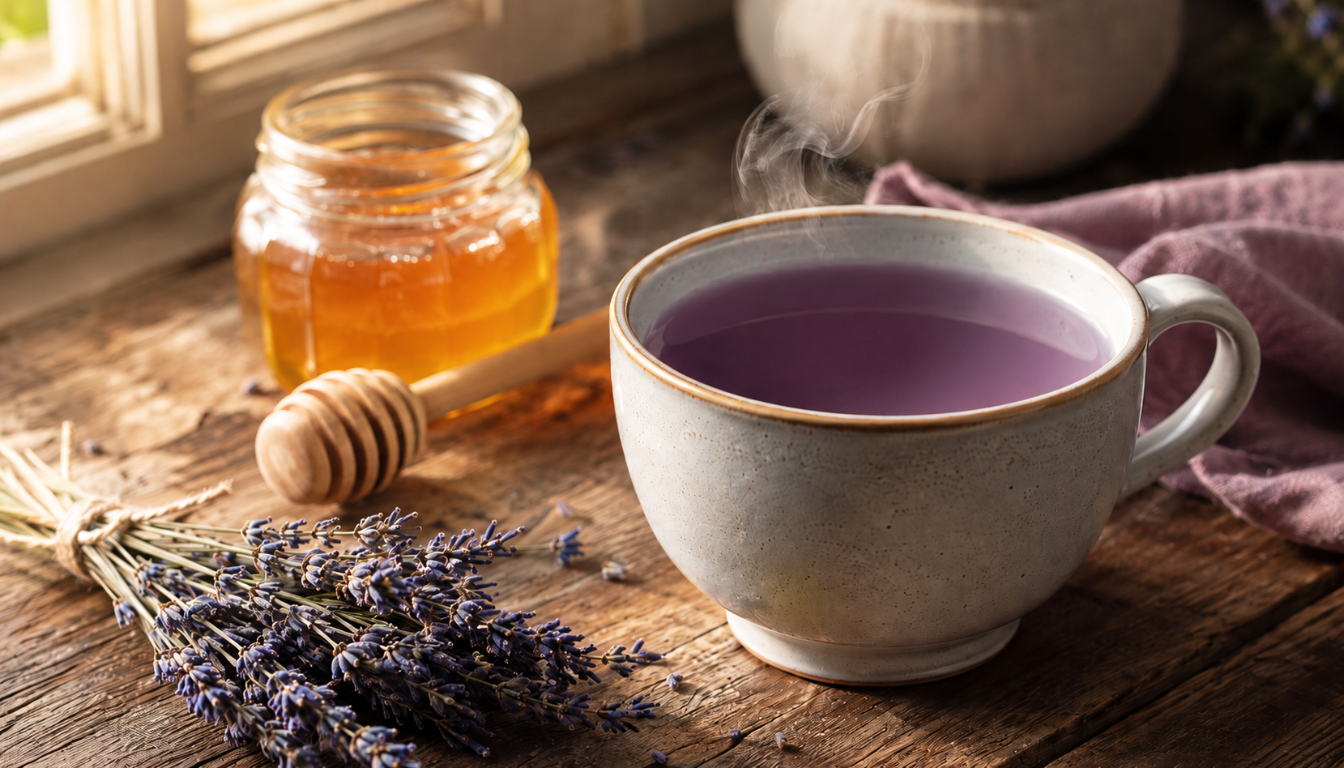
This lavender tea recipe is one of the simplest and most rewarding herbal preparations you can make at home. Brewed from the dried flowers of Lavandula angustifolia, it has a gentle floral flavour, a calming aroma, and a well-documented ability to reduce anxiety, improve sleep, and support digestive health. This guide covers everything you need, the recipe, the health benefits, variations to try, and exactly what the science says about why it works.
What Is Lavender Tea?
Lavender tea is an herbal infusion made by steeping dried or fresh lavender flower buds in hot water. Unlike black or green tea, it contains no caffeine, making it an ideal evening drink. The active compounds responsible for its therapeutic effects include linalool and linalyl acetate, two naturally occurring terpenes that have been extensively studied for their calming, anti-anxiety, and sleep-promoting properties.
The best lavender for tea is always English lavender (Lavandula angustifolia). It has the sweetest, most delicate flavour of all lavender species and the highest concentration of medicinally active compounds. French and Spanish lavender varieties have a stronger, more camphor-like scent that can make tea taste bitter or soapy.
Health Benefits of Lavender Tea
Anxiety and Stress Relief
Lavender is one of the most researched herbs for anxiety. The compound linalool, present in lavender flowers and released when steeped in hot water, interacts with the central nervous system to produce a measurable calming effect. A standardised oral lavender oil preparation (Silexan) has been shown in clinical trials to be as effective as lorazepam for generalised anxiety disorder. While lavender tea contains lower concentrations than a standardised extract, regular consumption still provides meaningful anxiety relief.
Sleep Support
Lavender tea is a well-established natural sleep aid. Studies show that lavender aromatherapy and oral consumption both improve sleep quality, increase slow-wave sleep, and reduce night waking. Drinking a cup 30–45 minutes before bed allows the active compounds to take effect as you wind down for sleep.
Digestive Support
Lavender has antispasmodic properties. It relaxes the smooth muscle of the digestive tract, making lavender tea effective for bloating, cramping, nausea, and indigestion. It has been used in European traditional medicine for digestive complaints for centuries.
Anti-Inflammatory and Antioxidant Properties
Lavender flowers are rich in polyphenols and flavonoids, plant compounds with significant antioxidant and anti-inflammatory activity. Regular consumption helps protect cells against oxidative stress and may reduce low-grade chronic inflammation.
Menstrual Pain Relief
Lavender’s antispasmodic and anti-inflammatory properties extend to menstrual discomfort. Several studies have found that lavender aromatherapy and consumption reduce the severity of menstrual cramps and associated symptoms including mood swings and bloating.
Respiratory Support
Lavender has mild antimicrobial properties and its anti-inflammatory compounds can help soothe irritated airways. Lavender tea drunk warm is a traditional remedy for sore throats, mild coughs, and congestion.
What You Need to Make Lavender Tea
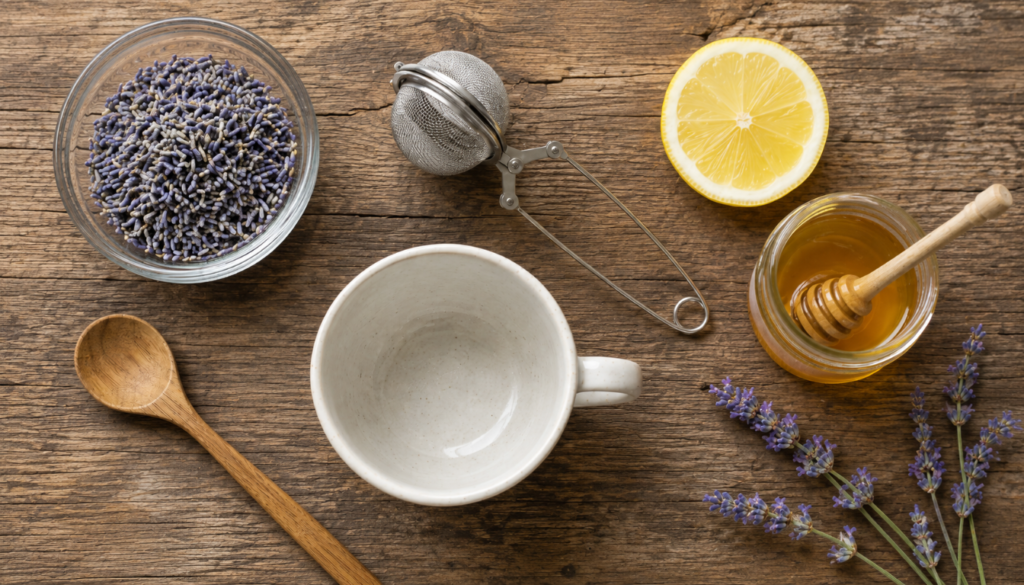
Ingredients
- 2 teaspoons dried English lavender buds (or 1 tablespoon fresh lavender buds)
- 240ml (1 cup) filtered water, just off the boil – around 90–95°C (195–200°F)
- Raw honey or maple syrup to taste (optional)
- A squeeze of fresh lemon (optional – brightens the flavour beautifully)
On quantities: dried lavender is significantly more concentrated than fresh. Start with the amounts above and adjust to your taste. More than 2 teaspoons of dried lavender per cup can result in an overpoweringly floral or slightly soapy flavour.
Equipment
- A kettle or small saucepan
- A tea infuser, tea ball, or muslin teabag
- A cup or mug
- A fine mesh strainer (if not using an infuser)
Lavender Tea Recipe: Step by Step
Step 1: Heat the water
Bring filtered water to just below boiling at around 90–95°C (195–200°F). Boiling water at 100°C can destroy some of the delicate aromatic compounds in lavender and result in a slightly bitter cup. If you do not have a temperature-controlled kettle, bring the water to a full boil and let it sit for 60 seconds before pouring.
Step 2: Prepare the lavender
If using dried lavender buds, measure 2 teaspoons into your tea infuser or muslin bag. If using fresh lavender, rinse the buds thoroughly under cold water, pat dry, and use 1 tablespoon. Fresh lavender produces a lighter, more delicate infusion than dried.
Step 3: Steep
Place the infuser in your cup and pour the hot water over it. Steep for 5–7 minutes for a gentle, floral cup, or up to 10 minutes for a stronger infusion. Do not steep for longer than 10 minutes, over-steeping releases bitter tannins and diminishes the pleasant floral notes.
Step 4: Remove and finish
Remove the infuser and discard the spent lavender buds. Add a small amount of raw honey if desired, honey complements lavender’s floral notes exceptionally well. A squeeze of lemon is optional but recommended; the citrus lifts the flavour and balances the sweetness.
Step 5: Serve
Drink immediately while hot for the full therapeutic benefit, or allow to cool and serve over ice for an iced lavender tea. See the variations section below for more serving ideas.
Lavender Tea Variations
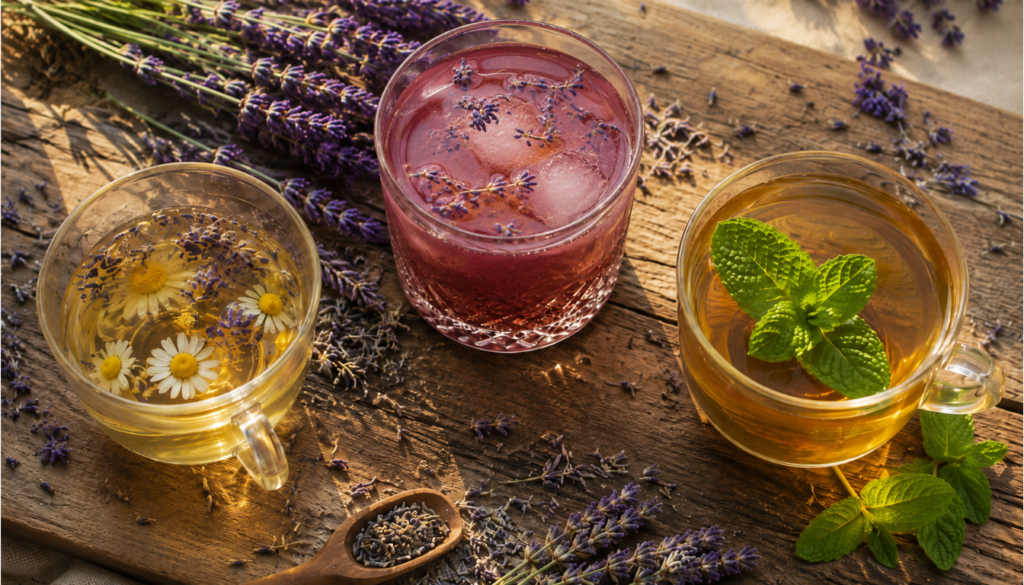
Each lavender tea recipe variation below uses the same basic method, simply adjust the ingredients to suit your blend.
Lavender and Chamomile Tea
The most popular lavender tea blend, and for good reason. Both herbs are calming, sleep-promoting, and anti-anxiety. Together they produce a deeply relaxing evening tea that is greater than the sum of its parts.
- 1 teaspoon dried lavender buds
- 1 teaspoon dried chamomile flowers
- 240ml hot water
- Steep 7–10 minutes, add honey to taste
Lavender and Mint Tea
A refreshing, digestive blend that works equally well hot or iced. Mint adds a cooling, uplifting quality that balances lavender’s floral depth, and both herbs support digestive health.
- 1 teaspoon dried lavender buds
- 1 tablespoon fresh mint leaves (or 1 teaspoon dried)
- 240ml hot water
- Steep 5–7 minutes, add honey and lemon to taste
Lavender Berry Iced Tea
A beautiful summer drink that showcases lavender’s affinity with fruit. The berry sweetness softens lavender’s floral intensity and creates a naturally purple-pink drink.
- 2 teaspoons dried lavender buds steeped in 480ml hot water for 7 minutes
- In a separate pan, simmer 1 cup mixed berries (raspberries, blueberries, strawberries) in 240ml water for 10 minutes
- Strain both, combine, cool completely, and serve over ice
Lavender and Lemon Tea
The simplest and most elegant variation. Lemon and lavender are a classic pairing, the citrus brightens the floral notes and adds vitamin C.
- 2 teaspoons dried lavender buds
- 240ml hot water
- Juice of half a lemon
- Raw honey to taste
- Steep 5–7 minutes, add lemon and honey after removing infuser
Buying and Storing Lavender for Tea
Buying
Always buy food-grade or culinary-grade dried lavender for tea, not craft or potpourri lavender, which may have been treated with fragrance oils or pesticides. Look for organic English lavender (Lavandula angustifolia) from a reputable supplier. Health food shops, specialist herb suppliers, and online herbal retailers are reliable sources.
Storing
Store dried lavender in an airtight glass jar away from direct light and heat. Properly stored, dried lavender retains its flavour and medicinal potency for one to two years. Check before use, if the colour has faded significantly and the fragrance is weak, replace it.
Growing Your Own
The most rewarding source of lavender for tea is your own garden. See our complete guide to growing lavender for everything you need to know about cultivating, harvesting, and drying your own lavender buds.
Lavender Tea in Traditional Medicine
Lavender has been used medicinally for over 2,500 years. The ancient Greeks and Romans used it to calm nerves, aid digestion, and treat headaches. Medieval European herbalists prescribed lavender tea for “melancholy,” anxiety, and insomnia, conditions we now treat with medications that lavender’s compounds partially mimic at lower, gentler concentrations.
Nicholas Culpeper, the 17th-century English herbalist, recommended lavender for “all diseases of the head and brain” including giddiness, falling sickness, and weak sight. The 19th-century Eclectic physicians used lavender as a nervous stimulant and digestive tonic. Today, modern pharmacological research has validated many of these traditional uses, particularly for anxiety and sleep.
Safety and Precautions
Lavender tea is very well tolerated by most people, but there are important considerations to be aware of:
- General use: lavender tea in normal culinary amounts (1–2 cups per day) is safe for most healthy adults
- Pregnancy: lavender tea in small amounts is generally considered safe during pregnancy, but avoid drinking large quantities. Consult your midwife or doctor if in doubt
- Breastfeeding: limited research exists on lavender consumption during breastfeeding – use with caution and in small amounts only
- Children: lavender tea in small amounts is generally safe for children over two years old. Use half the adult quantity and do not give regularly to very young children
- Drug interactions: lavender may enhance the effects of sedative medications, anti-anxiety drugs, and sleeping pills. If you take any of these, consult your doctor before drinking lavender tea regularly
- Hormone-sensitive conditions: some research suggests lavender may have mild oestrogenic activity. People with hormone-sensitive conditions should seek medical advice before regular use
- Allergies: people with allergies to plants in the Lamiaceae family (mint, sage, rosemary, thyme) may also react to lavender. Discontinue use if any allergic reaction occurs
Before You Go – Lavender Tea Recipe
This lavender tea recipe is one of the simplest and most effective herbal preparations you can add to your daily routine. Whether you drink it to wind down before bed, ease digestive discomfort, or simply enjoy the flavour, a well-made cup delivers genuine therapeutic benefit alongside extraordinary taste. Start with the classic recipe, then experiment with the variations to find your favourite blend.
If you want to take your lavender further, our complete guide to How to Grow Lavender: Varieties, Care, Harvest and Uses covers everything you need to grow, harvest, and dry your own flowers at home. And if you are looking for another calming herbal tea to pair with your routine, the Chamomile vs Lavender guide will help you decide which herb works best for your needs.
References – Lavender Tea Recipe
Little Herb Encyclopedia, by Jack Ritchason; N.D., Woodland Publishing Incorporated, 1995
The Ultimate Healing System, Course Manual, Copyright 1985, Don Lepore
Planetary Herbology, Michael Tierra, C.A., N.D., Lotus Press, 1988
Handbook of Medicinal Herbs, by James A. Duke, Pub. CRP Second Edition 2007
The Complete Medicinal Herbal, by Penelope Ody, Published by Dorling Kindersley
Related Articles
Dandelion Root Tea Recipe: A Simple to Boost Your Health
Herbal Mint Tea Recipe: A Refreshing Beverage
Frequently Asked Questions – Lavender Tea Recipe
What is the best lavender for tea?
For the best lavender tea recipe, always use English lavender (Lavandula angustifolia). It has the sweetest, most delicate flavour and the highest concentration of medicinally active compounds. French and Spanish lavender varieties have a stronger, more camphor-like taste that can make tea taste bitter or soapy.
How much lavender do I use per cup?
Use 2 teaspoons of dried lavender buds or 1 tablespoon of fresh lavender buds per 240ml (1 cup) of water. Adjust to taste: less for a lighter, more delicate cup, slightly more for a stronger infusion.
How long should I steep lavender tea?
Steep for 5–7 minutes for a gentle flavour or up to 10 minutes for a stronger cup. Do not steep longer than 10 minutes as over-steeping releases bitter tannins and diminishes the pleasant floral notes.
Can I make lavender tea from fresh lavender?
Yes, fresh lavender makes a lighter, more delicate tea than dried. Use 1 tablespoon of fresh buds per cup, rinsed thoroughly. Harvest just as the buds are beginning to open for the best flavour and medicinal potency.
Can I drink lavender tea every day?
Yes, 1–2 cups per day is safe for most healthy adults. Lavender tea is caffeine-free and well tolerated with regular use. If you are pregnant, breastfeeding, or taking sedative medications, consult your doctor before drinking it daily.
What does lavender tea taste like?
Lavender tea has a gentle, floral flavour with soft herbal notes and a natural sweetness. At the right strength it is smooth and calming, not perfumed or soapy. Over-steeping or using too much lavender can produce a stronger, more soapy taste.
Can I add other herbs to lavender tea?
Yes, lavender pairs beautifully with chamomile, mint, lemon balm, and rose. A squeeze of lemon and a drizzle of raw honey are the simplest and most complementary additions.
Does lavender tea help with sleep?
Yes, multiple studies confirm that lavender’s active compounds, particularly linalool, have sleep-promoting effects. Drink a cup 30–45 minutes before bed for the best results.