
The Herb Prof Team researches and writes our herbal guides, drawing on published research, traditional herbal references, and hands-on growing experience.
If you are looking for a simple way to bring more herbal support into your day, turmeric ginger tincture is a powerful place to start. This classic pairing concentrates two well-known anti-inflammatory roots into a convenient liquid extract that fits easily into a modern routine.
In this guide, you will learn what turmeric ginger tincture is, how it works, when it may be most useful, how to take it safely, and what to watch out for if you use medications or have existing health concerns.
What Is Turmeric Ginger Tincture?
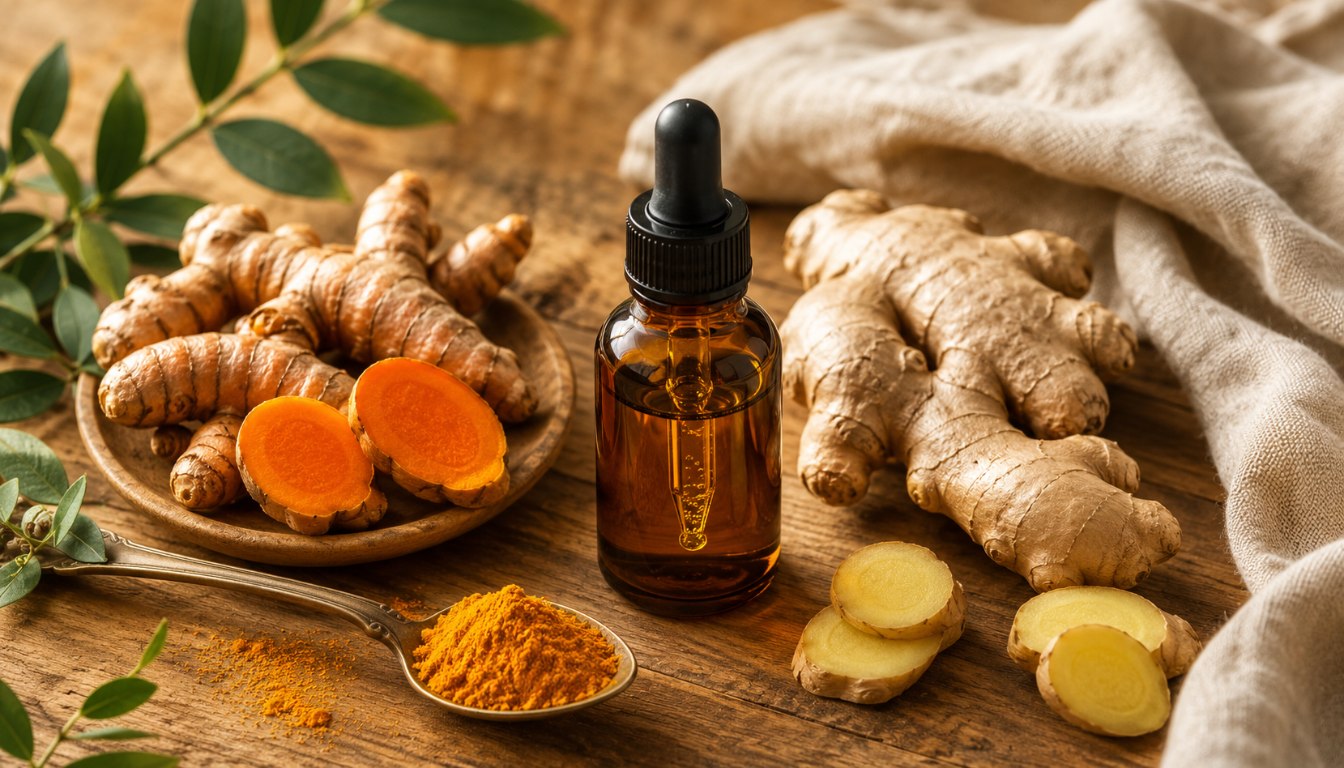
Turmeric ginger tincture is a concentrated herbal extract made from the roots of turmeric (Curcuma longa) and ginger (Zingiber officinale). It is usually prepared by macerating fresh or dried root in alcohol (or occasionally a glycerin blend) so that the key active compounds are pulled into the liquid.
- Turmeric contributes curcuminoids such as curcumin, which have been widely studied for anti-inflammatory and antioxidant effects.
- Ginger provides gingerols and shogaols, which support inflammatory balance, circulation and digestive comfort.
Taken together in a tincture, these herbs offer a compact way to access their shared benefits. This is especially helpful for people who do not use much turmeric or ginger in daily cooking.
Key Benefits of Turmeric Ginger Tincture
1. Inflammation and discomfort
Research suggests that turmeric and ginger can help modulate inflammatory pathways and oxidative stress. These processes are involved in joint stiffness, muscle soreness and many chronic conditions.
- Curcumin can influence inflammatory signalling, including NF‑κB and cytokine activity. It has shown anti-inflammatory and analgesic effects in preclinical and clinical settings.
- Gingerols and related compounds in ginger also show anti-inflammatory and pain-modulating effects. They may help reduce perceived soreness in some contexts.
One experimental study found that combining turmeric and ginger extracts produced stronger anti-inflammatory and analgesic activity than either herb alone, supporting the traditional practice of pairing them.
2. Antioxidant and immune support
Both turmeric and ginger act as antioxidants, helping to neutralise free radicals and support the body during times of increased oxidative stress.
- Curcuminoids can help reduce markers of oxidative damage and support cellular defences.
- Gingerols contribute additional antioxidant activity and may help support immune function indirectly through their effects on inflammation and circulation.
While a tincture will not “boost” immunity in a dramatic way, regular use alongside a generally healthy lifestyle may offer gentle background support, especially during colder months or periods of higher stress.
3. Digestive comfort
Ginger is one of the most respected herbs for digestion and nausea, while turmeric supports digestion from a slightly different angle.
- Ginger can stimulate gastric motility and has good evidence for helping with nausea in several contexts.
- Turmeric may support bile flow and help maintain a healthy inflammatory balance in the digestive tract.
In tincture form, the pair can be especially useful after heavy meals, during periods of bloating or when you want a small, quick dose of digestive support without making tea.
How to Make Turmeric Ginger Tincture at Home
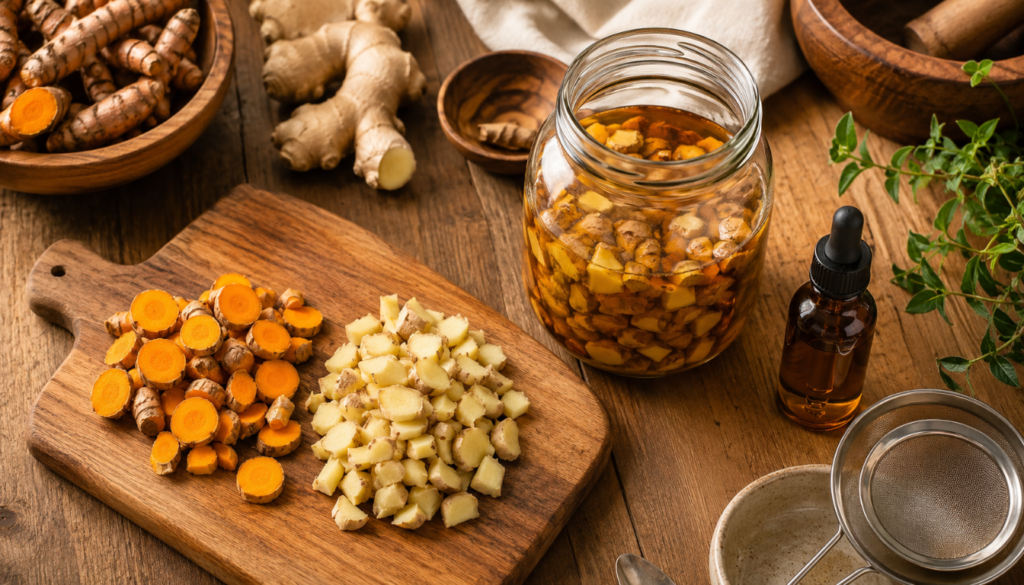
You can buy ready-made tinctures or prepare your own at home if you are comfortable working with alcohol-based herbal extracts.
Ingredients and tools
- Fresh or dried turmeric root
- Fresh or dried ginger root
- 40–50% alcohol (such as vodka or brandy) for most home preparations
- Clean glass jar with a tight-fitting lid
- Dark glass dropper bottles for storage
- Labels with the herb names, ratio, alcohol strength and date
Simple home method (folk method)
- Chop or grate the roots
- Wash and finely chop or grate fresh turmeric and ginger, or use sliced/dried root.
- Aim for roughly equal parts by volume, or adjust the ratio toward more ginger if you want stronger digestive and warming activity.
- Fill the jar
- Loosely fill a clean glass jar about halfway to three-quarters with the prepared root.
- Do not pack it too tightly; you want room for the liquid to circulate.
- Add the alcohol
- Pour your chosen alcohol over the herbs until they are completely covered by at least 2–3 cm.
- Use a clean utensil to release any trapped air bubbles and ensure all plant material is submerged.
- Seal and macerate
- Seal the jar, label it, and place it in a cool, dark cupboard.
- Shake gently every day or two to keep the herbs moving and support extraction.
- Allow to macerate for about 4–6 weeks.
- Strain and bottle
- After maceration, strain the liquid through a fine sieve or cheesecloth, pressing the herbs to extract as much liquid as possible.
- Transfer the tincture into dark glass dropper bottles, label clearly and store away from heat and direct light.
Properly stored, alcohol-based tinctures can remain usable for several years, although the flavour and strength may shift over time.
How to Take Turmeric Ginger Tincture
Typical starting amounts
Specific dosing should always be individual, but many herbalists start adults at a modest range and adjust based on response.
A common general guideline for a standard-strength tincture is:
- Start with about 1–2 dropperfuls (roughly 1–2 ml) once or twice daily with food or in a drink.
- After a week or so, if tolerated and appropriate, some people increase to a total of around 3–4 ml per day, divided into 1–2 doses.
Because tincture strengths and personal needs vary, it is wise to begin at the lower end and observe how you feel. Discuss regular use with a qualified clinician, especially if you take medications or have ongoing health conditions.
Practical ways to use it
You can use turmeric ginger tincture in several simple ways:
- Under the tongue: Place the drops directly under the tongue and hold briefly before swallowing for fast absorption.
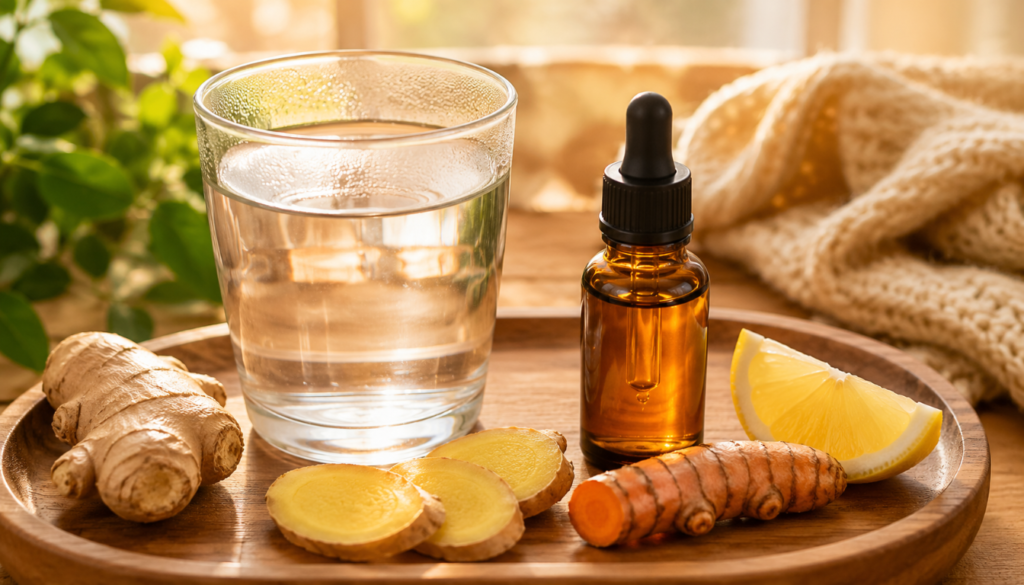
- In warm water: Add to a small glass or mug of warm (not boiling) water for a quick, soothing drink.
- In herbal tea: Stir into a cup of chamomile, lemon balm or mint tea once it has cooled slightly.
- In smoothies: Add to a morning smoothie where the flavours blend with fruits or leafy greens.
- In dressings or tonics: Mix into homemade salad dressings or simple tonic blends with lemon, honey and warm water for a culinary-style approach.
Rotating methods can make it easier to keep a consistent routine. It helps you avoid feeling like you are taking a ‘supplement’ every time.
Safety, Side Effects and Interactions
Turmeric and ginger are familiar kitchen herbs, but tinctures deliver them in more concentrated form, so they deserve the same respect you would give other targeted remedies.
Possible side effects
In many people, the main side effects are mild and digestive:
- Stomach upset, heartburn or loose stools, especially at higher doses
- Occasional nausea if taken on an empty stomach or if the dose is too high
Rarely, allergic reactions to turmeric or ginger can occur; symptoms such as itching, rash, swelling or breathing difficulty require immediate medical attention.
When to be especially cautious
Because turmeric and ginger can influence clotting, blood sugar and other systems, certain situations call for extra care:
- Blood thinners and bleeding risk: Both turmeric and ginger can have mild blood-thinning effects, and more concentrated preparations may increase the risk of bruising or bleeding, especially if combined with medications such as warfarin or aspirin.
- Diabetes medications: Higher-dose turmeric and ginger supplements may influence blood sugar control. They could potentially amplify the effects of some diabetes drugs.
- Blood pressure medications: Turmeric may contribute to small reductions in blood pressure. High-dose preparations with antihypertensive drugs could, in theory, lower blood pressure more than intended.
- Surgery: Because of the potential impact on clotting, many clinicians advise stopping concentrated turmeric and ginger products at least two weeks before planned surgery.
People with gallbladder disease, significant liver issues, or those who are pregnant, breastfeeding or on multiple medications should discuss regular tincture use with a qualified healthcare provider beforehand.
Before You Go – Turmeric Ginger Tincture
Turmeric ginger tincture offers a compact way to use a well-known herbal pairing for inflammation support, digestive comfort and gentle antioxidant activity. Used thoughtfully at appropriate amounts, with awareness of medication interactions and guidance from your healthcare team where needed, it can be a useful addition to a broader herbal and lifestyle routine.
To explore this herbal pair more fully, read my guide to the benefits of turmeric and ginger, where I cover digestion, inflammation support and daily use. For a closer look at turmeric itself, see the health benefits of turmeric and curcumin, including what curcumin does and why absorption matters.
References – Turmeric Ginger Tincture
Little Herb Encyclopedia, by Jack Ritchason; N.D., Woodland Publishing Incorporated, 1995
The Ultimate Healing System, Course Manual, Copyright 1985, Don Lepore
Planetary Herbology, Michael Tierra, C.A., N.D., Lotus Press, 1988
Handbook of Medicinal Herbs, by James A. Duke, Pub. CRP Second Edition 2007
The Complete Medicinal Herbal, by Penelope Ody, Published by Dorling Kindersley
Related Articles
Benefits of Turmeric and Ginger for Better Health
Health Benefits of Turmeric and Curcumin: Science-Backed
How Long Does Turmeric Take to Work? Realistic Timelines
Cold vs. Hot Process: Best Soapmaking Method for Herbs
Frequently Asked Questions – Turmeric Ginger Tincture
What is turmeric ginger tincture?
Turmeric ginger tincture is a concentrated liquid extract made from turmeric and ginger roots, usually prepared in alcohol, to capture their anti-inflammatory, antioxidant and digestive-supportive compounds in a small, easy-to-take form.
What are the main benefits of turmeric ginger tincture?
The combination is most often used to support inflammation balance, joint and muscle comfort, antioxidant protection and digestive support, including mild nausea and bloating. It is not a cure and does not replace medical treatment, but it can be a useful part of a wider wellness plan.
How much turmeric ginger tincture should I take?
A typical general starting point for adults is around 1–2 dropperfuls (about 1–2 ml) once or twice daily with food or in a drink. Because individual needs and tincture strengths vary, it is wise to start low, see how you feel, and seek personalised guidance for long-term or therapeutic use.
What is the best way to take it?
You can take it directly under the tongue, diluted in a little warm water, added to herbal tea once it has cooled slightly, mixed into smoothies or used in simple tonics and dressings. Choose the method you are most likely to use consistently.
How long does it take to notice effects?
Digestive effects, such as mild nausea or bloating support, may be noticed within a short time of taking a dose. For joint and inflammation-related support, people often use turmeric- and ginger-based preparations consistently for several weeks before evaluating the impact.
Are there side effects?
Some people experience mild digestive upset, heartburn or loose stools, especially at higher amounts. Rare allergic reactions can occur and require immediate medical attention. If you notice new or concerning symptoms, stop the tincture and seek professional advice.
Can turmeric ginger tincture interact with medications?
Yes. Because turmeric and ginger can thin the blood and may influence blood sugar and blood pressure, they can interact with medications such as blood thinners, some diabetes drugs and certain heart or blood pressure medications. Always speak with your prescribing clinician before adding regular tincture use if you take prescription medicines.
Is turmeric ginger tincture safe in pregnancy or while breastfeeding?
Ginger is often used in pregnancy at modest doses, especially for nausea, but higher or concentrated medicinal use of ginger and turmeric should be discussed with a qualified practitioner who knows your history. Because safety data for concentrated tinctures in pregnancy and breastfeeding are limited, personalised guidance is essential.
Can I take turmeric ginger tincture every day?
Many people use culinary amounts of turmeric and ginger daily without issues, and some use low–moderate tincture amounts regularly as part of a broader herbal routine. Daily use of higher-dose tinctures should be approached more cautiously, with attention to side effects and potential interactions, and ideally with professional support if you have ongoing health conditions.