
Paul Johnston is the founder and master herbalist of The Herb Prof, with decades of clinical experience in naturopathic medicine, herbal remedies, detoxification and holistic wellness. After overcoming his own serious health challenges, he now dedicates himself to helping others reclaim their health naturally.
Turmeric and curcumin have earned their place as two of the most researched natural compounds in modern herbal medicine, with a growing body of science confirming their wide-ranging health benefits. For thousands of years, healers across Asia, the Middle East and Europe turned to this golden root for everything from wound care to digestive support, and today we understand why better than ever.
In this guide, I will walk you through the botanical origins of turmeric, what makes curcumin so powerful, the ten most well-supported health benefits, how to use turmeric effectively, and how to take it safely.
Understanding Turmeric: The Plant Behind the Spice
Turmeric comes from Curcuma longa, a perennial plant in the ginger family (Zingiberaceae). It grows natively across Southeast Asia, particularly in India, which remains the world’s largest producer and consumer of the spice today.
The part used in medicine and cooking is the rhizome, a horizontal underground stem that sends out both roots and shoots. When you slice a fresh turmeric rhizome, you find a deep orange-gold interior. That colour comes from a group of polyphenolic pigments called curcuminoids, the most important of which is curcumin.
Curcumin: The Active Compound
Curcumin is the principal curcuminoid in turmeric and the compound responsible for most of its therapeutic properties. Researchers have published close to 20,000 scientific papers on curcumin, making it one of the most studied natural compounds in the world.
However, turmeric contains more than 200 active compounds alongside curcumin, and the full herb works differently from isolated curcumin supplements. Both forms have their place, and understanding the difference helps you use turmeric more effectively.
How to Solve The Bioavailability Problem: Health Benefits of Turmeric and Curcumin
One critical fact many articles skip over is that curcumin on its own absorbs very poorly in the body. Research shows that after oral intake, the systemic bioavailability of curcumin alone can be virtually zero because the liver and intestines break it down rapidly before it reaches the bloodstream.
The most practical solution is to combine turmeric or curcumin with black pepper. Black pepper contains piperine, an alkaloid that inhibits the enzymes that break down curcumin. Clinical research shows that just 20 mg of piperine combined with 2 g of curcumin increases bioavailability by up to 2,000%.
Taking turmeric with a source of healthy fat, such as olive oil, coconut oil or ghee, also improves absorption because curcumin is fat-soluble. Traditional Indian cuisine, which combines turmeric with fat and black pepper in the same dish, achieves this naturally.
A Rich History of Traditional Use
Ayurvedic practitioners in India have used turmeric for at least 4,000 years, referring to it as the golden spice and using it to balance the body’s energies and treat digestive disorders, skin conditions and joint pain.
In traditional Chinese medicine, turmeric has long been valued for promoting blood circulation and reducing pain. Ancient Egyptians also applied it to wounds and inflammations, while Greek and Roman physicians used it as a digestive remedy.
10 Health Benefits of Turmeric and Curcumin
1. Powerful Anti-Inflammatory Action
Chronic inflammation sits at the root of many serious diseases, including heart disease, cancer, metabolic syndrome and Alzheimer’s. Curcumin tackles inflammation directly by blocking NF-kB, a molecule that travels into the nuclei of cells and switches on genes related to inflammation.
Several clinical trials have found that curcumin can match the effectiveness of some pharmaceutical anti-inflammatory drugs in reducing inflammatory markers, without the side effects those drugs carry. This makes turmeric a valuable long-term dietary addition for anyone managing chronic inflammatory conditions.
2. Strong Antioxidant Protection: Health Benefits of Turmeric and Curcumin
Oxidative stress, caused by free radical damage, contributes to ageing and many chronic diseases. Curcumin neutralises free radicals directly due to its chemical structure, and it also stimulates the body’s own antioxidant enzymes, including superoxide dismutase.
Topically, curcumin has also shown promise for skin conditions including psoriasis and eczema, with several companies now producing curcumin-based creams for clinical use.
3. Brain Health and Cognitive Support
One of the most exciting areas of curcumin research involves brain health. Curcumin increases levels of Brain-Derived Neurotrophic Factor (BDNF), a protein that promotes the growth and survival of neurons. Low BDNF levels are strongly linked to depression, Alzheimer’s disease and age-related cognitive decline.
UCLA researchers found that curcumin, particularly when combined with vitamin D, may help immune cells called macrophages clear amyloid-beta plaques from the brain, the same plaques that build up in Alzheimer’s patients. While more human trials are still needed, these early findings have made curcumin one of the most studied natural compounds in neuroscience research.
4. Heart Health Support
Curcumin supports cardiovascular health through several mechanisms. It improves the function of the endothelium, the lining of blood vessels, which helps regulate blood pressure and blood clotting.
A 2025 clinical study published in Nature Scientific Reports found that curcumin supplementation improved outcomes in patients with diabetes and atherosclerotic cardiovascular risk. Furthermore, curcumin’s anti-inflammatory and antioxidant effects protect the heart by reducing the chronic low-grade inflammation that drives heart disease progression.
5. Arthritis and Joint: Key Health Benefits of Turmeric and Curcumin
Arthritis involves both inflammation and oxidative damage in the joints, two areas where curcumin excels. Several controlled trials have found that curcumin reduces pain and improves mobility in people with both osteoarthritis and rheumatoid arthritis.
In rheumatoid arthritis specifically, curcumin has shown comparable effectiveness to non-steroidal anti-inflammatory drugs (NSAIDs) in some studies, with the advantage of fewer gastrointestinal side effects. Always use curcumin as a complementary support alongside medical treatment, not as a replacement.
6. Digestive Health
Turmeric has a long traditional history as a digestive herb, and modern research supports several of these uses. Curcumin stimulates bile production in the gallbladder, which helps break down dietary fats and supports digestion.
A 2024 systematic review and meta-analysis found that curcumin supplementation significantly improved fasting blood sugar, C-reactive protein (an inflammation marker), HDL cholesterol and body weight, all markers closely linked to metabolic and digestive health. It also shows promise for reducing symptoms in irritable bowel syndrome and inflammatory bowel conditions.
7. Blood Sugar and Diabetes Management
Curcumin improves insulin sensitivity and helps regulate glucose metabolism through several molecular pathways. Clinical evidence now shows high-quality results for curcumin’s ability to reduce fasting blood sugar and improve insulin resistance markers including HOMA-IR.
A 2025 trial demonstrated that curcumin supplementation meaningfully improved clinical outcomes in diabetic patients with cardiovascular risk. If you take diabetes medications, however, always discuss adding curcumin with your doctor, as it may enhance their effect and require dosage adjustments.
8. Mental Health and Mood: Health Benefits of Turmeric and Curcumin
Curcumin shows genuine promise as a natural support for mental health. By boosting BDNF and modulating the activity of neurotransmitters including serotonin and dopamine, curcumin may help reduce symptoms of depression and anxiety.
Several randomised controlled trials have found curcumin superior to placebo in reducing depression scores, and one study found it comparable to fluoxetine (an antidepressant) in mild-to-moderate depression. These findings are encouraging, though curcumin should complement, not replace, professional mental health treatment.
9. Cancer Research: Promising but Preliminary
Curcumin has attracted significant research interest in oncology. Laboratory and animal studies show it can inhibit cancer cell growth, reduce tumour blood vessel formation and promote cancer cell death at the molecular level.
A six-month study at Johns Hopkins University found that daily curcumin doses were associated with a nearly 60% reduction in colon polyps, a known precursor to colon cancer. Research also suggests curcumin may slow the spread of breast cancer and enhance the effectiveness of some conventional cancer drugs. It is important to note, however, that most cancer research on curcumin remains at the laboratory and animal stage. Human clinical trials are still ongoing, and curcumin should never replace conventional cancer treatment.
10. Healthy Ageing and Longevity: Health Benefits of Turmeric and Curcumin
By tackling inflammation and oxidative stress, two of the primary drivers of cellular ageing, curcumin supports healthy ageing at a cellular level.
Research suggests curcumin influences multiple ageing pathways, including those involved in cellular senescence (the process by which cells stop dividing and start contributing to tissue ageing). Adding turmeric to your daily diet is one of the simplest, most evidence-backed steps you can take toward long-term health maintenance.
How to Use Turmeric Every Day

Turmeric is versatile and easy to incorporate into a daily routine. One of the most common questions readers ask is whether to use turmeric in food or take a curcumin supplement. The answer depends on your goal.
| Criteria | Turmeric in Food | Curcumin Supplement |
|---|---|---|
| Curcumin content | Low (2–5%) | High (95% standardised) |
| Absorption | Moderate with fat and pepper | High with piperine |
| Additional compounds | 200+ whole plant compounds | Isolated curcumin only |
| Best for | Daily maintenance, cooking | Targeted therapeutic use |
| Cost | Low | Moderate to high |
For daily maintenance and general wellness, turmeric in food is perfectly sufficient. For specific therapeutic goals, managing arthritis, supporting blood sugar or addressing chronic inflammation, a standardised supplement is likely to deliver more consistent results. Here are the most practical ways to use both:
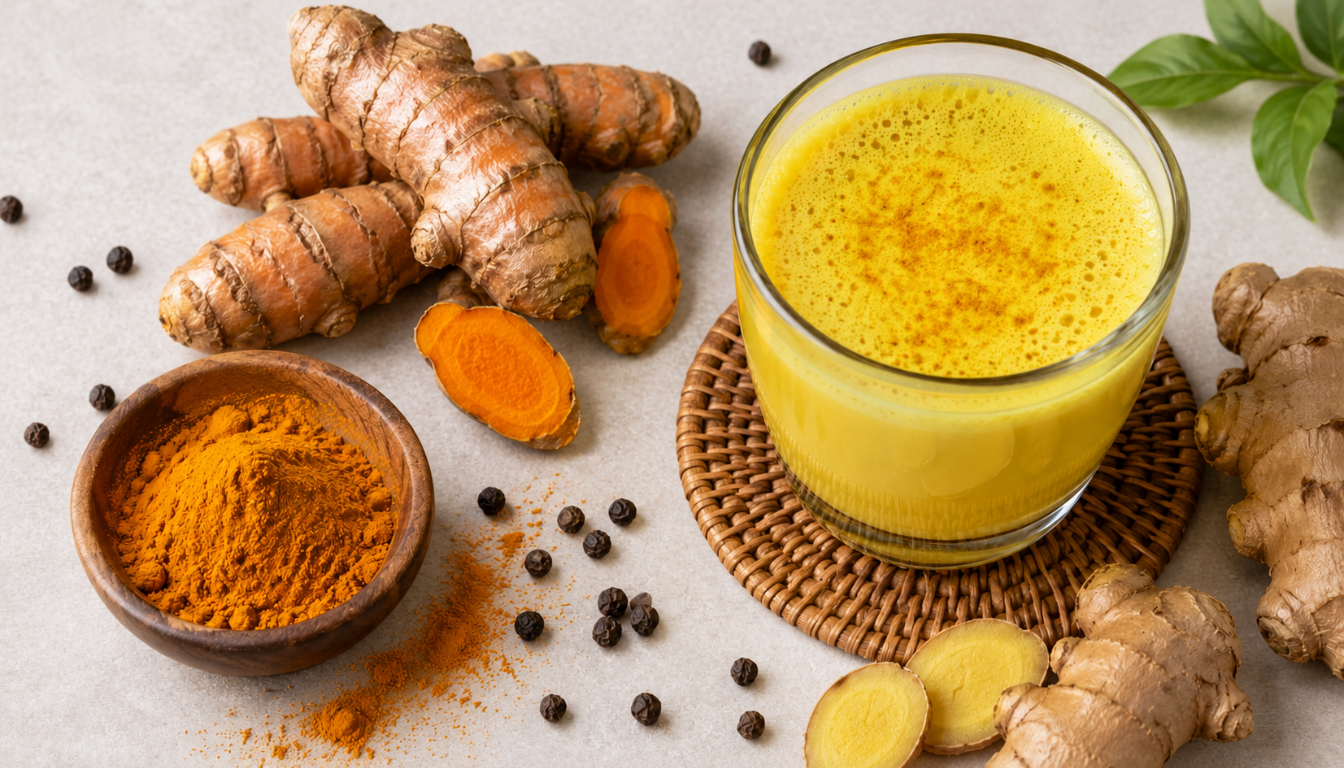
- Golden milk: Warm your preferred milk with a teaspoon of turmeric, a pinch of black pepper, a little honey and a dash of cinnamon. The fat in the milk and the black pepper together maximise absorption.
- Turmeric tea: Steep turmeric in hot water with ginger, a squeeze of lemon and black pepper for a simple immune-supporting drink.
- Smoothies: Add half to one teaspoon of turmeric powder to any fruit or vegetable smoothie with a small amount of healthy fat such as nut butter or coconut milk.
- Cooking: Stir turmeric into soups, stews, curries, scrambled eggs or roasted vegetables. Always add black pepper alongside it.
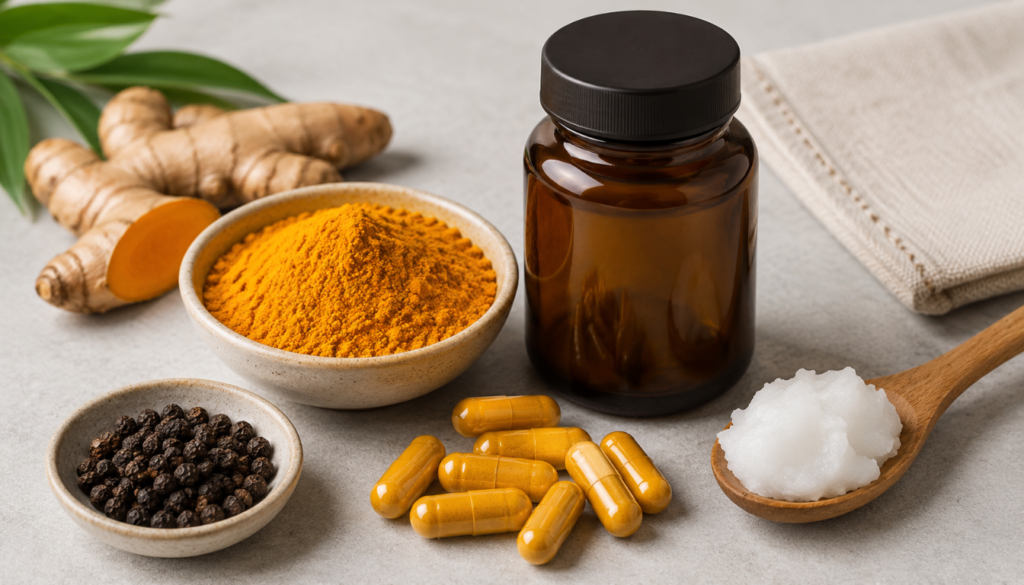
- Supplements: If you prefer a concentrated dose, look for supplements standardised to 95% curcuminoids that include piperine or use a bioavailable formulation such as phytosomal or liposomal curcumin.
Using Turmeric Safely
Turmeric is generally well tolerated at culinary and supplemental doses, but a few important safety points apply.
Recommended Dosage: Health Benefits of Turmeric and Curcumin
- Culinary use: 1–3 g of turmeric powder daily in food is safe for most adults and provides meaningful antioxidant and anti-inflammatory support.
- Supplements: Most clinical trials use 500–2,000 mg of curcumin per day. Always follow the dosage on the supplement label or confirm with a qualified practitioner.
Potential Side Effects
Most people tolerate turmeric well. At higher doses, some people experience:
- Mild digestive upset, nausea or loose stools
- Headache in rare cases
- Yellowing of skin with very high doses (harmless but temporary)
Medication Interactions
Turmeric and curcumin can interact with several medications:
- Blood thinners (e.g. warfarin) – curcumin has mild anticoagulant properties and may enhance their effect.
- Diabetes medications – curcumin lowers blood sugar and may require dosage adjustment.
- Acid-reducing drugs – high doses of turmeric may interfere with antacids or proton pump inhibitors.
Always speak with your healthcare provider before adding curcumin supplements to your routine if you take any regular medication.
Who Should Use Caution
- Pregnant women – culinary amounts are fine, but medicinal or supplemental doses should be discussed with a doctor.
- People with gallbladder issues – curcumin stimulates bile flow and may worsen gallstones or bile duct obstruction.
- Anyone scheduled for surgery – stop supplemental curcumin at least two weeks before any planned procedure due to its mild blood-thinning effect.
Before You Go – Health Benefits of Turmeric and Curcumin
Turmeric is one of the most researched natural compounds available, and the evidence behind it continues to grow. The key to getting real results is consistency, always pairing it with black pepper and fat, and choosing quality sources whether you use it in food or supplement form. As with any herbal remedy, work with a qualified practitioner if you have existing health conditions or take regular medication.
If you want to explore turmeric further, I have covered the benefits of turmeric and ginger combined, the best turmeric supplements available, and how long turmeric takes to work in separate guides on theherbprof.com.
References – Health Benefits of Turmeric and Curcumin
Little Herb Encyclopedia, by Jack Ritchason; N.D., Woodland Publishing Incorporated, 1995
The Ultimate Healing System, Course Manual, Copyright 1985, Don Lepore
Planetary Herbology, Michael Tierra, C.A., N.D., Lotus Press, 1988
Handbook of Medicinal Herbs, by James A. Duke, Pub. CRP Second Edition 2007
The Complete Medicinal Herbal, by Penelope Ody, Published by Dorling Kindersley
Related Articles
Neurogenesis Through Herbs and Food Plants
How Long Does Turmeric Take to Work? Realistic Timelines
Turmeric Ginger Tincture: Anti-Inflammatory Power in a Drop
Benefits of Turmeric and Ginger for Better Health
Frequently Asked Questions – Health Benefits of Turmeric and Curcumin
What is the difference between turmeric and curcumin?
Turmeric is the whole spice derived from the root of Curcuma longa and contains over 200 active compounds. Curcumin is the most studied of those compounds and the one responsible for most of turmeric’s anti-inflammatory and antioxidant effects. Supplements often use isolated curcumin, while food use delivers the full spectrum of the plant.
Why do you need black pepper with turmeric?
Curcumin absorbs very poorly on its own. Piperine, the active compound in black pepper, blocks the enzymes that break down curcumin before it reaches the bloodstream. Research shows this combination increases curcumin bioavailability by up to 2,000%. Always add a pinch of black pepper whenever you use turmeric.
How much turmeric should I take daily?
For general health support through cooking, 1–3 g of turmeric powder daily is a reasonable starting point. For targeted therapeutic use, most clinical trials use 500–2,000 mg of curcumin in supplement form. Confirm your specific dose with a qualified practitioner, especially for long-term use.
Can turmeric help with arthritis?
Several controlled trials show curcumin reduces joint pain, swelling and stiffness in both osteoarthritis and rheumatoid arthritis. In some studies it performed comparably to NSAIDs with fewer side effects. Use it as a complementary support alongside your existing medical treatment rather than as a stand-alone remedy.
Can turmeric interact with my medications?
Yes. Turmeric and curcumin supplements can interact with blood thinners, diabetes medications and some acid-reducing drugs. Always speak with your doctor before adding curcumin supplements to your routine if you take any prescription medication.
Is turmeric safe during pregnancy?
Turmeric in normal culinary amounts is generally considered safe during pregnancy. However, supplemental or medicinal doses are not well studied in pregnancy and most conservative sources advise against them without professional guidance.
What is the best way to take turmeric for maximum benefit?
Combine turmeric or curcumin with black pepper and a healthy fat such as olive oil, coconut oil or milk. This triple approach maximises bioavailability. Quality supplements standardised to 95% curcuminoids with added piperine, or advanced formulations like phytosomal curcumin, are also effective options.
Can turmeric be used on the skin?
Yes. Curcumin has anti-inflammatory and antioxidant properties that make it useful in topical applications for conditions like psoriasis, eczema and acne. Research into curcumin-based creams is ongoing. When applying turmeric directly to skin, be aware it can temporarily stain yellow.